The steak method that works on any pan you own
Thickness, a dry surface and a thermometer matter more than cast iron. The rest is knowing when to leave the meat alone.
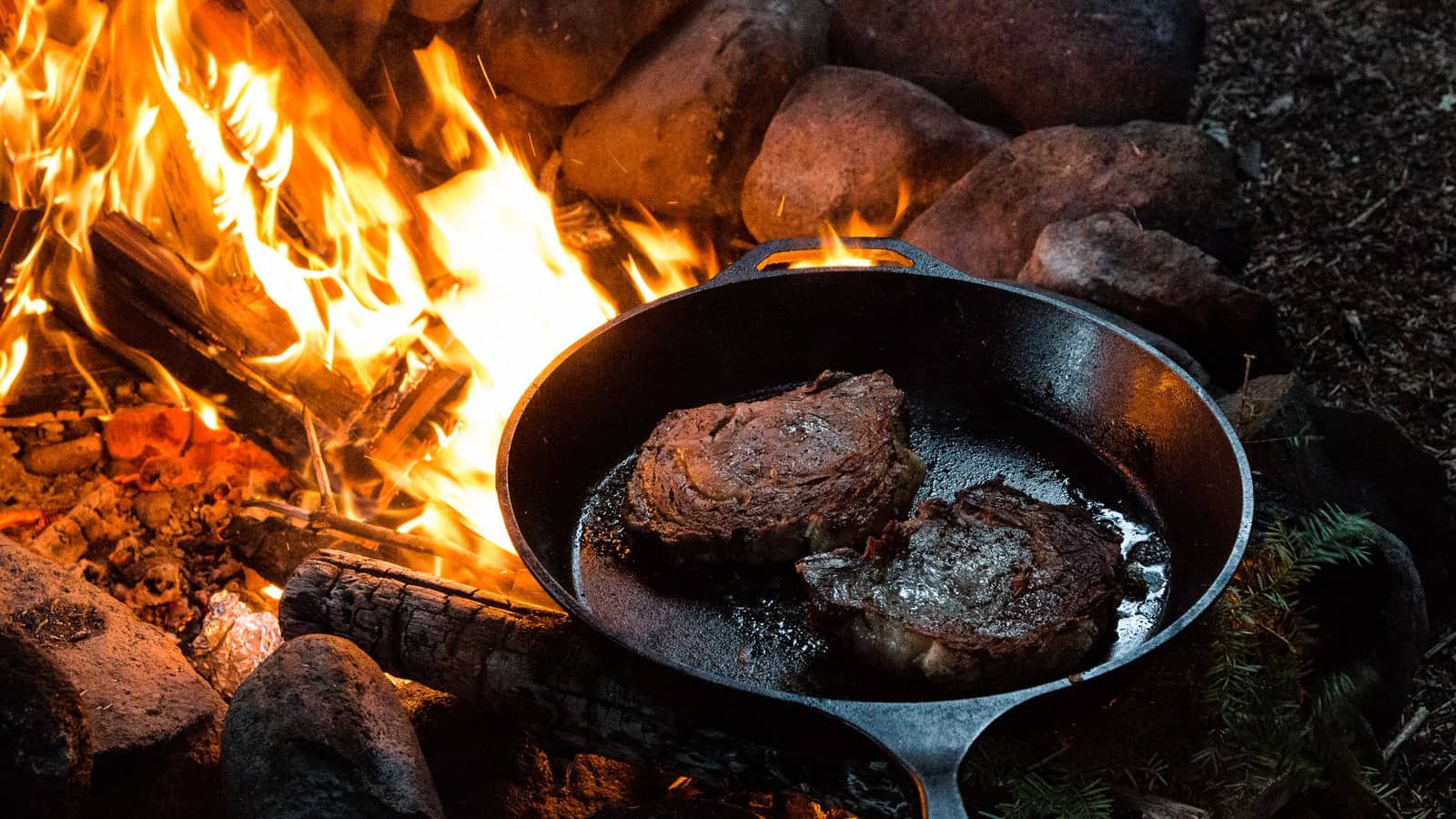
Buy the steak an inch and a half thick. That single decision fixes more problems than any pan upgrade you'll ever make. A half-inch steak gives you about ninety seconds to build a crust before the middle turns gray, and nobody hits that window reliably. At an inch and a half you've got three or four minutes of margin, which is enough for a beginner to recover from a mistake mid-cook.
Ask the butcher to cut it. Most counters will, and one thick steak split between two people eats better than two thin ones. A single 16-ounce ribeye runs the same money as two 8-ounce ones and cooks about four times better.
Now the pan. Cast iron is the standard advice and it's good advice, but a heavy stainless skillet does the job, and a thin aluminum pan will do it too if you adjust for what it can't hold. The only pan that genuinely fights you is nonstick, and there's a workaround for that at the bottom.
Salt it early, or salt it right before
Salt pulls moisture to the surface. For the first 30 or 40 minutes that moisture is sitting there as a wet film, which is exactly what you don't want when the steak hits the pan. After about an hour the brine gets reabsorbed and the surface dries back out, and after a few hours in the fridge uncovered it's drier than when you started.
So there are two good times to salt. Either right before it goes in the pan, or at least an hour ahead, ideally the night before on a rack in the fridge. The dead zone is ten to forty minutes out. That's when steaks steam instead of sear and people blame the pan.
Use kosher salt and use more than feels right. About three-quarters of a teaspoon of Diamond Crystal per pound of meat, or half that if you're using Morton, which is denser and will oversalt you if you measure by volume out of habit. Salt all six surfaces. The edges count.
Dry means dry
Before it goes in the pan, blot the steak with paper towels until the towel comes away almost clean. Two sheets, both sides, press don't wipe. If you skipped the overnight salt and the surface is damp, this step is doing most of your work for you.
Water on the surface has to boil off before the meat gets above 212°F, and browning doesn't really get going until well past that. Every drop you leave on is a few seconds of your sear budget spent making steam.
Take it out of the fridge while you preheat the pan. Fifteen or twenty minutes on the counter is fine. The old advice about bringing steak fully to room temperature doesn't do much, and an hour on the counter in a warm kitchen isn't worth it.
Preheating, and how to actually tell
This is where most home steaks fail. People put the pan on medium-high for ninety seconds, drop the steak in, and get a gray steak with a few brown patches.
Cast iron needs five to eight minutes over medium-high to come up to an even temperature. Thin stainless or aluminum gets hot faster but gives up that heat the second cold meat touches it, so it needs the burner cranked higher and it needs you to cook one steak at a time.
The water test works on any pan. Flick a few drops in. If they hiss and vanish, it's hot but not hot enough. If they gather into beads that skate across the surface, you're there. That's the Leidenfrost point and it's a reliable signal in a way that "shimmering oil" isn't.
Then add the fat. Refined avocado oil, grapeseed, or plain canola. A tablespoon, swirled to coat. Butter goes in later, because butter's milk solids burn long before the pan is hot enough to sear anything.
The cook
Lay the steak down away from you and press it flat for three seconds so the whole face makes contact. Then leave it.
You'll hear a hard, continuous sizzle. If it's quiet, the pan wasn't ready and you should lift the steak out, get the pan hotter, and start again. That's annoying but it's recoverable. Leaving it in a lukewarm pan isn't.
Flip every 45 to 60 seconds. The one-flip rule is romantic and it's how steakhouses do it on equipment that holds far more heat than your stove. At home, frequent flipping browns both sides evenly and keeps the interior gradient tighter. You end up with less of that gray band under the crust.
Open a window. A properly hot pan smokes, and your range hood is probably not as good as you think it is. Take the battery out of the smoke alarm if you must, and put it back the same evening.
Butter in the last ninety seconds
Drop in a tablespoon of butter, a crushed garlic clove and a sprig of thyme if you have it. Tilt the pan, spoon the foaming butter over the top for about a minute.
This is flavor, not cooking. It also gives you something to do while you wait for the thermometer to catch up, which is the real reason chefs like it.
The thermometer is the whole game
Poking steak with your finger is a skill built over hundreds of steaks on the same equipment. You don't have that. Buy an instant-read thermometer. A decent one is around $30 and it will pay for itself the first time it saves a ribeye.
Probe from the side, into the thickest part, and watch the number fall as you back the tip out toward the center. The lowest reading is the one that counts.
Pull temperatures, for a steak this thick:
- Rare: 118°F (48°C)
- Medium rare: 125°F (52°C)
- Medium: 133°F (56°C)
- Medium well: 142°F (61°C)
Carryover will add five to eight degrees while it rests. Pull earlier than feels right. You can always put a steak back in a hot pan for thirty seconds. You can't unbrown the middle.
Rest it, but not forever
Eight to ten minutes on a warm plate or a cutting board. Don't tent it tightly with foil or you'll steam the crust you just spent ten minutes building. A loose sheet laid over the top is fine.
Slice across the grain. On a ribeye the grain changes direction between the eye and the cap, so look at it before you cut rather than running the knife straight down the length out of habit.
If your only pan is nonstick
Don't sear in it. Nonstick coatings aren't meant for the heat this needs, and you'll ruin the pan and get a mediocre crust anyway.
Instead, reverse-sear. Oven at 250°F, steak on a rack over a sheet pan, until the center reads about 15 degrees below your target. On an inch-and-a-half steak that's usually 25 to 40 minutes, but go by the thermometer. Then get the nonstick pan over medium-high with a film of oil and give it sixty to ninety seconds a side. The surface is bone dry by then, so it browns fast and you're out before the pan gets hot enough to do damage.
Reverse-searing is honestly better for thick cuts regardless of pan. The downside is time, and that you need to start it 45 minutes before you want to eat. On a Tuesday, the skillet wins.
The four things that actually go wrong
Crowding the pan. Two steaks in a 10-inch skillet drop the temperature and release enough moisture to steam each other. Cook one, rest it, cook the second, and serve them together. The first one will still be plenty warm.
Cooking straight from the fridge in a thin pan. The pan can't recover and the outside overcooks while the center crawls.
Salting in the dead zone.
Trusting time instead of temperature. A "four minutes a side" instruction assumes a steak thickness, a pan mass and a burner output that aren't yours.
Get the thickness right and get a thermometer. Everything else is adjustment, and you'll have it sorted by the third steak.
Dean Shaw
Gear & Garage
Reads the warranty, the parts list and the long-term owner reviews before anything else. Trucks, tools, watches, and the cheap version that costs more.

Watch
Worth an hour of your evening
More from Food.
From channels we rate. Plays on YouTube.
Read next