Chores by age, and the part where you stop redoing them
What a three-year-old can actually finish, when to hand over a whole job, and why the second week is the one that breaks most families.
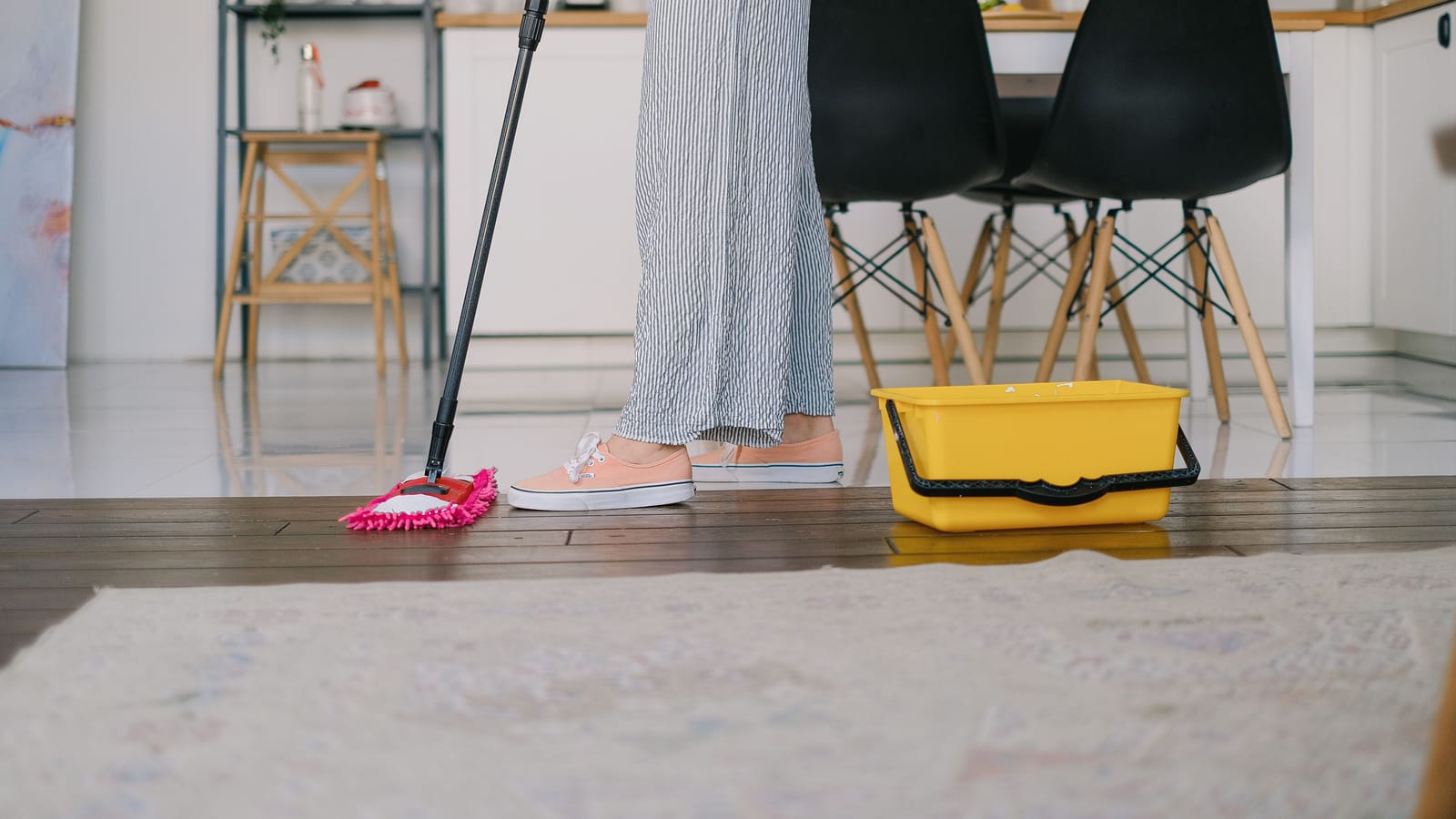
The fastest way to end up with a fifteen-year-old who doesn't help is to keep doing it yourself because you're quicker. You're quicker. A six-year-old loading the bottom rack takes four minutes and leaves a bowl face-up. You'd have done it in ninety seconds. That math is true every single night, and it's the reason most households quietly give up somewhere around the kid's eighth birthday.
So pay the tuition early. Roughly three weeks of being slower, per job, per kid. After that it's free labor for a decade.
Decide what "done" looks like before you assign anything
Half the fights about chores aren't about the chore. They're about a standard nobody wrote down.
"Clean the kitchen" means nothing to a nine-year-old. "Counters have nothing on them but the fruit bowl and the salt, sink is empty, floor's been swept under the table" is a job someone can finish and be right about.
Write the standard once. Tape it inside a cabinet door if you have to. Then hold it, which means you send them back. Not with a lecture. "Table's still got crumbs." Four words, no sigh, no doing it yourself while they watch.
Send-backs are the whole system. A kid who learns that Mom re-wipes the counter after he leaves has learned exactly what you taught him.
Two and three: carrying, dumping, closing
They can't clean. They can move objects from one place to another, and that's most of housework anyway.
- Carry their plate to the counter, not the sink. The sink is too high and you'll get a broken plate and a crying kid.
- Throw a diaper or a napkin in the trash.
- Put shoes in a basket by the door. One basket. Not pairs, not matched.
- Dump their bath toys into a bin while you drain the tub.
- Push the dryer door shut with both hands.
You get a hook at 30 inches and a step stool, and suddenly a two-year-old can hang up her own coat. That's not cute. That's her coat, forever, off your floor.
Expect to narrate everything. "Plate to the counter." Then hand it to her. Don't ask a question you don't want answered, which means no "can you take your plate?" She can, and she'll say no.
Four and five: the first real jobs with a start and a finish
This is where a kid learns that a task has an end. Give them work that visibly finishes.
Set the table, which at this age means forks and napkins only. Feed the dog with a scoop you've marked with a strip of tape at the right line. Match socks out of the warm basket on the couch, and let them keep the odd ones in a shoebox. Wipe the lower half of the fridge with a spray bottle of water and a little vinegar, which costs about four dollars and does no harm if they drink it, which they will try.
Five-year-olds can also strip their own bed. They can't remake it. Nobody can remake a bed at five. Let them pull the sheet off, drag it to the laundry room, and call that the job.
The honest part: they'll spray the fridge for eleven minutes and wipe it for forty seconds. Let it go. The point isn't the fridge.
Six to eight: hand over an entire job, not a step
Somewhere in first or second grade, hand a kid a whole domain. Not "help with the trash." The trash. All of it, all week, including the bathroom cans nobody remembers.
Whole jobs work because ownership is what actually sticks. A step is something you're being made to do. A job is something that's yours, and yours has a different feeling to it.
Good whole jobs at this age:
- All the trash and recycling, including taking the bin to the curb
- Emptying the dishwasher, bottom rack for the six-year-old, both racks by eight
- Their own laundry from hamper to washer, with you pushing the buttons
- Sweeping the kitchen after dinner, every night
- Wiping down the bathroom sink and mirror, twice a week
Teach the actual motion. Stand behind them, put your hands on theirs, run the broom the right way once. Kids sweep in circles because nobody ever showed them not to. Ten seconds of your hands on theirs beats four months of "you missed a spot."
Nine to twelve: cooking, mowing, and the first job that matters if it's skipped
By ten, a kid should be able to make one dinner start to finish. Pick something with a short ingredient list. Tacos, spaghetti, breakfast for dinner. They shop the list with you, they cook it, you sit down. The first three attempts are rough and the kitchen looks like a crime scene, and then somewhere around attempt five you get a real night off.
Also in this band: running the washer and dryer unsupervised, mowing with a push mower if you've walked them through the blade and the fuel, cleaning a whole bathroom to a written standard, watching a younger sibling for twenty minutes in the same house.
Twelve is the age for a job with consequences. Not "sweep the porch," which nobody notices. Give them something where skipping it costs the family something visible. Feeding the animals. Getting the bins out Tuesday night, because Wednesday morning there's no second chance and the garage smells for a week.
Let the consequence land once. Don't rescue it, and don't make a speech about it either. The overflowing bin says more than you will.
Thirteen and up: they should be able to run the house for a weekend
The target for a teenager is straightforward. If you got the flu on a Thursday, could the house survive until Sunday?
That means a sixteen-year-old knows how to plan and cook three meals, get everyone's laundry through, change the vacuum bag, unclog a drain with a hand snake, shut off the water at the main, and jump a car. My rule is that nobody drives the family car until they can check the oil and change a tire on the driveway, in daylight, with me timing them.
Give teenagers work that scales with skill. Painting a room. Staining the deck. Doing the grocery shop with a set budget and the receipt handed back. A fourteen-year-old who's told "here's $90, feed us for four days" learns more about money in one week than a year of allowance.
Pay for extra work, not for being in the family
Taking out your own trash isn't a job, it's rent. Nobody gets four dollars for it.
Extra work gets paid. Hauling brush, washing the car inside and out, painting the shed, watching siblings for a real stretch while you're out. Name the price before the work starts and pay it the day it's done, in cash, into a hand. Kids have a long memory for owed money.
The ten-minute reset
One routine holds all of this together. Before dinner, set a timer for ten minutes and everybody resets the main floor. Toys to bins, shoes to the basket, backpacks to hooks, counters clear. When the timer goes off, you stop, even if it isn't perfect.
It works because it's bounded. Kids will do almost anything for ten minutes with a visible clock and no negotiation available.
Some weeks it all falls apart. Newborn, a bad stretch at work, somebody's in the hospital. The system doesn't die, it pauses, and you restart it on a Saturday morning with the chart and the standards and no apology for the two months off.
The payoff shows up quietly. One night your twelve-year-old starts a load of towels because she noticed the basket was full, and she doesn't mention it, and she doesn't want anything for it. You'll want to make a big deal out of it. Don't.
Nina Castellan
BRO for Her
Runs the women-facing desk. Same standard, same tools, written for a different reader — not a softer one.

Watch
Watch how it's done
Picked for this article.
From channels we rate. Plays on YouTube.
Fields Full House
How to Train Your Kids to do CHORES || Large Family
Early Childhood by Blessing
Age-appropriate chores for kids: a simple guide for parents
Read next