Buy the thermal monocular first, and the scope later
You can legally own night vision and thermal gear in the U.S. Most people still buy the wrong piece first. Here's the order that saves you money.
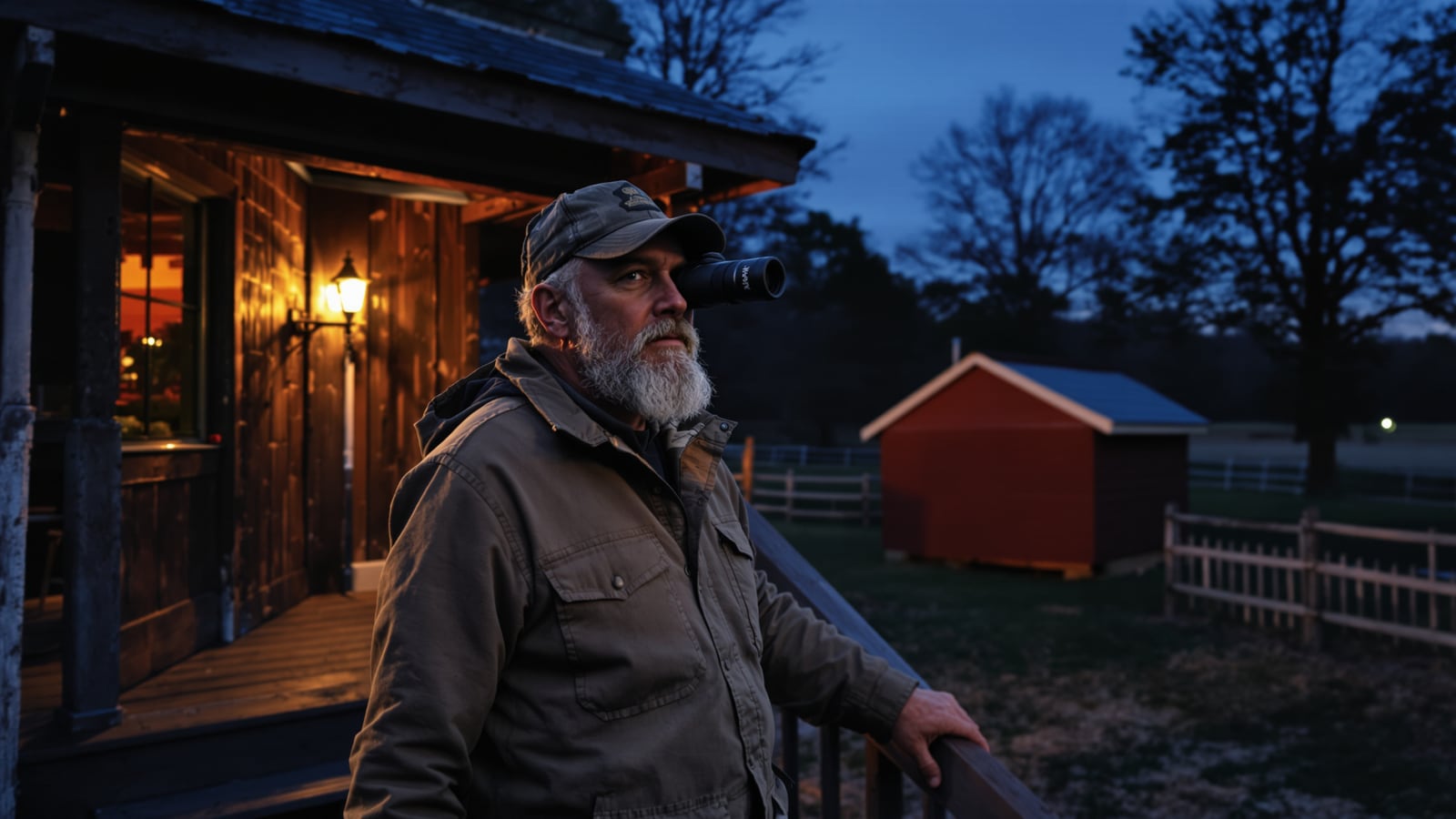
Quick answer: Yes, civilians can buy night vision and thermal optics in the U.S. with no federal license. Buy a handheld thermal monocular before a rifle-mounted scope. Then check your state or province's hunting rules before you take either one into the field.
Walk out your back door at 2 a.m. with a thermal monocular and you'll learn more about your property in five minutes than in ten years of daylight. The deer bedded behind the shed. The raccoon on the fence. The neighbor's cat, glowing like a coal. It's a little humbling.
Then you start pricing scopes, and the fun gets expensive.
What you can own
Nobody needs a permit to own night vision or a thermal imager in the United States. You buy it like any other optic, from a dealer or online, and it ships to your door. Owning one is a right you exercise, not a privilege you apply for.
Two catches.
Export. These devices are controlled for export. The best image intensifier tubes and many thermal imagers need a license to leave the country, and that includes in your luggage on a hunting trip to Canada. Call the manufacturer or check with the State and Commerce Departments before you pack one. Don't find out at the border.
Hunting. Owning it and hunting with it are different questions. Some states ban any night vision or thermal use on game. Others allow it only for feral hogs, coyotes or other nuisance animals. Some allow it at night for varmints but not deer. Canadian provinces make their own rules, and many are strict. Your state wildlife agency's current regulations are the only authority that matters. Read them, and if the wording is vague, call the game warden's office and ask.
The three kinds of gear
Image intensifier tubes. This is classic night vision, the green glow. The tube amplifies whatever light exists: stars, a sliver of moon. It gives the sharpest detail and the clearest look at what you're seeing. It needs some ambient light, and it costs real money. Gen 3 tubes sit at the top and are the ones export rules care about most. Keep the caps on in daylight and never point a powered unit at a bright light.
Digital night vision. Think of a camera sensor behind an eyepiece. It's far cheaper, it records video, and it won't be damaged by daylight. The catch is range. In true dark it leans on an infrared illuminator, which works well for a few dozen yards and poorly beyond that. Anyone else with night vision can see that illuminator, too.
Thermal. It doesn't see light at all. It reads heat. That means it works in complete darkness, through fog, light rain, smoke and thin brush, and a warm animal stands out against a cold field like a flashlight. It also means two things people forget:
- It can't see through glass. A windshield or window is opaque to it, and it'll show you your own reflection instead.
- It shows heat, not detail. A sun-baked rock or stump still glows after dusk. A calf and a deer can look alike. A fence post and a person can fool you for a second.
Why the monocular goes first
A thermal scope does two jobs: it finds the animal and it helps you shoot it. Buying one first means paying for the second job before you've learned the first.
A handheld thermal monocular does only the finding. You scan a field, a tree line, a creek bottom. You count what's out there and see how it moves. You work out where the hogs come in, and you do it without a rifle in your hands, which is the safest way to learn.
It also pays off outside hunting season. You can walk the property line, find a lost dog, or check a noise at night without stumbling around with a flashlight. If security is the real goal, though, price a floodlight camera first. The smart home gear that earns its place costs a fraction of the thermal gear and does that job all night without you getting out of bed.
Buying for the work you'll really do beats buying for the spec sheet. Same rule as with headphones.
Later, if you decide you want it on a rifle, you'll know what sensor size, lens and refresh rate you need. You'll also know whether you want a scope at all or a clip-on that sits in front of your daytime optic. A clip-on keeps your zero and your good glass.
Reading the spec sheet
Skip the adjectives. Look at these four things.
- Sensor resolution. 256, 384 and 640 are the common sizes. More pixels means more detail at distance. If you shoot or scout past a couple hundred yards, don't settle for the smallest sensor.
- Refresh rate. 50 or 60 Hz gives smooth motion. A lower rate smears a running animal. Some lower-rate units exist partly because they face fewer export restrictions, so a cheap one isn't always a bargain.
- Lens size. A bigger objective lens gathers more and sees farther. It's also heavier and costs more. A wider lens is better for scanning, a longer one for distance.
- Detection, recognition, identification. The range printed on the box is almost always detection: you can tell something warm is out there. Recognizing it as a hog and identifying it as the animal you may legally shoot happen much closer. Treat the big number as marketing and divide it hard.
One more annoying part: batteries. Cold drains them fast. If you're sitting in a field in January, carry a spare and keep it in an inside pocket.
The responsibility part
A thermal image isn't target identification. You see a warm shape. You don't see what's behind it.
Before any shot, know what the animal is, know it's legal to take, and know where the bullet ends up if it passes through or misses. The same four rules apply at midnight as at noon. In fact they apply harder, because everything looks flatter and closer on a screen than it is. Get to the spot in daylight first. Walk the field and note the fences, the roads, the houses, the hills. At night you'll know what the screen can't show you.
If the rules in your state permit it, thermal is a remarkable tool for hog control and predator work. It lets a landowner protect crops and livestock without wasted effort or wasted shots. That's a good use of good gear.
Before you spend the money
- Look up your state's or province's current rules on night vision and thermal use for the animals you hunt.
- Decide the job: finding, shooting, or both.
- Start with a monocular in the 384 range with a smooth refresh rate. Try one in the dark before you commit, if a shop or friend will let you.
- If you ever travel with it across a border, sort out the export paperwork first.
Buy the one that tells you what's out there. Then decide what's worth a shot.
Dean Shaw
Gear & Garage
Reads the warranty, the parts list and the long-term owner reviews before anything else. Trucks, tools, watches, and the cheap version that costs more.

Watch
Watch how it's done
Picked for this article.
From channels we rate. Plays on YouTube.
Veritasium
How Do Night Vision Goggles Work?
Urban Survivor
Night Vision vs Thermal vs Fusion vs Outline - Which is Best?
Read next