Be player two instead of the referee
The fastest way to have real influence over what your kids play is to pick up the second controller and stay in the room.
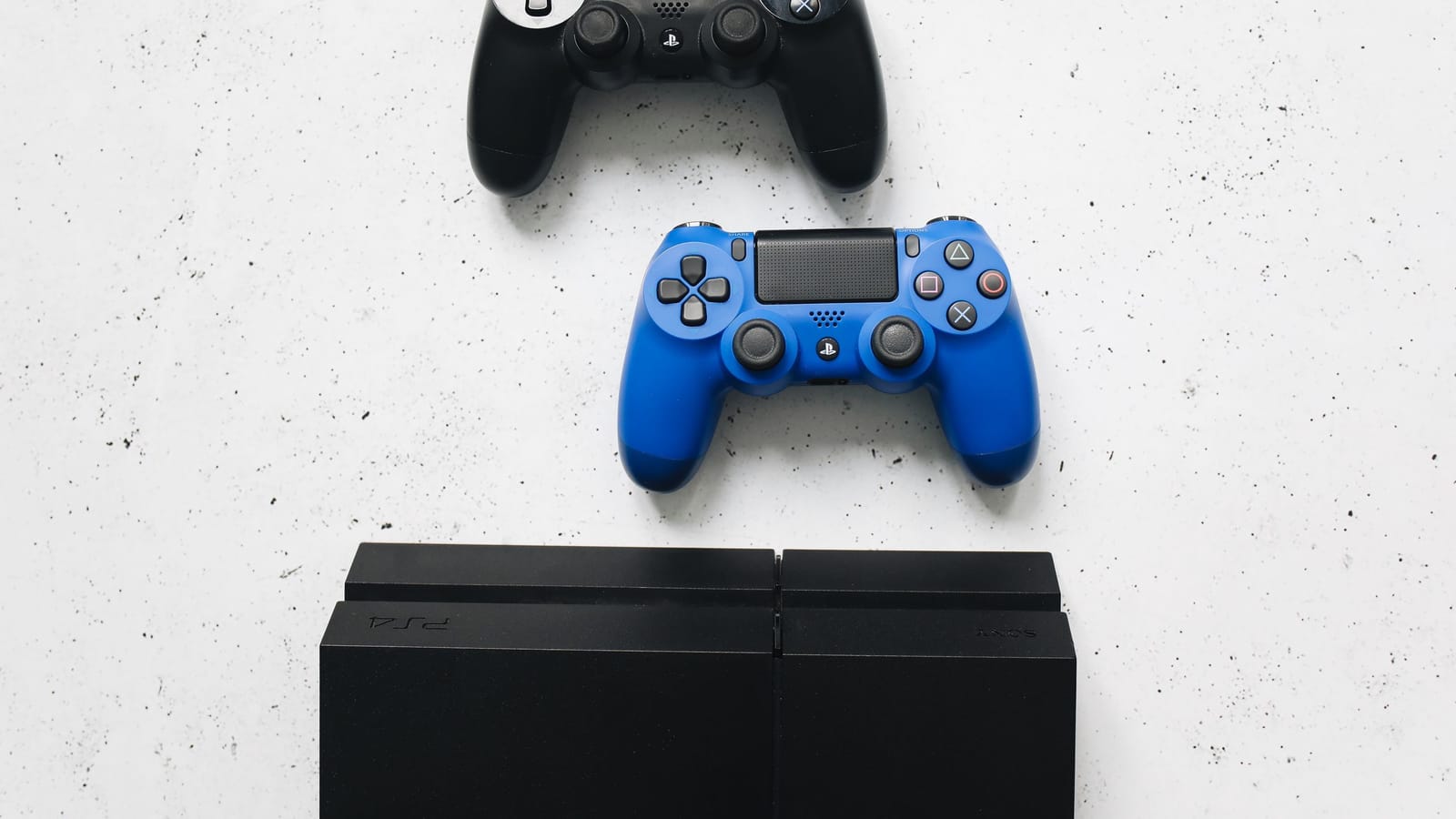
Pick up the second controller. That's the whole move.
Most parents approach gaming as a security problem. You set the timer, you check the rating on the box, you shout "five more minutes" from the kitchen, and you have no idea what's actually happening on the screen. Then a fight starts, because the five minutes landed in the middle of a match your kid can't pause and can't leave without letting four other people down.
Sit down and play with them and almost all of that goes away. You learn the games. You learn the pacing. You find out who they're talking to. And your opinions start carrying weight, because they're the opinions of someone who's actually played the thing.
Why the referee role fails
A referee is an outsider with a whistle. Every interaction is a correction. Nothing you say has any credibility inside the world your kid spends hours in, because you've never been there.
Kids can smell that. A rule handed down by someone who doesn't understand the activity gets treated as an obstacle, not a boundary. So they learn to hide. They play at a friend's house. They get a second account. They tell you it's fine.
Being in the game changes the relationship. Now you're not interrupting, you're participating. When you say "that one's too much, we're not playing it," they know you've seen it. That sentence lands completely differently.
There's a second benefit, and it's bigger. Playing side by side is one of the easiest shoulder-to-shoulder activities you get with a child who's stopped wanting to be talked to directly. Twelve-year-olds don't open up across a table. They open up in the car, on a walk, and about forty minutes into a co-op run when their hands are busy.
Put the screen where you're
This is the single most practical change available to you, and it's free.
One main screen, in a shared room. Not a console in a bedroom with the door shut. Not a handheld used exclusively under a duvet. The physical location of the screen determines how much of your kid's gaming life you have any contact with.
Two controllers plugged in and charged, always. If the second controller is dead or missing, you won't play. Small friction kills good habits.
Headphones off when you're both on the couch, or one ear off. You want to hear what's being said, and you want them to hear you.
A handheld is fine for car journeys and waiting rooms. It's a bad default for the house.
Games that actually work for two
The category you want is couch co-op — two players, one screen, same room. It's narrower than it used to be, so learn the names.
For little kids, roughly four to eight. The Lego games are the workhorse here. Any of them. Players can't die permanently, the puzzles are gentle, and a five-year-old can mash buttons in the same level as a grown adult without either person being bored. Mario Kart works because the assist options let a beginner finish a race against you. Minecraft in creative mode is less a game than a shared sandbox, and it's very good for a kid who wants to show you something they made.
For eight to twelve. Overcooked is the best argument-generator and team-builder on the list — you'll be shouting about plates and laughing about it afterwards. Stardew Valley in co-op is slow, calm, and quietly teaches that work compounds. Portal 2's co-op campaign is genuinely two-brain puzzle solving, and watching a ten-year-old crack a chamber you were stuck on is a good afternoon. Terraria and Minecraft survival both reward planning and patience.
For teenagers. This is where you stop choosing and start being invited. Rocket League. Deep Rock Galactic. Halo campaigns in co-op. Sea of Thieves, which is a whole evening and a lot of talking. You'll be worse than them at nearly all of it. Play anyway.
Check ratings yourself rather than taking a friend's word for it. ESRB and PEGI both publish content descriptors, not just an age number, and the descriptors are the useful part. "Violence" covers an enormous range. Read what it actually says.
Ending a session without a fight
Clock time doesn't map onto games. Games are built out of matches, levels and save points, and a kid who gets yanked out mid-round has a legitimate grievance.
So stop counting minutes and start counting units. "Three more races." "Finish this level and save." "One more run, then we're done." You'll find this ends sessions cleanly, because the exit point is one everybody agrees on.
Say the number at the start, not the end. "We've got about forty-five minutes" at the beginning of a session lets a kid plan. Sprung on them at the end, it's a punishment.
And build in a landing. Ten minutes of nothing between the controller and bedtime beats going straight from a competitive match to lights out. That's not a screen thing, it's an adrenaline thing.
Strangers, voice chat, and the part worth taking seriously
The content on the disc is rarely the real issue. Other people are.
Open voice chat with random adults is the thing to get a grip on. Every major platform has family settings that control it — Nintendo, PlayStation and Xbox each run a family app or family management area where you can restrict voice and text chat, limit who can send friend requests, and cap spending. Go and set them up properly. It takes twenty minutes once.
Then have the actual conversation. Explain that people online sometimes pretend to be kids, and that anyone who asks for photos, moves the chat to another app, or tells them to keep a friendship secret has told you everything you need to know about them. Make clear that they will never be in trouble for reporting something to you. Kids stay quiet mostly because they're afraid of losing the console, so take that fear off the table out loud.
Playing with friends they know from school, on a private voice channel, is a different thing entirely. That's just being social with a screen in the way. Don't treat it like a threat.
Let them be better than you
You will lose. Reaction times go, and a twelve-year-old who's put three hundred hours into one game is going to dismantle you.
Lose well. Don't make excuses, don't quit, don't get quietly sour about it. Your kid is watching how a grown man handles being beaten by a child in front of his other children, and that lesson is worth more than the win.
Then coach lightly. One suggestion, not a running commentary. The urge to turn every session into a teaching moment is how you get uninvited.
Notice things, too. How a kid plays tells you a lot. The one who rebuilds after a loss without complaint. The one who rages and needs help finding words for it. The one who quietly makes sure the youngest gets a turn. That's character showing up where nobody's performing, and you only see it if you're in the room.
You've got a fairly short window where a kid wants to play anything with you at all. Spend it on the couch, controller in hand, getting beaten.
Sam Ortiz
Dads & Family
Father of three. Writes about presence, discipline and the long game, without pretending any of it's tidy.

Watch
Worth an hour of your evening
More from Gaming.
From channels we rate. Plays on YouTube.
Read next