Building one Minecraft world with your kids, and finishing it
Turn off mob griefing, pick a build with an ending, and give every kid a job with their name on it.
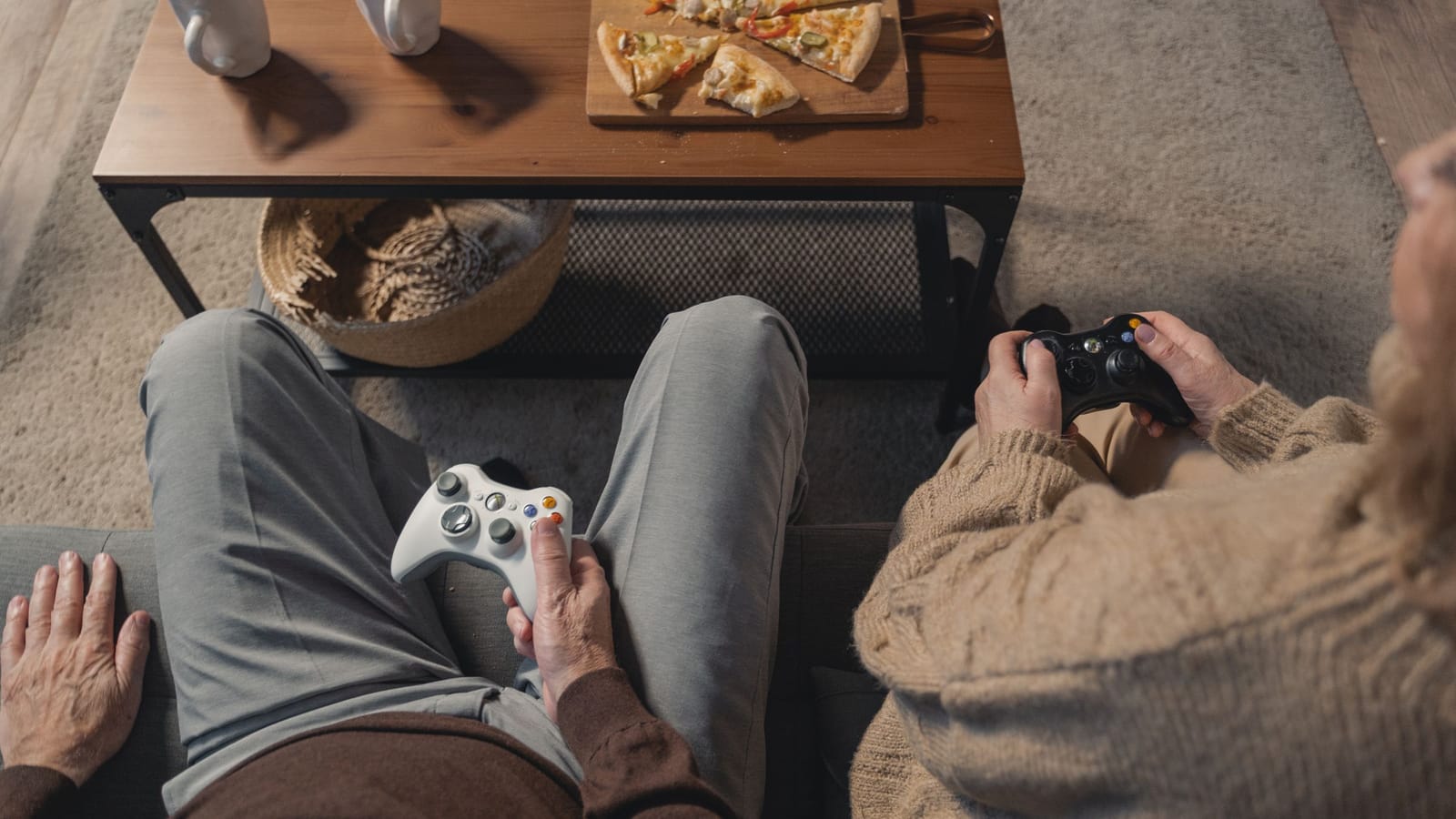
Before your kids place a single block, open the chat window and type /gamerule mobGriefing false. That one command stops creepers, endermen and ghasts from altering the terrain. Without it, a creeper will eventually wander into the side of a tower your eight-year-old spent two evenings on and blow a crater through it. The session ends in tears. Sometimes the hobby does too.
That's the whole difficulty with playing Minecraft as a family project rather than as a babysitter. Left alone, the game is a sandbox with no goal, and kids will happily dig a hole for four hours. Shaped slightly, it's the best shared build you can do indoors with a seven-year-old and an eleven-year-old at the same time, which isn't a sentence you can say about many activities.
Pick the edition once, for the whole household
There are two versions of Minecraft and they don't share worlds. Bedrock runs on Xbox, PlayStation, Switch, phones, tablets and Windows, and all of those can play together. Java runs on Windows, Mac and Linux only, has the mod scene, and will happily run on an old laptop that chokes on everything else.
The practical rule: if anyone in the house is playing on a console or a tablet, you're on Bedrock. Done. The cross-play is the entire point, and Bedrock on console gives you split-screen, so two kids can build on the same television while you're on the family PC in the next room.
Java is the better choice if everyone's on a computer and you want mods, custom maps or a build that lasts years. Before you buy anything, check what you already own. On Windows the two editions are now sold together, and plenty of people have paid twice because they didn't look.
The settings that prevent arguments
Do these at world creation, or turn cheats on afterwards and type them in.
/gamerule keepInventory true— you keep your stuff when you die. A child who loses forty minutes of mining to one fall into lava doesn't come back to the game with enthusiasm./gamerule mobGriefing false— as above./gamerule doFireTick false— fire stops spreading. Someone will experiment with flint and steel next to a wooden barn.- Difficulty on Easy. Not Peaceful, unless your youngest genuinely can't cope with the noises. Easy keeps some tension without gutting the game.
- Turn coordinates on. Java shows them with F3; Bedrock has a toggle in world settings. Without them, a six-year-old who wanders three hundred blocks away is lost and upset, and you're spending the evening as a search party.
One warning for Bedrock: switching cheats on disables achievements for that world. Kids who care about the achievement list will mind. Ask first.
Choose a build that can be finished
"Let's build a castle" isn't a project. It's a sentence that ends four weekends later in a half-finished wall nobody mentions again.
Pick something with edges. A lighthouse on a coastal cliff is close to perfect: 9x9 footprint, five storeys, a spiral staircase up the inside, a glass lantern room at the top with sea lanterns in it. Odd-numbered widths matter more than you'd think. A 9x9 base has a true center column, so the stairs land in the middle and the whole thing stays symmetrical. Even numbers give you two middle blocks and a build that always looks slightly off.
Other builds that end: a bridge across a ravine, a train station, a working farm with a fenced paddock and actual cows in it, a scale model of your own house. The house one is worth doing at least once. Get them to pace out the rooms, then argue about whether the kitchen is really that big.
Give every kid something with their name on it
Jobs, not instructions. The eleven-year-old does the roof and the redstone piston door. The seven-year-old does the interior, the color scheme and the animals, and nobody else touches those. Put a sign on it.
If you've got two kids more than three years apart, the older one will build four times faster and unintentionally steamroll the younger. Fix it with geography. Mark out plots along a shared road, one each, and make the road itself the joint project. Everyone contributes to the thing in the middle. Nobody edits anyone else's plot without asking.
Say the TNT rule out loud on day one. Someone is going to find TNT. Decide now whether it's allowed, and where.
Creative or survival is a genuine trade-off
Creative mode gives you infinite blocks and flight. The lighthouse goes up in one evening, nobody gets frustrated, and the actual building happens rather than the mining.
Survival makes it mean something. Every stone brick was cobblestone somebody dug. A build that takes three weeks of real gathering is a build a child remembers, and you get resource planning, patience and a bit of honest graft thrown in free.
I'd do the first project in Creative and the second in Survival, because a first project that stalls out is a project that doesn't get a sequel. But plenty of sensible parents do the opposite and they're not wrong. There's also a middle path that works well: play Survival, and do the boring mining yourself on a weekday evening, leaving labelled chests of material on the site. Your kids turn up to a stocked building yard on Saturday morning.
Ending the session without a fight
"Twenty more minutes" is a terrible stopping rule because twenty minutes in Minecraft is one in-game day and a bit. Try a task instead: we're finishing the roof tonight. Roof goes on, we stop. The goal ends the session, not the clock, and nobody feels cut off mid-thought.
Take a screenshot every time you finish a stage. F2 on Java, the capture button on console. Keep them in a folder. Print two at the end and put them on the fridge, which sounds sentimental and works anyway.
Keep them off public servers
Don't put a nine-year-old on an open server with voice chat. Use a Realm, which is Mojang's paid hosted world, and invite only people you know by name. Or play on a local network with everyone in the same house. Set up a Microsoft family account for each child so you control who can message them, and check those settings after major updates, because they occasionally reset.
What they're actually learning
Coordinates, first. X, Y and Z become obvious when you use them to find your way home. Symmetry and scale become obvious when a 15-block room turns out to be too cramped once the furniture's in and it all has to come apart.
Then there's arithmetic with a point. A 9x9 wall five blocks high — how many stone bricks? Don't tell them. Let them work it out, get it wrong, run short at the top and come back down for more. That's the lesson, and it sticks harder than a worksheet.
Redstone is logic, properly. A piston door needs a signal, a delay and a repeater in the right order, and a child who builds one has understood something real about how machines think.
Back up the world file. On Java it's in .minecraft/saves; on Bedrock you can export the world to a file from the settings menu. Do it twice, on two different drives. Because in six years, the thing you'll want off that hard drive isn't the lighthouse. It's the crooked dirt hut next to it that nobody was allowed to knock down.
Dean Shaw
Gear & Garage
Reads the warranty, the parts list and the long-term owner reviews before anything else. Trucks, tools, watches, and the cheap version that costs more.

Watch
Watch how it's done
Picked for this article.
From channels we rate. Plays on YouTube.
Minecraft
Parents' Guide to Minecraft
MaxStuff
Minecraft - How To Edit Game Rules (Menu)