Running a role-playing game for your own kids
Forty minutes, one problem, no character sheets on the first night. What actually works at the kitchen table, and what quietly kills it.
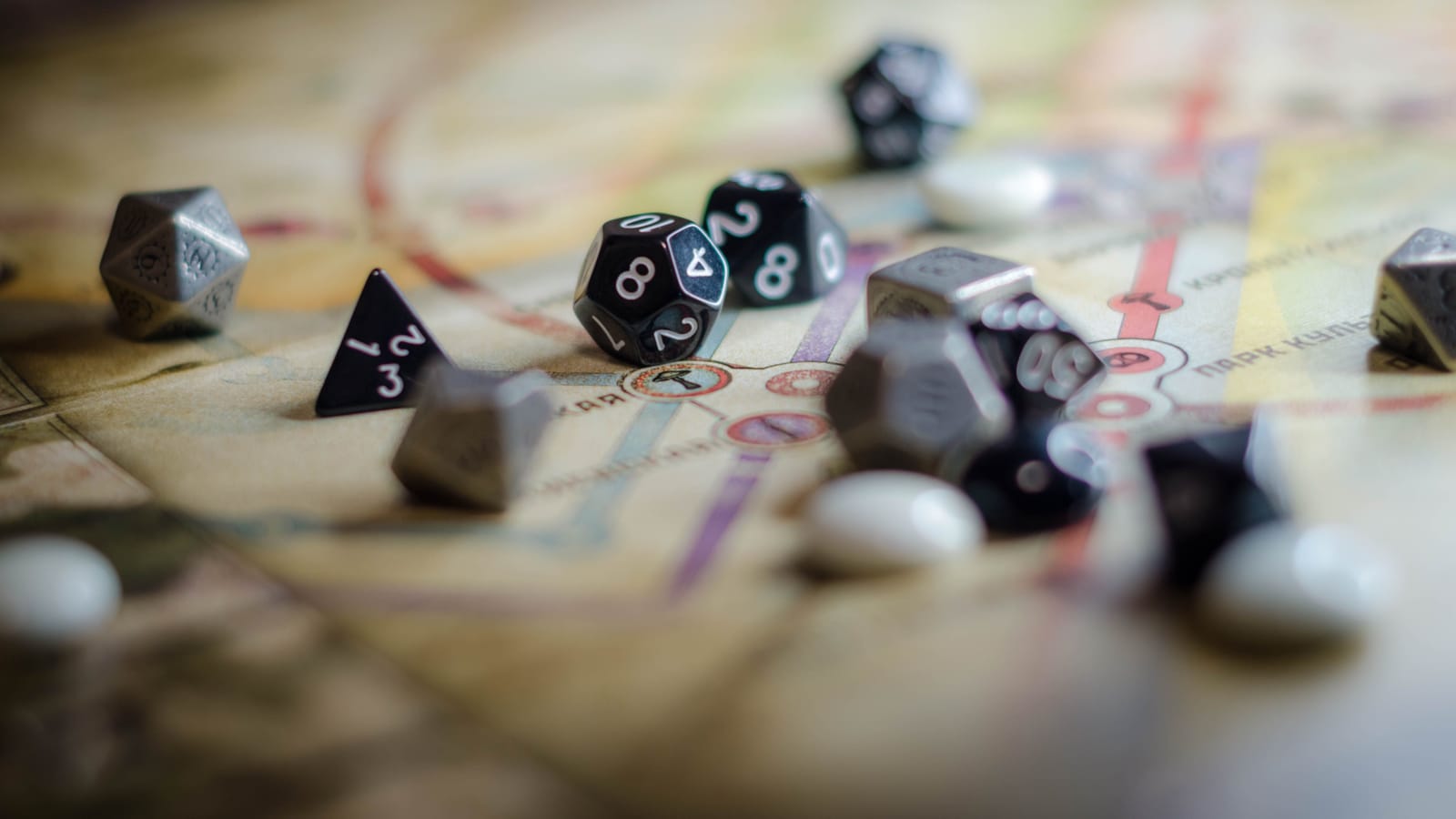
Run the first session for forty minutes, in one room, around one problem. No character sheets. No backstory. You describe a place, they say what they do, and a six-sided die settles the arguments. That's the whole game on night one, and if you try to do more than that you'll lose them before the second scene.
I've run games for kids from five to thirteen. The difference between the sessions that worked and the ones that died wasn't the rules or the dice or the miniatures. It was how long I spent before anything happened.
Skip character creation entirely, the first time
Character creation is where kids' games go to die. An eight-year-old will spend forty-five minutes deciding whether her elf has a bow or a sling, and by the time she's finished, her brother has left the table and you've used up your whole window.
So hand them a character. Say it out loud: "You're Bek, you're small and fast, and you're very good at climbing." One sentence each. Give them a single thing they're brilliant at and one thing they're hopeless at, because the hopeless thing is where the comedy comes from and the comedy is what makes them want to come back.
Write it on a sticky note. That's the character sheet.
If they love it, session two can have proper sheets, names they chose, and a little drawing in the corner. Earn the paperwork.
Pick a light system, or none at all
Fifth edition Dungeons and Dragons is a good game. It's not a good first game for a seven-year-old. The modifiers, the spell slots, the two-page sheet — you'll spend the evening doing arithmetic homework with monsters in it.
Lighter options exist and several are free. Cairn and Mausritter both have rules you can read online in one sitting, and Mausritter's mice-with-swords setting does a lot of the imaginative work for you. Amazing Tales is built specifically for small children and you can teach it in about two minutes. Older kids, ten and up, can handle something chunkier.
Honestly? You can run the first three sessions with no system at all. One die. They say what they want to do. If it's clearly possible, it works. If it's clearly impossible, it doesn't. If it's uncertain, roll a d6 and call 4 or higher a success. That single rule will carry you further than any rulebook.
The trade-off is real, and worth naming. Loose rules mean you're the arbiter of everything, which means every ruling is a negotiation with a child who is very motivated to negotiate. A rulebook is a referee you can point at. Some kids desperately want that fairness, and for them, a slightly heavier game is the kinder choice.
Prep one page, and expect to use a third of it
Write down a place, a problem, and three things that might happen. That's it. Twenty minutes of prep, tops.
Don't map a dungeon. Don't write a plot. Kids will walk past your carefully drawn crypt to go and talk to the man selling pies, and then spend an hour on the pie man, and the pie man will become the most beloved character in your campaign. This happens every time. Let it.
What you actually need ready:
- Three names you can use for anyone they meet
- One monster with something odd about it
- Something they want that they can't just take
The "something they want" is the engine. A kid who wants a boat, or a dog, or to get their sister's stolen coin back will drive the session for you. You barely have to steer.
Fail forward, always
Never let a bad roll stop the story. This is the single most important habit, and new game masters get it wrong constantly.
Your son rolls badly picking the lock. Don't say "nothing happens, try again." Say "the lock clicks open, but the noise carries down the hall and something heavy starts moving towards you." The door opens. The story moves. The failure costs them something other than a turn.
Kids don't have the patience for a stalled scene, and a five-minute stall feels like an hour to a nine-year-old. Every roll should change the situation, whichever way it lands.
The sibling problem
If you've got two or more playing, the older one will start answering for the younger one. Not out of malice. They're faster, they've understood the rules, and they want the group to do the smart thing.
Fix it by going round the table in order and asking each child by their character's name. "Bek. What do you do?" Then wait. Let the silence sit. Don't fill it, and don't let the older one fill it either.
The other fix is to give the younger one a job nobody else can do. They hold the treasure map. They're the only one who can talk to animals. Make them structurally necessary and the table will start turning to them on its own.
Keep it clean, keep it kind, and stay in control of the dial
You're the narrator, so you set the tone completely. Monsters can be frightening without being gruesome. A goblin can be beaten and run away rather than be killed. If your kids are young or easily spooked, "the skeleton's bones clatter into a heap and it goes still" does the job and nobody has nightmares.
Be ready for the thing nobody warns you about. My youngest, faced with a goblin guarding a bridge, refused to fight it, asked its name, and then wanted to bring it home. I'd prepped a fight. What we got was forty minutes of negotiating with a goblin called Mr Pebble about whether he'd be allowed to sleep in the shed.
That session was better than the one I'd written. Say yes to it.
When to stop
Stop while they still want more. Every time. End on a cliffhanger, put the dice away, and let them go to bed wondering what's behind the door.
A game that runs ten minutes long turns into a game about whose turn it's and who's cheating. Forty minutes for the young ones, an hour and a half by eleven or twelve, and watch for the moment someone starts fiddling with the dice tower instead of listening. That's your cue, not the clock.
Also, know that most family campaigns die around session four or five, and that's not a failure. Sports start, school gets heavy, the interest moves on. Don't guilt anybody into it, including yourself. Put the sticky-note characters in a drawer. Kids come back to things.
Mine did, about seven months later, and the first question was whether Mr Pebble was still in the shed.
Dean Shaw
Gear & Garage
Reads the warranty, the parts list and the long-term owner reviews before anything else. Trucks, tools, watches, and the cheap version that costs more.

Watch
Watch how it's done
Picked for this article.
From channels we rate. Plays on YouTube.
Dicebreaker
Quest tabletop RPG review - the definitive roleplaying game for beginners?
Read next