Plant for the July Garden, Not the May One
Every crowded bed starts the same way: it looked sparse in May. Here's how far apart your vegetables need to be, and what your zone changes.
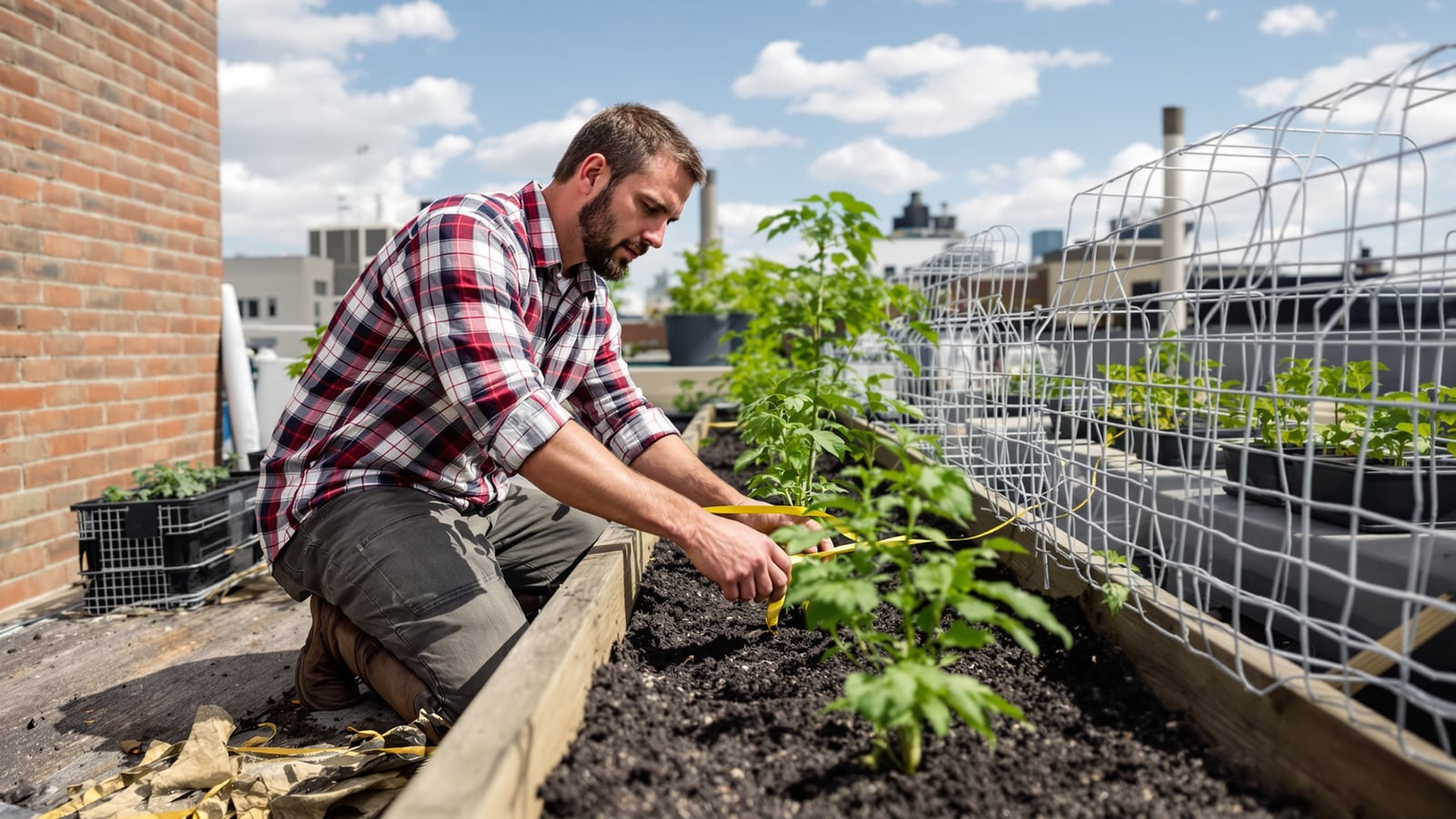
Quick answer: Space for the full-grown plant, not the seedling. Tomatoes need 24 to 36 inches, zucchini 3 feet, peppers 18 inches. Humid zones should go to the wide end, because crowded leaves stay wet and wet leaves get sick.
May lies to you
In May, a tomato transplant is a foot tall and looks lonely. The row looks like a lot of dirt with a few green sticks in it. So you tuck in another plant. Then another one, because there's room.
By mid-July that lonely plant is four feet wide and carrying forty pounds of leaf and fruit. Your neighbor plant is hugging it. You're standing in the aisle with a pair of pruners, trying to find the ripe tomato you know is in there somewhere.
Every spacing mistake comes from the same place. You're planting for the garden you see in May, and you'll live in the one you grow in July.
The numbers that hold up
These are the spacings I'd use as a floor. Closer than this and you're borrowing trouble.
- Tomatoes, indeterminate: 24 to 36 inches apart, staked or caged. Determinate types can go 18 to 24.
- Peppers: 18 inches.
- Zucchini and summer squash: 3 feet. Yes, one plant per three feet. Yes, it will fill it.
- Winter squash and pumpkins: 4 to 6 feet unless you're training them up a trellis.
- Cucumbers: 12 inches on a trellis, 3 feet on the ground.
- Broccoli and cabbage: 18 inches.
- Kale and chard: 12 to 18 inches.
- Bush beans: 3 to 4 inches apart in rows about 18 inches apart.
- Carrots: 2 to 3 inches after thinning.
- Head lettuce: 8 inches. Leaf lettuce for cutting can run closer.
- Corn: 9 to 12 inches, planted in a block of at least four short rows so the wind can pollinate it.
The seed packet gives you a number, and it's usually a fair one. Plant to it. People ignore the packet because it feels wasteful, and then they pay for it in August.
What actually suffers
Crowding doesn't kill plants in one dramatic move. It takes a slow percentage off everything, and you blame the weather.
Airflow goes first. Leaves that touch stay damp after rain or a heavy dew. Powdery mildew on squash and early blight on tomatoes both love that. You'll see white dust on the zucchini leaves or brown rings on the lower tomato leaves, and once it's moving it jumps from leaf to leaf like a rumor. A plant with room dries off by mid-morning. A crowded one stays wet until noon.
Light goes second. Tomatoes and peppers ripen fruit with sugar made in the leaves. Shade the leaves and you get fewer fruit, slower color and flatter flavor. If your tomatoes taste like water, this piece on tomato flavor covers the rest of the causes, but a jungle is on the list.
Roots come third, and nobody sees it. Two plants in the space of one are fighting over the same water and the same feed. The soil dries faster, you water unevenly, and the plants swing between thirsty and soaked. Cracked tomatoes and bitter cucumbers tend to follow that kind of swing.
Root crops just give up. Carrots left at one inch apart make thin, twisted, forked roots, because they can't swell into each other. Beets and radishes do the same. You'll get a bed of green tops and a handful of pencil lead.
Picking gets harder. Squash hides under big leaves and turns into a baseball bat before you find it. Beans disappear. A tight garden is a garden you stop walking through, and the garden you stop walking through is the one that gets bugs.
Your zone changes the math
A hardiness number tells you winter low temperatures. It doesn't tell you humidity, but where you live usually does. Your zone is a starting point, and the climate around it decides how tight you can get away with.
Humid Southeast, Gulf Coast, Midwest summers. Go wide. Warm nights and wet leaves are the recipe for fungus. Give tomatoes the full 36 inches, prune the lowest foot of leaves off so rain can't splash soil up, and water at the base in the morning.
Dry West and Mountain states. You can tighten up a little, because the air does half the disease control for you. But your limit is water. Plants at close spacing drink the bed dry in a week of heat, so tighter means more irrigation, not less.
Short-season North. Light is the issue, not disease. You have a handful of warm months to ripen fruit, and shaded leaves slow it down. Space tomatoes generously and don't plant tall things on the south side where they'll shade everything behind them.
Season matters inside the year too. Lettuce, spinach and radishes in cool spring weather can go close, since they finish before the leaf canopy gets thick. The same bed in August would be a different story.
Where close spacing works
Not every tight bed is a mistake. Intensive spacing is a real method, and for some crops it's a good one.
Lettuce, radishes, spinach, bush beans and carrots do fine at the close end of their range if the soil is rich and you water on schedule. A dense canopy shades out weeds. Pole beans on a trellis let you plant a long row in two feet of width.
Tomatoes can run closer, around 18 inches, if you stake them to a single stem and prune hard. That's work. You'll be in there every week pinching suckers. If you're not going to do it, plant them wide and let them be.
The rule I use is simple. If you'll tend it weekly, you can crowd it a bit. If you plant it and leave it, give it room.
Doing the math on a 4x8 bed
A 4x8 bed is 32 square feet. If you built one from the raised bed plan, here's a layout that won't punish you by July.
- Two tomatoes at the north end on a trellis or cages, 30 inches apart.
- Two peppers in front of them.
- One zucchini in a corner. Only one.
- A row of bush beans.
- Lettuce or radishes in the gaps, to be pulled in six weeks before the big plants need the space.
That's a modest list for 32 square feet, and that's the point. People look at it and ask where the rest goes. The rest goes in a second bed, or into the cooler months, or it doesn't go in at all.
The cost of crowding
Seedlings and seed aren't free, and cramming in extra plants feels like getting your money's worth. It isn't. Three sprawling tomato plants with room will out-produce six fighting for light, and you'll spend less on fungicide, cages and weekend afternoons cutting back blighted leaves. The cheapest plant is the one you didn't put in the wrong place.
If you start your own plants, you're tempted to plant everything that sprouted. Don't. Starting seeds indoors makes it easy to grow forty seedlings and have room for twelve. Give the extras to a neighbor.
A test you can do tonight
Walk the garden at dusk in July. Try to slide your open hand between two plants without touching a leaf on either side. If you can't, you planted for May.
Next spring, put the tape measure next to the transplant and believe it. The empty dirt looks like a mistake for about five weeks. Then you'll be wading through your own harvest, wishing you'd planted fewer.
Wes Dunbar
Country & Skills
Grew up on an acreage and never quite left. Covers trucks, trades, land, and how to do the thing yourself.

Watch
Worth an hour of your evening
More from Garden & Yard.
From channels we rate. Plays on YouTube.
Read next