

Pull the weeds first or the mulch is just expensive decoration
Spreading mulch over weeds is the most common way to waste a Saturday. Do the work in the right order and the bed stays clean until fall.
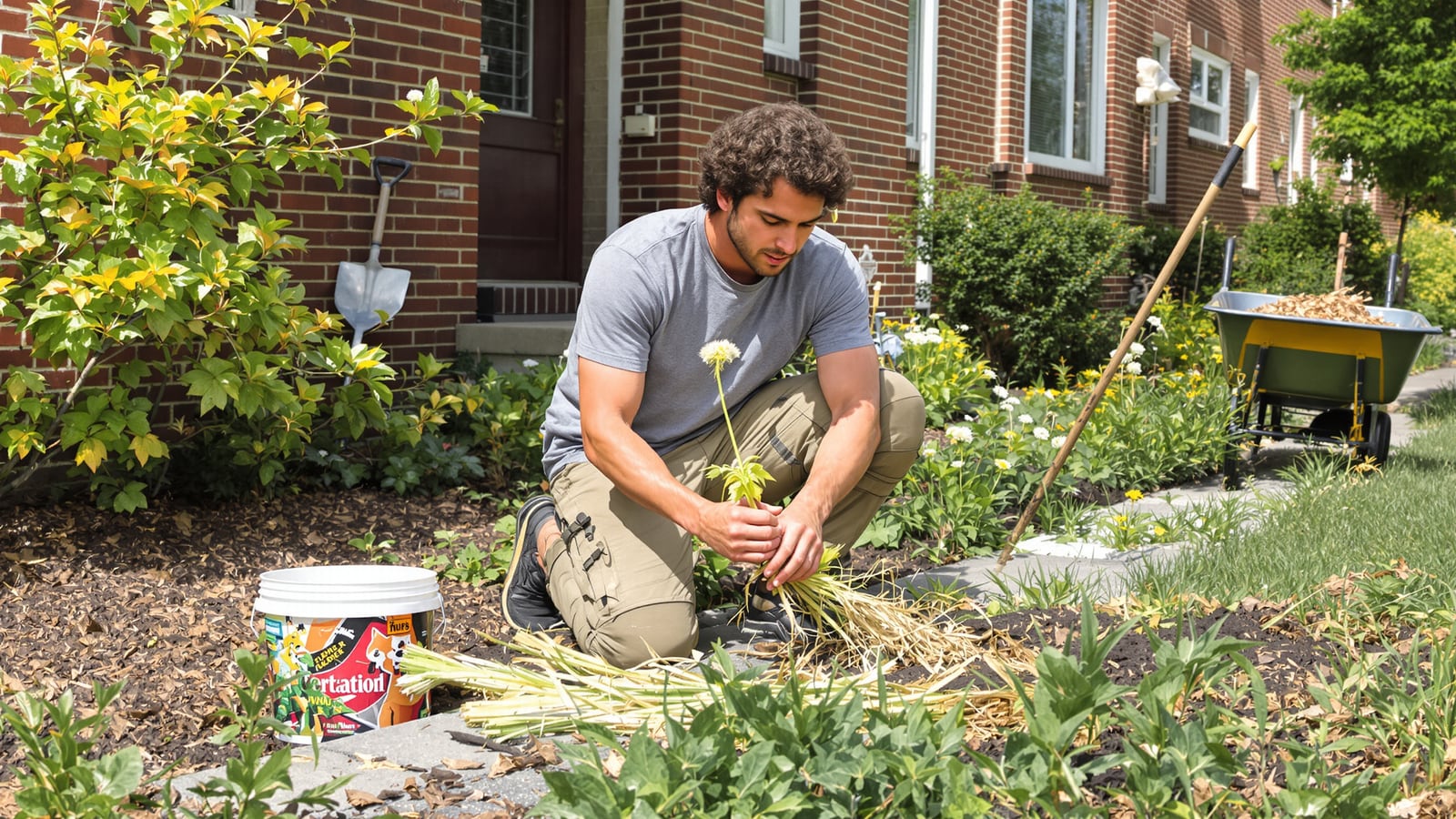
Quick answer: Pull the weeds roots and all, edge the bed, then lay mulch two to three inches deep and keep it off stems and trunks. Skip the landscape fabric. Order matters more than the mulch you buy.
A cubic yard of mulch covers about 108 square feet at three inches deep. Spread it over a bed full of live weeds and you've paid for a delivery, thrown out your back, and given the weeds a nice warm blanket.
Most people get the order backwards. They mulch because the bed looks rough, and the mulch is supposed to fix it. Mulch doesn't fix weeds. It keeps new ones from starting. Those are different jobs, and only one of them is mulch's.
Why mulch can't smother what's already up
Mulch works by blocking light. Weed seeds sitting in the soil need light and warmth to sprout, and three inches of shredded bark takes the light away. That's a real, reliable effect on seeds.
It does nothing to a plant that's already established. A dandelion with a taproot will push straight up through the pile. So will Canada thistle, bindweed, nutsedge, and Bermuda grass if you live where it grows. Those spread from roots and runners, and a layer of bark just gives them a cozy place to run.
Annual weeds are the easy half. Crabgrass, chickweed, and foxtail die when you pull them, and mulch keeps the next round from sprouting. Perennial weeds are the fight. They have to come out with the root, or they come back from whatever you left.
Step one: weed when the ground is soft
Wait for a day after a good rain, or soak the bed the evening before. Roots slide out of damp soil. In dry clay you'll snap them off at the surface and feel productive for about three weeks.
Use the right tool for the weed.
- Taproots (dandelion, dock): a hand weeder or a long-bladed knife, straight down beside the root, then lever.
- Runners (bindweed, nutsedge, Bermuda grass): a garden fork. Loosen the soil and lift the whole mat. Shake it off and check for white pieces left behind. Every piece is a new plant.
- Annuals: a hoe, on a dry morning, so they wilt in the sun instead of re-rooting.
Get them into a bucket and out of the bed. Don't toss runner weeds or anything with seed heads into your compost pile unless it runs hot. The compost piece covers why. Bag them or burn them where that's legal.
Step two: edge it, then fix the bare spots
Cut a clean edge with a flat spade, a V-shaped trench about four inches deep between the bed and the lawn. It's a half-hour of work for forty feet of border. It does two things. It keeps grass from creeping into the bed, and it gives the mulch a wall to sit against so it stays put in a heavy rain.
A neat edge also makes the whole yard look like somebody cares. The front yard piece makes that case better than a lecture from me.
If the bed is a total mess, a mat of perennial weeds across the whole thing, don't fight it by hand. Mow or cut it down, lay flat cardboard over it with the tape and staples removed, overlap the edges by six inches, wet it down, and put the mulch on top. The cardboard starves the plants of light for a season and rots into the soil. It's cheap and slow, and it works better than most things at a garden center.
Why you should skip landscape fabric
It sounds like the smart move. It isn't. Fabric tears, shifts, and bunches around plants. Mulch breaks down on top of it and turns into a thin layer of soil, and weed seeds sprout right there. Their roots grow down through the fabric. Pulling them tears it up, and now you have a plastic mess under your bed that you'll be digging out in five years.
The exception is a gravel path, where there's no organic matter to rot and you're not planting anything. For a planted bed, skip it.
Step three: lay the mulch
Two to three inches. Not one, because weeds come through it. Not six, because it holds too much water against roots and stems and invites rot and voles.
Keep it away from the base of trees, shrubs, and house siding, a few inches of bare gap. The pile stacked up against a trunk like a volcano is the most common mulch mistake in American yards. It holds moisture against the bark, and the bark rots.
What to buy depends on where you are.
- Shredded hardwood or bark: the all-purpose choice. It knits together and stays in place on slopes.
- Pine straw: common and cheap across the South. It lets water through easily and doesn't float away.
- Straw (not hay, which is full of seed): for vegetable gardens. It breaks down by season's end and you can till it in.
- Wood chips from a tree service: often free if you call and ask. Rougher, and best around trees and paths.
Dyed mulch is cosmetic. Plain is fine.
Do the math before you drive to the yard
Bagged mulch is a convenience tax. A standard bag is two cubic feet, so it takes about 13.5 bags to equal one yard. Call a landscape supplier and get the per-yard price plus delivery. If they quote you forty dollars a yard and a flat delivery fee, a 200-square-foot bed at three inches needs a bit under two yards. Compare that to thirty bags and see which one you'd rather lift.
Measure the bed in square feet, multiply by the depth in inches, and divide by 324 to get cubic yards. That's the whole formula.
Zone and season decide when
Check your hardiness zone and your last frost date before you start.
In cold zones, wait until the soil has thawed and warmed a bit. Mulch too early holds the cold in and slows spring growth. In the South and the Southwest, mulch heavy in late spring before summer heat, because its job there's keeping roots cool and holding water. Fall mulching helps in either place if you want winter protection, but pull it back from perennial crowns in spring.
In a vegetable bed, wait until the soil warms, especially for tomatoes and peppers, then mulch around the plants. It keeps water off the leaves and soil splash off the fruit. The tomato piece covers watering, which is the other half of the job.
The July check
Walk the beds once a month. A weed that gets through the mulch will be small and shallow-rooted, so it pulls out with two fingers. A weed you ignore until August goes to seed and gives you next year's problem.
Each spring, rake the old mulch to break up the crust and top it off with an inch or so. Don't pile a fresh three inches on top of three-year-old mulch.
Do the weeding right once and the mulch gets to be what it's supposed to be: the thing that keeps the work you already did from coming undone.
Wes Dunbar
Country & Skills
Grew up on an acreage and never quite left. Covers trucks, trades, land, and how to do the thing yourself.

Watch
Watch how it's done
Picked for this article.
From channels we rate. Plays on YouTube.
Lowe's Home Improvement
How to Mulch a Backyard | How To Anything
Reluctant DIYers
Mulching Flower Beds - How and Why
Read next