

Pick the tomato for the job before you buy a single plant
A slicer makes watery sauce and a paste tomato makes a dull sandwich. Match the variety to the job, then to your frost dates.
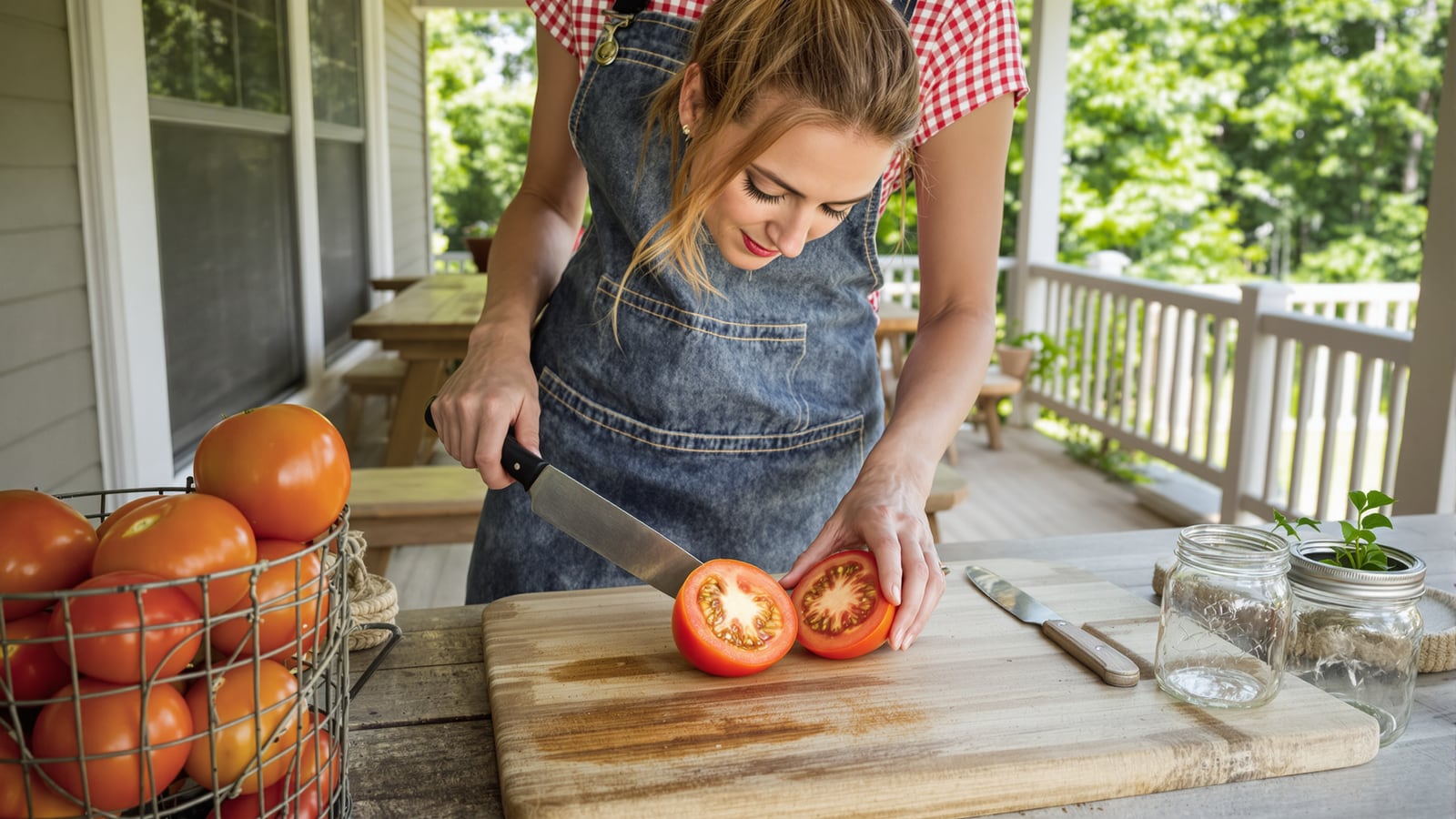
Quick answer: Grow paste tomatoes like Roma, San Marzano or Amish Paste for sauce and most salsa. Grow a classic slicer like Better Boy or Celebrity for sandwiches. Then check the days-to-maturity number against your first fall frost, because that number rules out more varieties than taste does.
The mistake that wastes a summer
Somebody buys a flat of whatever looked healthy at the garden center, and in August there are forty pounds of tomatoes on the counter. He cooks them down for sauce. Four hours later he's got a thin, pink soup and a scorched pot.
That's the wrong tomato for the job. Nothing was wrong with the plant.
A slicer is bred to be juicy, with big seed cavities and a lot of water. A paste tomato is bred to be dense, with thick walls, little gel and few seeds. Cook a slicer and you spend hours boiling off water that a paste tomato never had. Slice a paste tomato onto a burger and you get a mealy, mild disk that slides right off.
Decide the job first. The variety follows.
Sauce: paste types, and why determinate helps
For sauce, buy Roma, San Marzano or Amish Paste. All three are meaty and cook down fast.
- Roma is the dependable one. It's a determinate plant, so it sets most of its fruit in one stretch of two to three weeks. That's a gift if you can sauce in a single Saturday. It's also forgiving of mediocre soil and the occasional missed watering.
- San Marzano has the reputation, and the flavor is a bit sweeter and less acidic. The trade-off is that it's a long-vined indeterminate plant that takes longer to ripen, so it needs a long season and a tall stake.
- Amish Paste is the big one, with fat, oxheart-shaped fruit that's easier to peel than a small Roma. It's an open-pollinated heirloom, so you can save the seed.
Blossom end rot hits paste tomatoes hardest. That's the black, sunken patch on the bottom. It usually comes from uneven watering, not a calcium shortage in the soil. Mulch the bed and water deeply on a schedule, and you'll lose far fewer fruit.
Salsa: meaty, but not necessarily paste
Salsa is where people overthink it. A Roma makes a fine salsa. It's thick, it doesn't weep onto the chip, and it holds up when you cook it.
If you like a looser, juicier salsa, a slicer works. Core it and scoop out the seed pockets first, or roast the halves under a broiler for ten minutes to drive off water and add some char. Roasting fixes a lot of sins.
If you plan to can salsa, don't wing it. The acid balance is what keeps it safe. Use a tested recipe from your state's cooperative extension office or the National Center for Home Food Preservation. Don't swap in more peppers or onions than the recipe calls for, and don't cut the vinegar or lime juice. Tomatoes sit near the safe-acidity line, so the extra vegetables are what tip a jar the wrong way. Your county extension agent will answer questions like this for free.
Slicing: the one place to splurge on flavor
For sandwiches and tomato-and-salt-on-the-back-porch eating, you want a big, juicy fruit with some give.
Better Boy and Celebrity are the workhorses. They're disease-resistant, productive, and tolerant of heat and the odd bad week. If you've had trouble with wilt, pick a variety whose tag lists V and F, which flag resistance to verticillium and fusarium.
Brandywine and Cherokee Purple are the heirlooms people mean when they say real tomato. The flavor is better than a hybrid's, and the yield is worse. They crack, they catface, and they take around 80 days or more, so they're a gamble in a short season. Plant one or two beside a reliable hybrid so a bad year doesn't leave you with nothing.
Early Girl is the answer to a short summer. It ripens in roughly 50 to 60 days from transplant, and the flavor is good for how fast it comes.
If a tomato tastes like wet cardboard however you grow it, this piece on tomatoes that taste like water walks through the usual causes.
Your zone and your calendar decide what's possible
This is where a pretty seed catalog lets people down. Every variety lists days to maturity, and for transplants that usually counts from the day you set the plant out, not from seed. Do the math backwards.
- Find your average first fall frost date. Your county extension office posts it.
- Subtract the days to maturity.
- Add another two to three weeks, since the plant needs time to establish and the fruit needs time to ripen.
- Is that date after the last spring frost, when the soil has warmed? If so, you're fine. If not, choose something faster.
In a short-season northern zone, that's Early Girl, Roma and similar 60 to 75-day types. Skip Brandywine unless you'll start it indoors early. In the South and the Southwest, the problem flips. Tomato blossoms tend to drop when daytime highs stay above about 90°F or nights stay above about 75°F, so a plant can go quiet in midsummer. Heat-tolerant hybrids earn their keep there. Plant early so the first set of fruit ripens before the worst heat, and plan on a second planting for fall.
Not sure what your zone is? Your hardiness zone decides what lives and what dies covers it. The zone number alone won't tell you your frost dates, so look those up too.
A sample plan for one 4x8 bed
Tomatoes want 18 to 24 inches between plants and a cage or stake that can carry the weight. A 4x8 bed holds about six if you stake them and prune the suckers. If you haven't built one yet, here's a 4x8 raised bed for under two hundred dollars.
- Three Roma or Amish Paste for sauce and salsa
- Two Better Boy or Celebrity for the table
- One Early Girl as insurance
Starting from seed costs a few dollars a packet and gets you more varieties than any garden center stocks. Start them six to eight weeks before your last frost, and use this seed-starting guide so you don't end up with leggy seedlings. Buying transplants costs more per plant, and it's the quicker way to get going if you're late.
Plant deep. Bury the stem up to the first set of leaves and it will root along the buried section. Water at the base, not on the foliage.
What to do in March
Write the plan down before the seed racks fill up. Count the jars you want on the shelf in January and pick the paste plants first. The slicers can fill whatever space is left, because you'll eat those fresh. Then do the frost-date math, and let the calendar make the final cut.
Wes Dunbar
Country & Skills
Grew up on an acreage and never quite left. Covers trucks, trades, land, and how to do the thing yourself.

Watch
Worth an hour of your evening
More from Garden & Yard.
From channels we rate. Plays on YouTube.
Read next