

Test the Soil Before You Buy a Single Blueberry Bush
Blueberries want acidic soil most yards don't have. A lab test before you plant tells you whether you're growing berries or just paying for leaves.
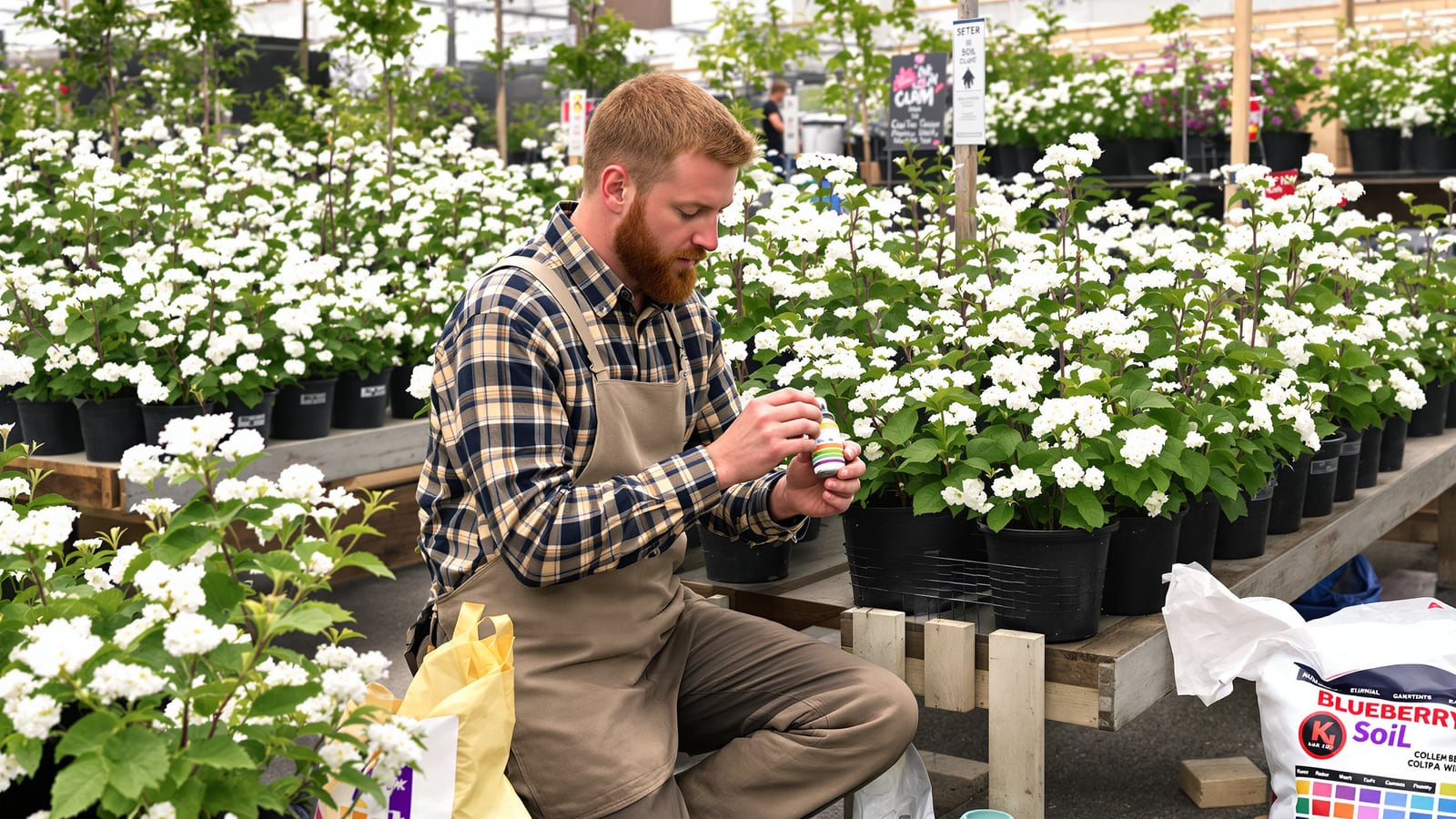
Quick answer: Blueberries want soil with a pH around 4.5 to 5.5. Most yard soil sits closer to neutral. Test it first, fix it with elemental sulfur months before planting, or grow the bushes in a bed filled with acidic mix. Skip the test and you'll likely buy the bushes twice.
The bush that sits there and sulks
Picture three bushes in the ground by April, each with a nursery tag and a little optimism. By July the leaves are yellow with green veins. Growth is stingy. The first summer's berries number about eleven. The second summer is the same, only sadder.
Nothing is wrong with the plants. The soil is wrong for them.
Blueberries evolved in acidic ground. In soil that's too alkaline, they can't pull iron out of the dirt even when plenty is down there. That's the yellow leaf with green veins, and it's called iron chlorosis. No fertilizer fixes it, because the fertilizer was never the problem.
Why pH is bigger than the number looks
The pH scale is logarithmic. Soil at 6.5 isn't a little less acidic than soil at 5.5. It's ten times less acidic. Soil at 7.5 is a hundred times less acidic than 5.5.
So a reading that sounds close to fine, like 6.3, is actually far from where blueberries want to live. Most vegetables are happy around 6.0 to 7.0, which is why a garden that grows tomatoes beautifully can still kill a blueberry. If you've got tomato soil, you probably have the wrong soil for berries. (If your tomatoes taste like water, that's a different problem, and we covered the fix.)
Test first, and test properly
You can guess at pH, and guessing is how people end up dumping coffee grounds on a bed and calling it done. Coffee grounds don't move the number much. Test instead.
Option one: a lab test. Call your county extension office or search your state university's soil lab. The fee is usually modest, in the range of a lunch, so ask when you call. This is the one worth doing.
How to pull the sample:
- Use a clean trowel and a clean plastic bucket. Metal can contaminate the sample.
- Dig six or eight spots across the planting area, each about 4 to 6 inches deep.
- Mix the soil together, let it dry on newspaper, and send about a cup.
- Tell the lab you're growing blueberries. Ask for the pH plus a recommendation for how much sulfur to add.
Option two: a home kit or meter. Cheap, quick, and good for a rough read. Cheap probe meters can be wildly off, so treat the result as a hint. If it says 5.0 or 7.5, you've learned something. If it says 6.0, go to the lab.
Test in the fall if you can. That's the whole reason for the next section.
Sulfur works slowly, and that's the part nobody mentions
If the lab says your pH is too high, the standard fix is elemental sulfur. Soil bacteria convert it to sulfuric acid, and that lowers the pH. The key word is bacteria. They work faster in warm, moist soil and barely work at all in cold dirt.
Plan on several months, not several days. Apply in fall, work it into the top several inches, and plant in spring. If you test in April and plant in May, you've lost the window. Test, wait, retest, then plant.
How much depends on your starting pH and your soil type. Clay needs more than sand to move the same distance. The lab report will give you a rate, and you should follow it over whatever the bag says. Overshoot and you've gone too acidic, which is its own headache. And don't try to rush it by doubling the dose.
Aluminum sulfate acts fast and gets recommended a lot. It's also a way to put more aluminum in the soil than you want. Stick with sulfur.
If your soil is far off, change the bed instead
Some yards are hopeless. Soil sitting at pH 7.8 over limestone, or irrigation water loaded with minerals that keep pushing the number back up, will fight you every year. A bush in a lawn bed might need sulfur again and again.
The honest alternative is a raised bed or a large container filled with an acidic mix: peat moss, pine bark fines, and a bit of sand or compost. You control the pH from day one. The same 4x8 raised bed we built for under two hundred dollars can be filled with blueberry mix instead of vegetable soil. Go easy on compost in that mix. Finished compost often runs near neutral and drifts you the wrong way.
The trade-off is cost and watering. A raised bed dries out faster, and blueberries have shallow roots that hate drought.
Zone and variety come first
Pick the bush for your area before you worry about its soil. Northern highbush does best in zones 4 through 7. Southern highbush is bred for mild winters, roughly zones 7 through 10. Rabbiteye handles heat, roughly zones 7 through 9. Lowbush, the small wild type, is the hardy one for cold zones. Not sure which zone you're in? Your hardiness zone decides what lives and what dies, and blueberries are no exception.
Plant at least two varieties that bloom at the same time. Highbush bushes can set fruit alone, but the berries come out larger and more plentiful with a partner nearby. Rabbiteyes need a second variety to produce well at all.
Keeping the pH where you put it
Planting day isn't the finish line.
- Mulch with pine bark or pine needles, 3 to 4 inches deep. It helps hold moisture and nudges acidity the right way.
- Fertilize with an acidifying product. Ammonium sulfate is a common one. Skip nitrate-based fertilizers like calcium nitrate, which push pH up.
- Water carefully. Hard, alkaline tap water raises the pH over time. If your water is hard, collect rainwater when you can.
- Retest every year or two. It costs little and catches drift before the leaves do.
Pinch off the blossoms the first year. It hurts. But a young bush that spends its energy on roots instead of fruit pays you back for a decade.
What it costs, and what it's worth
The test costs about lunch. The sulfur is cheap. The bushes cost real money, and a mature planting can feed a family from early summer on, year after year.
Skipping the test is what makes blueberries expensive. You pay for the bushes, wait two seasons to be sure they've failed, and start over.
Get the number first. Then spend your money.
Wes Dunbar
Country & Skills
Grew up on an acreage and never quite left. Covers trucks, trades, land, and how to do the thing yourself.

Watch
Worth an hour of your evening
More from Garden & Yard.
From channels we rate. Plays on YouTube.
Read next