

Twisted carrots are a soil problem, not a seed problem
Forked carrots and stunted beets are decided in the first twelve inches of dirt, before you open a seed packet. Here's how to fix the bed and pick roots that fit it.
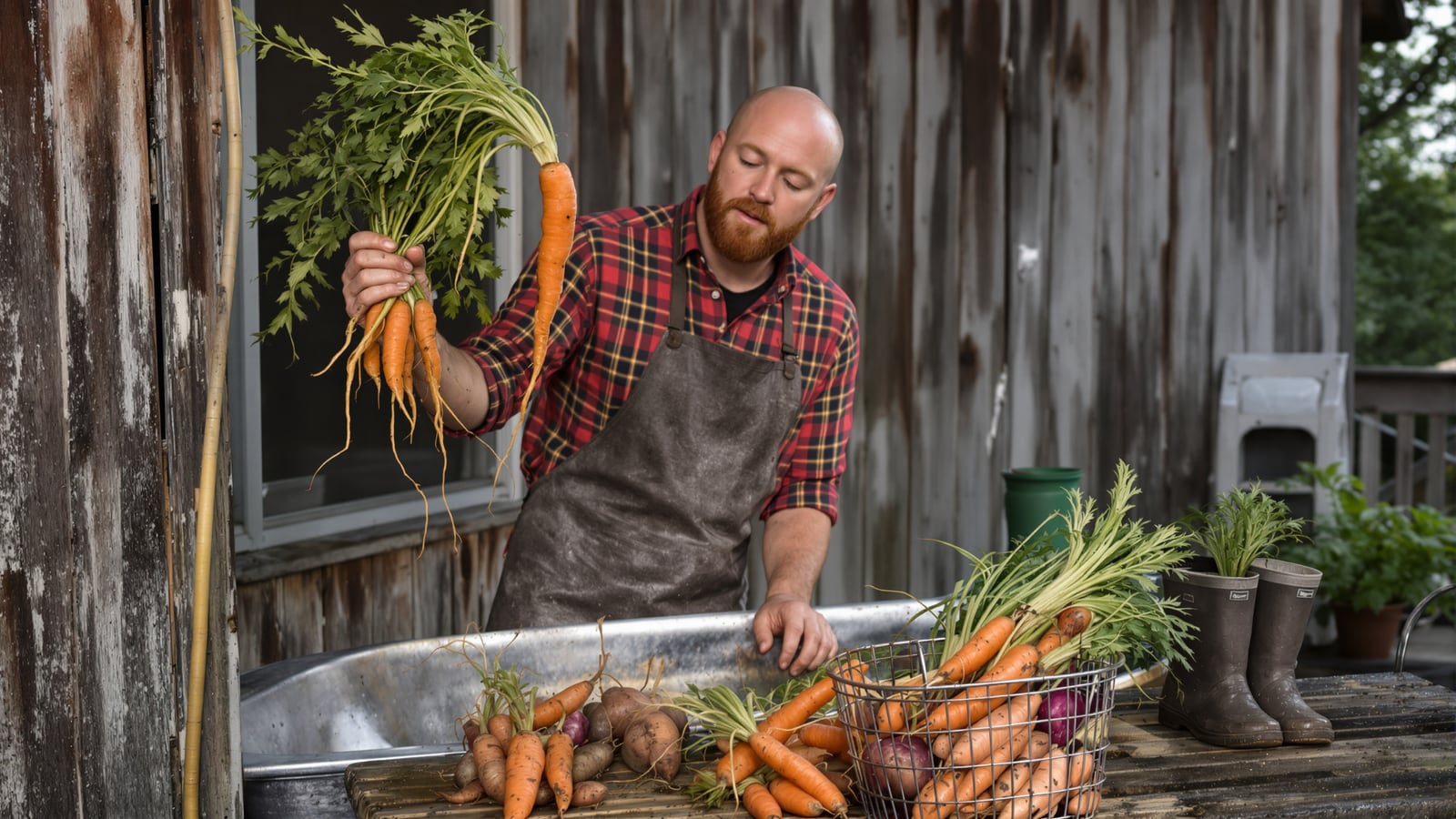
Quick answer: Loosen the bed a full 12 inches deep, pull every rock and clod bigger than a golf ball, skip fresh manure, and sow seed directly where it will grow. If your soil is heavy clay, grow short varieties or build a raised bed.
You've seen the carrot. Three legs, a kink in the middle, one fat shoulder, and a hairy beard along the bottom. It looks like a prank. It's actually the plant doing its job.
A carrot sends one taproot straight down. When the tip hits a rock, a clod of clay, or a pocket of undigested compost, it splits or bends and keeps going. Nothing's wrong with the seed. The soil told the root where to go.
What's happening below the surface
Roots grow where they meet the least resistance. Packed clay, stones, and chunks of half-rotted material all push back, and the root takes the soft way around. Beets get stunted and lumpy. Parsnips fork. Radishes crack. Even a good variety turns out badly in bad ground.
The other common culprit is fresh manure. It's high in nitrogen, and too much nitrogen gives you lush tops and a root that forks and sprouts side hairs. Manure also leaves lumps, and the lumps cause the kinks. If you use it, put it on the bed the season before you plant roots, or use finished compost instead. Our piece on compost that doesn't stink or feed the rats covers how to tell finished from not finished. Finished compost looks like dark crumbly soil and smells like a forest floor. Anything you can still identify, such as an eggshell or a corn cob, isn't ready for a carrot bed.
Prepare the bed like it matters
Do this at least a week before sowing, longer if the ground is wet.
- Wait for workable soil. Squeeze a handful. If it stays in a sticky ball, it's too wet. If it crumbles when you poke it, go. Working wet clay makes bricks.
- Loosen 12 inches down. A garden fork pushed in and rocked back and forth does it. You don't need to flip the soil, just break it up. A broadfork is faster on a big bed but costs well over a hundred dollars. A fork you already own, or can borrow, works fine.
- Pull the rocks. Anything bigger than a golf ball comes out. Sift the top 6 inches with your hands if you're serious. It's tedious and it's the best hour you'll spend.
- Add finished compost or coarse sand to heavy soil. A two-inch layer of compost worked into the top several inches improves clay over time. Don't use fine sand alone on clay. You can end up with something close to concrete.
- Rake it level and fine. The top inch should look like crumbled brownies, with no clumps.
Then leave it alone. Don't walk on the bed after you've loosened it. Plant from the edge, or lay a board across it to kneel on.
If your soil is clay, you have three honest options
Build up. A raised bed filled with a good loose mix beats fighting heavy ground. A 4x8 frame costs under two hundred dollars, and we walked through the build in this raised bed guide. Make it at least 12 inches deep for carrots, and deeper if you want parsnips.
Choose short roots. Nantes and Danvers carrots run medium length. Chantenay carrots are short and stout and cope with tougher ground. Paris Market carrots are round and about the size of a golf ball, so they don't need depth at all. For beets, most standard varieties handle moderate soil, but they still sulk in clay.
Improve it over seasons. Add compost every year and grow a cover crop in the off-season. It takes time but it costs almost nothing. Done for three or four years, it makes a bed you won't recognize.
The one thing not to do is expect a hard-packed bed to behave because you bought premium seed. A few dollars a packet won't beat the dirt.
Sow it right, because there's no second chance
Don't transplant carrots, parsnips, or radishes. Disturb the taproot and it forks. Sow directly where they'll grow.
Carrots: Sow a quarter inch deep, in rows a foot apart. Seeds are slow, often one to three weeks to come up, and they hate drying out. Keep the surface damp. A board laid over the row for the first several days holds moisture, but check it daily and pull it the minute you see green. Thin to 2 or 3 inches apart. Do it with scissors, snipping at the soil line, so you don't disturb the neighbors. Pulling a carrot seedling also releases a scent that draws carrot flies, so thin in the evening and don't leave the clippings.
Beets: What looks like a beet seed is a cluster of several. You'll get a handful of sprouts from each one. Sow half an inch deep and thin to 3 or 4 inches. The thinnings are good eating as greens.
Parsnips: These want a long season and the deepest, loosest soil you've got. Fresh seed matters. Buy new every year, because old seed barely germinates.
Zone and season set the calendar
Roots are cool-season crops. They sweeten in cold weather and get woody and bitter when it's hot.
- Spring planting: Sow carrots two to three weeks before your last expected frost. Beets can go in once soil is in the 40s Fahrenheit. A cheap soil thermometer takes the guessing out.
- Fall planting: Often the better crop. Sow carrots and beets about ten weeks before your first expected fall frost. Roots that mature in cool weather taste sweeter, and a light frost helps.
- Hot climates (the Deep South, desert Southwest): Spring is short. Plant in late winter or in fall and winter instead. Midsummer sowing mostly gives you disappointment.
- Cold climates (northern tier, mountain states): You can sow spring crops a bit later and mulch fall carrots heavily, then keep digging them after the first frosts.
Not sure of your dates? Start with your hardiness zone and then confirm last and first frost dates with your county extension office. Our piece on how your hardiness zone decides what lives and what dies is the place to begin.
What still goes wrong
Green shoulders on carrots. The tops are poking out of the soil and getting sunburned. Hill a little soil or mulch over them.
Splitting after rain. A long dry spell followed by a heavy soaking makes roots crack. Water steadily, about an inch a week if rain doesn't do it for you.
Nothing comes up. The surface crusted or dried. Next time keep it damp, and cover the row lightly with fine compost or vermiculite instead of heavy soil.
Tops huge, roots tiny. Too much nitrogen, or too little thinning. Cut back on feeding and thin harder than feels comfortable.
Small root, tough as wood. Heat, or you waited too long to harvest. Pull beets at the size of a golf ball to a baseball at most.
Leave the bed better than you found it
When you're done, rinse the fork, dry it, and wipe the tines with an oily rag before you put it back. If it's borrowed, return it cleaner than it came, with something in the other hand, like a bag of the carrots you grew.
The first pull of a straight, sweet carrot out of loose soil is worth the trouble. It comes out with a little give and a clean snap, and not one kink in the whole thing.
Wes Dunbar
Country & Skills
Grew up on an acreage and never quite left. Covers trucks, trades, land, and how to do the thing yourself.

Watch
Worth an hour of your evening
More from Garden & Yard.
From channels we rate. Plays on YouTube.
Read next