Lifetime gear only pays off in four categories
Steel, leather, cast iron and wood will outlive you. Foam, batteries and membranes won't, no matter what the marketing says.
There's a coffee can in my garage with my grandfather's Vise-Grip in it. Stamped DeWitt, Nebraska. Still locks with that same knuckle-punishing snap it had when he was using it on a hay baler. Two feet away, in a drawer, sit three dead headlamps from three different Christmases, all of them "premium," none of them worth the postage to send back.
That's the whole lesson. Some things are worth buying once. Most things aren't, and pretending otherwise is how you end up with a $300 version of something that was going to fail in four years at any price.
The sorting rule is materials, not money.
If it's steel, leather, cast iron or hardwood, buy it once
Those four materials fail slowly and visibly. They dent, patina, stretch, dull and crack, and every one of those failures is either fixable or cosmetic. Nothing inside them is counting down.
An Estwing framing hammer is one piece of forged steel from Rockford, Illinois, where they've been making them since 1923. There's no joint to loosen and no head to fly off. You can leave it in the rain, feel bad about it, and wire-brush the rust off in ten minutes. A good pair of Channellocks will still be gripping when your kid inherits them. A bridle-leather belt with a solid brass buckle and stitched keeper will outlast a dozen of the bonded-leather belts that delaminate into gray crumbs by month eighteen.
Cast iron is the purest case. A Lodge 12-inch skillet, made in South Pittsburg, Tennessee, runs about thirty-five bucks at the grocery store. The $200 boutique skillet is smoother out of the box and genuinely nicer to cook on, and if you want it, buy it. But it won't last longer. Both of them are functionally immortal. This is the cheap one being right, and it's right by a mile.
If it has foam, a battery, a membrane or glue, it's a consumable
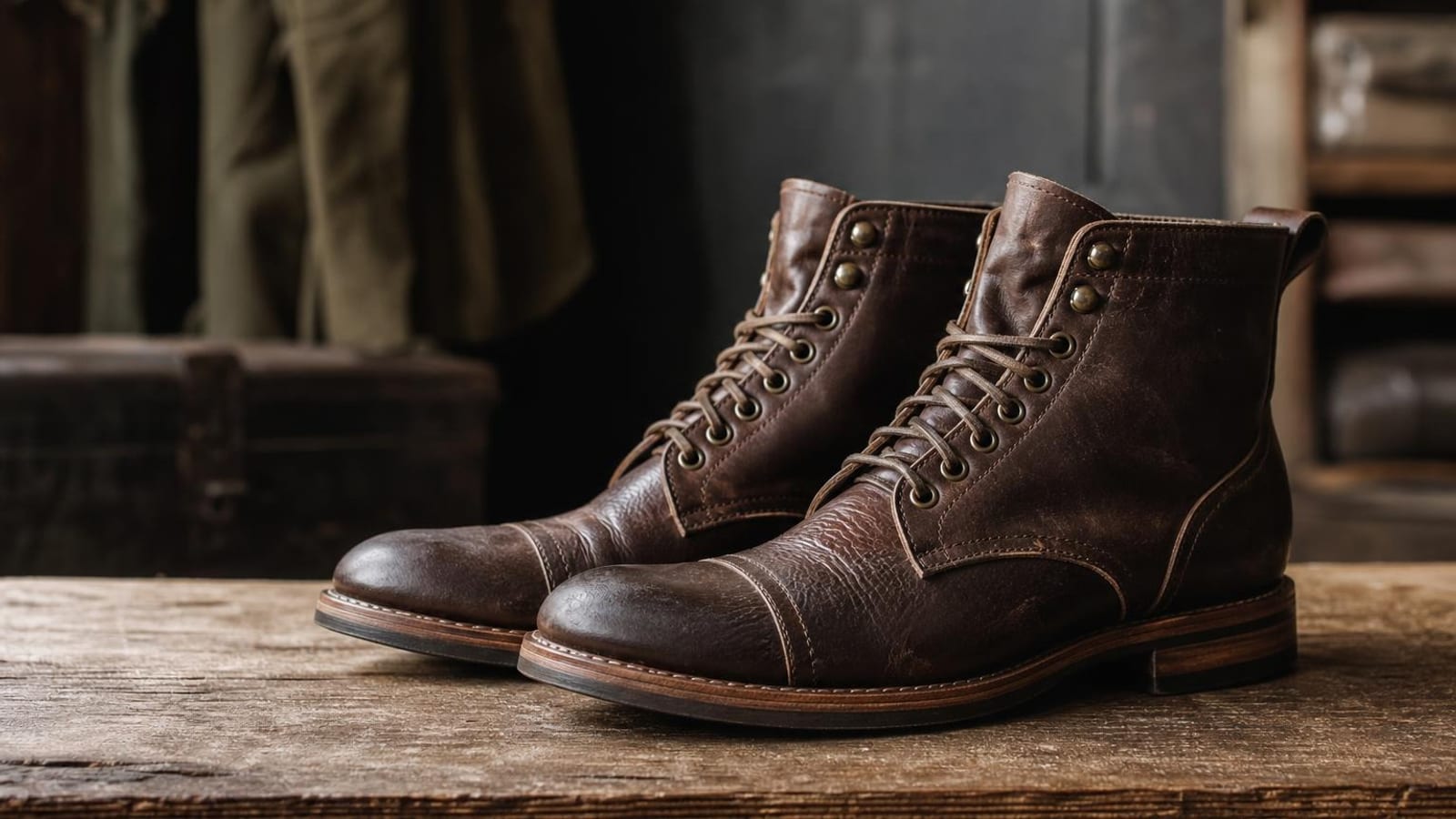
Say it out loud before you spend: foam compresses, batteries cycle out, waterproof membranes clog and delaminate, adhesives let go. No price fixes that. A $450 hiking boot with a glued midsole is a four-year boot with a nicer logo.
So buy consumables at the price where replacement doesn't sting. The cheap one's real cost here isn't durability, it's the failure mode. A cheap headlamp dies and you're annoyed. A cheap tie-down strap fails and something leaves your truck bed at 60 mph. The question isn't "how long does this last," it is "what happens the moment it quits."
Budget accordingly. Cheap flashlight, cheap tarp, cheap tape measure, cheap work gloves. Not cheap ratchet straps, not cheap recovery gear, not cheap anything that holds weight over your body.
Knives are a lifetime item, but not for the reason people say
Steel doesn't wear out. You'll sharpen away maybe a millimeter of blade in twenty years of honest use. So almost any decent knife is technically a lifetime knife.
What separates them is what the cheap one costs you in the meantime. Soft, poorly heat-treated steel doesn't break, it just stops holding an edge. You sharpen it Tuesday, you're sharpening it Friday, and after a while you stop carrying it because it's never sharp when you need it. That's the cost. Not failure. Abandonment.
An Opinel No. 8 in carbon steel, made in Savoie, France since 1890, costs under twenty dollars, takes a scary edge in about ninety seconds, and will be in your pocket in 2050. It'll also rust if you slice an apple and forget about it, and the wooden handle swells when wet, which means the blade can stick until you tap it loose. Real trade-off. I'd still hand one to a nephew before I'd hand him a $200 folder.
Where I'd spend: a fixed blade you actually use hard. Full tang, visible steel from tip to butt, no rubber overmold hiding a thin stub of metal. Overmold is glue with a warranty.
The lifetime watch has a subscription, and nobody mentions it
Two honest answers here and they point in opposite directions.
A mechanical watch is serviceable forever. A competent watchmaker can keep a decent automatic running for a century. What the ads skip is the invoice. A proper service means a couple hundred dollars and up, the watch gone for weeks, and a recommendation to do it again in five or so years. Call it what it is. A lifetime watch with a maintenance contract.
Then there's the resin quartz Casio, the DW-5600 shape everybody recognizes, around sixty dollars. The battery lasts years and costs about ten to swap. It's shock-rated, it's waterproof for everything you'll do, and the only thing that actually kills it's the resin case going brittle after a decade in the sun. On real-world lifespan per dollar, nothing touches it.
So buy the mechanical one because you want to, not because it's the frugal move. It isn't. Buy it because you like winding it, because it was your dad's, because it doesn't need you to charge it every other night. Those are good reasons. "It'll save money" isn't one of them.
The rifle is the heirloom. The stuff bolted to it isn't.
A well-made bolt gun or a service pistol is genuinely multi-generational hardware, and lawful ownership is both a right and a responsibility worth taking seriously. Steel and walnut, parts available, gunsmiths everywhere. Buy once, buy decent, take care of it.
The accessories are a different animal. Optics have electronics and seals. Holsters are molded polymer with hardware that loosens. Slings wear. Cheap magazines are the single most common cause of a gun that "doesn't work."
And the highest-return dollar isn't gear at all. It's a day with a qualified instructor and a case of ammunition. A $600 optic on top of untrained hands is decoration. Train first. Then spend, if you still want to.
When the cheap one is the right call
Three situations, and I'd argue them to anybody.
You're learning. Buy the forty-dollar tool, find out whether you actually use it, then upgrade knowing exactly which feature you were missing. Nobody's first sharpening stone should cost $150.
You use it twice a year. A tile saw, a pipe cutter, a bench grinder for one project. Cheap, or better, borrowed. Fifteen minutes a year doesn't earn premium money.
You will lose it. Pocket flashlights, tape measures, utility knives, pens, carabiners, gloves. These things walk off. Buy them in multiples and grieve nothing.
The test that actually sorts it
At an estate sale, would a stranger pick it up?
Somebody will pay real money for the Vise-Grip in that coffee can, sixty years on, because it still works and it was made by people who expected it to. Nobody's bidding on the dead headlamps. Nobody ever will.
Buy the things your kids will have to decide who gets. Rent, borrow or buy cheap on everything else, and quit feeling guilty about it.
Dean Shaw
Gear & Garage
Reads the warranty, the parts list and the long-term owner reviews before anything else. Trucks, tools, watches, and the cheap version that costs more.

Watch
Worth an hour of your evening
More from Gear.
From channels we rate. Plays on YouTube.