The pad between you and the frozen ground
Your sleeping bag is only half the system. Here's how to buy a pad that keeps you warm, survives a rock or two, and doesn't quit in year three.
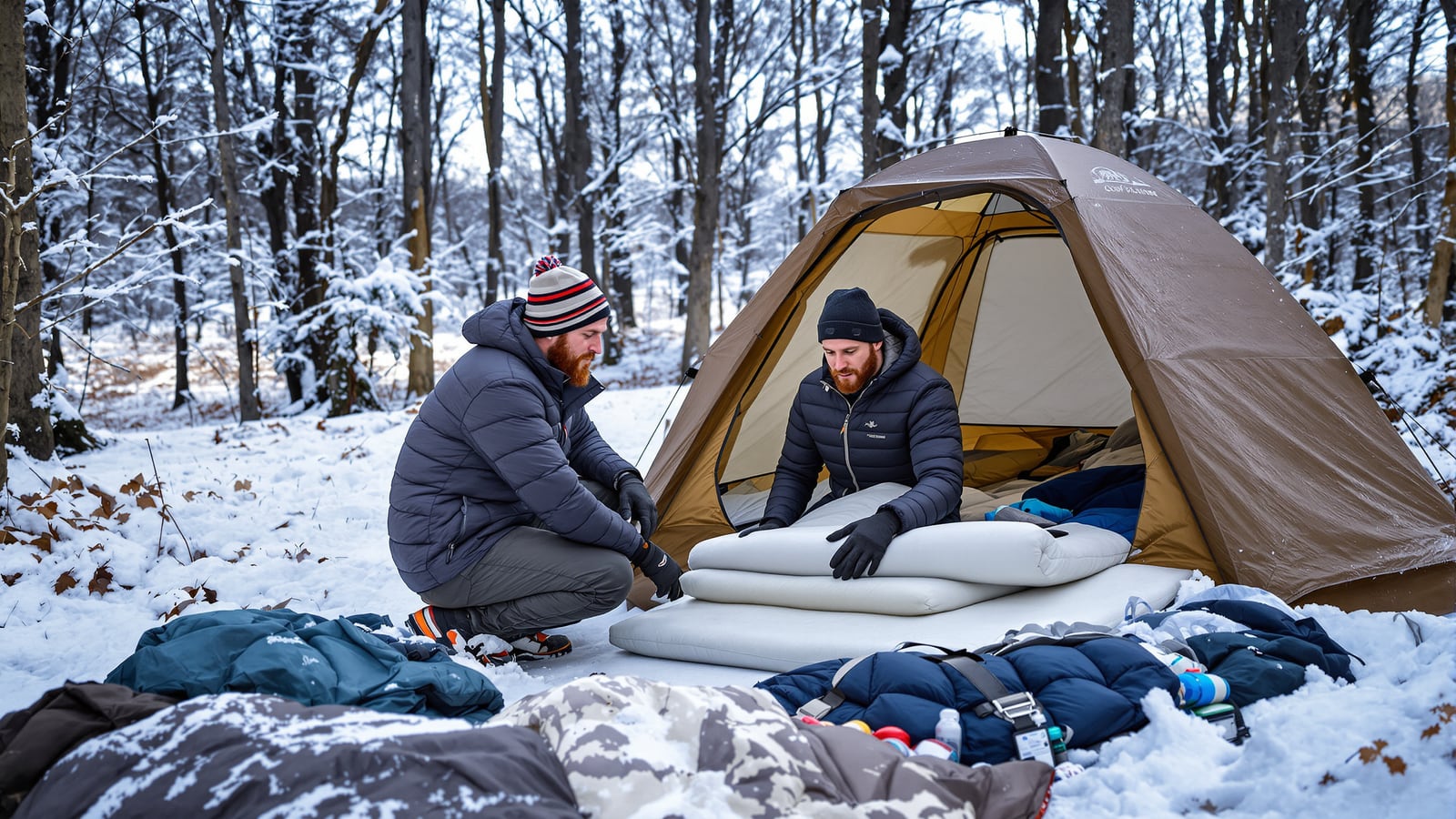
Quick answer: Buy for R-value first, and aim for 4 or higher if you'll ever camp below freezing. Buy a pad you can patch. Carry a cheap foam pad either way, because it's the one piece of gear that can't fail.
The bag is lying to you a little
The insulation in your sleeping bag works by trapping air. Lie on it and your body weight squashes all that air flat. Underneath you, the bag is thin cloth and good intentions.
So the ground wins. Cold earth pulls heat out of you faster than cold air does, and it keeps pulling all night. That's why a bag rated to 20 degrees can leave you shivering at 40 on a bad pad. The temperature rating on a bag assumes you're sleeping on something that works.
The pad is the other half of the system. Most people spend two hundred dollars on the bag and grab whatever's on the end cap for the pad. Then they wonder why they were up at 3 a.m., rolling over every ten minutes, doing math about how long until sunrise.
What R-value actually tells you
R-value measures how well the pad resists heat moving through it. Higher is warmer. That's the whole idea, and it's the one number on the box that matters.
Rough guide:
- Under 2: Summer only, warm nights, warm ground.
- 2 to 4: Three-season. Spring through early fall, a frost now and then.
- 4 to 5: Cold-weather use. Deer camp in November.
- 5 and up: Real winter, snow, frozen ground.
Two things make the number more useful than it used to be. First, the industry adopted a common test standard (ASTM F3340) around 2020, so ratings from different brands are finally comparable. A pad sold before then may use older numbers that flatter it. Second, R-values stack. Put a pad rated 2 on top of a pad rated 3 and you're sleeping on roughly a 5. Hold onto that. It matters later.
Don't confuse thickness with warmth. A fat, puffy air mattress with nothing inside it can be several inches thick and barely insulate, because the air inside circulates and carries your heat away. Warm pads have baffles, reflective layers or foam inside to stop that.
The three kinds, and what each costs you
Closed-cell foam. The folding or rolled kind that looks like an egg carton or a yoga mat. It's light, it can't leak, and you can sit on it, kneel on it, and dry your socks on it. Warmth is modest, comfort is basic, and it's bulky strapped to a pack. It will outlast most of the gear it's sleeping next to.
Self-inflating foam. Open-cell foam sealed in a shell. Unscrew the valve and it fills most of the way on its own. It's heavy and bulky, but tough and comfortable, and the foam still insulates a little even if the shell gets a hole. For hunting camp, truck camping and anyone not carrying it on their back, this is the sensible choice.
Insulated air pads. The ones that pack down to the size of a water bottle and sleep like a bed. Warmth per ounce is the best of the three. The trade-off is that they're the only kind that can fail completely in the dark. A thorn, a stray piece of shale or a leaky valve and you're lying on the ground by midnight.
That last one isn't a reason to avoid them. It's a reason to buy one that can be fixed.
What to buy
For most readers, the winning combination is boring.
An insulated air pad rated R-4 or higher, with a thin foam pad underneath. The foam shields the air pad from sharp ground, gives you a spare if the air pad quits, and stacks the R-value for winter. Both go in the same stuff sack. Total weight is a pound or two, which is nothing next to a rifle and a day pack.
If weight doesn't matter, because you're camping out of a truck, buy a thick self-inflating pad and stop thinking about it. It's the right answer for a lot of people.
Check these before you pay:
- Width. A 20-inch pad is fine if you sleep like a plank. If you roll around, or you're a big guy, spend the extra for 25. Your arms and shoulders hanging off the edge will be cold.
- Length. Short pads work if you put your pack under your legs. Otherwise get regular.
- Valve. Look for one that inflates and deflates fast, and that you can actually operate with gloves on.
- Fabric. Heavier face fabric costs a few ounces and buys a lot of tolerance for rough ground.
- A patch kit in the box. If it's missing, buy one separately.
Same rule I'd give for any gear: buy it for repairability, not just the price tag. A pad you can patch in the field is worth more than a lighter one you have to throw out.
What the cheap one really costs
The cheap air mattress at a big-box store is built for a guest room, not a campsite. It's thick, it's cold and it usually has no insulation to speak of. Below about 50 degrees you'll feel it. It's also thin-skinned, so it'll leak the first time it meets something pointy.
You don't save money buying that pad. You lose a night of sleep, and then you buy the real one anyway. If you get up at 4 a.m. to hunt on three hours of broken sleep, you've wasted the trip you paid for.
Plain closed-cell foam is a different matter.
When the cheap one is right
Buy cheap foam without guilt in these cases:
- Summer car camping. Warm ground, warm nights. Any pad that keeps the dirt off you works.
- Kids' first campouts. They'll roll off it, spill on it and leave it in the rain. A foam pad shrugs all of that off.
- As your backup and base layer. Even if you own a good air pad, carry the cheap foam one under it. It's the best insurance in the pack.
- Sitting pad. Cut an old one into a square and it earns its keep in a deer stand all fall.
The cheap foam pad isn't a compromise. It's the one piece of kit with no failure mode. Same logic applies in your truck: a short kit of dull, dependable stuff beats one fragile piece of cleverness.
Make it last
Most pads die from neglect, not use.
- Don't blow it up with your mouth in the cold. Your breath puts moisture inside, and in freezing temperatures that moisture can freeze or turn into mildew. Use a pump sack or the built-in inflator.
- Clear the ground first. Walk your tent site and pick out sticks, rocks and acorns. It takes a minute.
- Find leaks with water. Inflate the pad, then submerge or wipe it with soapy water and watch for bubbles. Patch it dry and let the glue cure the full time.
- Store it flat or loosely rolled, with the valve open. Squashed in a stuff sack for six months, the foam inside loses its spring and the glue stresses at the folds.
- Wipe it clean after a trip. Dirt and sweat break down the coating over time.
Do those five things and a decent pad should handle many seasons of real use, not just one.
The one-night test
If you're not sure what you need, borrow a cheap pad and sleep outside in your backyard in the coldest weather you expect to camp in. You'll know by midnight. Skip the debate, trust your back, and buy the pad that lets you sleep.
You can stand to be uncomfortable on the hike in. You can't afford to be miserable all night.
Wes Dunbar
Country & Skills
Grew up on an acreage and never quite left. Covers trucks, trades, land, and how to do the thing yourself.

Watch
Worth an hour of your evening
More from Gear.
From channels we rate. Plays on YouTube.
Read next