

Spit after brushing, then leave your mouth alone
Rinsing right after you brush washes off the thing the toothpaste came to deliver. Here's where mouthwash fits, and where it just gets in the way.
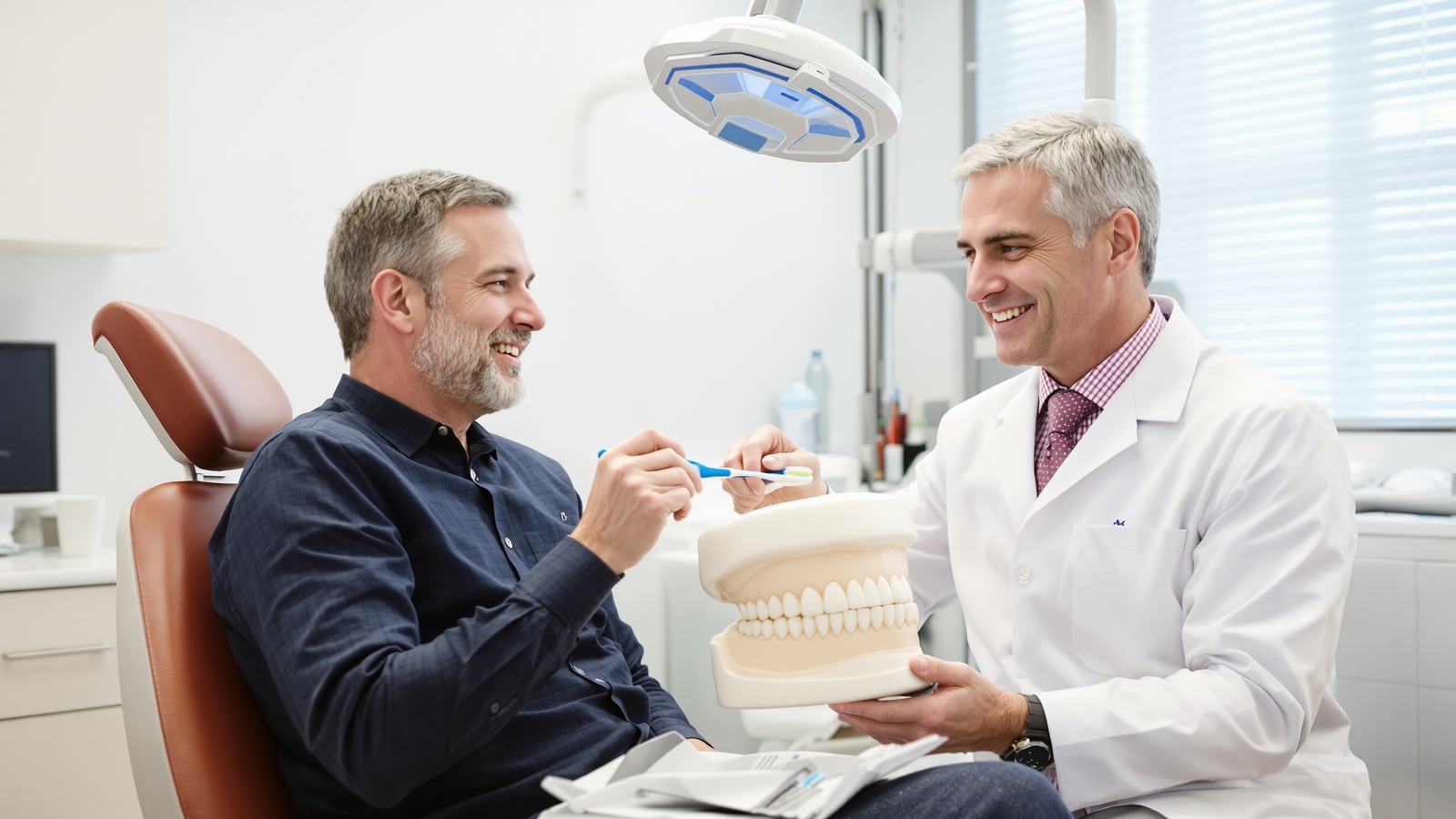
Quick answer: Brush for two minutes with a fluoride toothpaste, spit, and don't rinse with water or mouthwash right away. If you want a rinse, move it to a different part of the day.
Most guys do the opposite. Brush, swish a cup of water or a capful of something blue, gargle like it's an event, and walk out feeling thorough. You just washed off the part of the toothpaste that does the real work.
What the toothpaste is actually doing
Fluoride is the active ingredient. After you brush, some of it stays behind in your saliva, in the thin film on your teeth, and on the enamel itself. That leftover layer helps harden enamel and makes it harder for the acids from bacteria and sugar to eat through it.
Rinse hard with water, and you dilute that layer and send it down the drain. Dentists have been saying "spit, don't rinse" for years for exactly this reason. It feels wrong because the foam tastes strange and the habit runs deep. You'll get over it in about a week.
Spit out the foam. Don't chase it.
So what does mouthwash do?
It depends which kind you bought, and the label is written to make that hard to tell.
Cosmetic rinses freshen your breath for a short while. That's the whole job. They don't change what's happening on your teeth or gums, and bad breath comes back once the mint fades.
Therapeutic rinses are the ones with an active ingredient. Some contain essential oils or cetylpyridinium chloride, which are antibacterial and, added on top of brushing and flossing, can cut plaque and gum inflammation. Others contain fluoride. Look for the American Dental Association's Seal of Acceptance on the box, which means the claim was reviewed instead of just printed. Listerine Antiseptic is a well-known example of the antibacterial kind. A fluoride rinse such as ACT is the other kind.
Prescription rinses, chlorhexidine being the common one, are for a dentist to hand you for a specific gum problem. Used long term, it can stain teeth. That's a reason to use it when a dentist says to, and not as a daily habit because you saw it once.
The honest ranking: brushing and cleaning between your teeth do the heavy lifting. A rinse is an add-on, and the marketing makes it sound like the main event.
Where the rinse goes
If you want one, give it its own slot.
- After lunch or at your desk. Thirty seconds, spit, back to work. This is the best use of a cosmetic rinse, because that's when your breath needs help.
- Before you brush. Some people rinse first to loosen debris. It does no harm to the fluoride because you brush afterward.
- At least half an hour after brushing, if you're using a fluoride rinse on a dentist's advice. Ask which timing they prefer for you.
The other rule: nothing after the last brush of the night. No water, no snack, no rinse. Saliva flow drops while you sleep, and saliva is what normally washes and buffers your teeth. Leaving the fluoride film alone overnight is the best use of it all day.
The morning version that survives a bad morning
You don't need a ritual. You need about three minutes.
- Brush for two full minutes with fluoride toothpaste. Use the timer on your phone if you can't count.
- Spit. Don't rinse. If the taste really bothers you, take a sip of water and swallow it. Don't swish.
- Scrape or brush your tongue for ten seconds, back to front.
- Leave.
Step three matters more than any mouthwash. Most bad breath starts with the bacteria that coat the back of your tongue, and a minty rinse only covers it for a while. Scraping removes it. If you want the full picture of smelling right, smelling good at arm's length covers the rest.
Floss at night when you have time. Mornings are for the part you'll actually do.
What goes wrong
The burn. Some rinses contain alcohol, and the sting feels like it's working. It isn't proof of anything. If you get a dry mouth, or the sting makes you quit after a week, switch to an alcohol-free formula. A rinse you use beats one you gave up on.
Dry mouth. If your mouth is dry all the time, a rinse that dries it further makes the problem worse, since saliva is your own defense against cavities. Mention it to your dentist, because medications cause it often, and they can point you to something better.
Kids. Most mouthwashes aren't made for children under six, who tend to swallow them. Fluoride toothpaste and a spit lesson come first. Ask your dentist or pediatrician before you add a rinse for a kid.
Persistent bad breath. If it doesn't clear up after a few weeks of brushing, flossing and scraping, a rinse isn't the answer. Bleeding gums, a sour taste or breath that won't quit are things to take to a dentist. Masking them with mint just delays the visit.
When a rinse makes sense
Be fair to the other side. If you've got gum inflammation that keeps returning, or you wear braces or other hardware that makes cleaning difficult, a therapeutic rinse can earn its spot. A dentist can tell you whether you're that guy. Most of us aren't, and for most of us the best upgrade is the free one: the same toothpaste, spat instead of rinsed.
This is general information, not advice for your particular mouth. Your dentist can see what yours needs. If you're buying products in general, three ingredients do the work and the rest is packaging applies here too.
Tomorrow morning, spit and walk away. Your mouth will feel strange for about a minute. Your teeth will do the rest.
Dean Shaw
Gear & Garage
Reads the warranty, the parts list and the long-term owner reviews before anything else. Trucks, tools, watches, and the cheap version that costs more.

Watch
Watch how it's done
Picked for this article.
From channels we rate. Plays on YouTube.
The Bentist
Dentist Reveals If You Should SPIT Or Rinse After Brushing Your Teeth!
Teeth Talk Girl
should you STOP rinsing after brushing?
Read next