Your rifle needs one good cleaning after the season, not ten
A deer rifle fires a handful of rounds a year. Moisture and neglect hurt it more than powder fouling, so clean it once, properly, and store it dry.
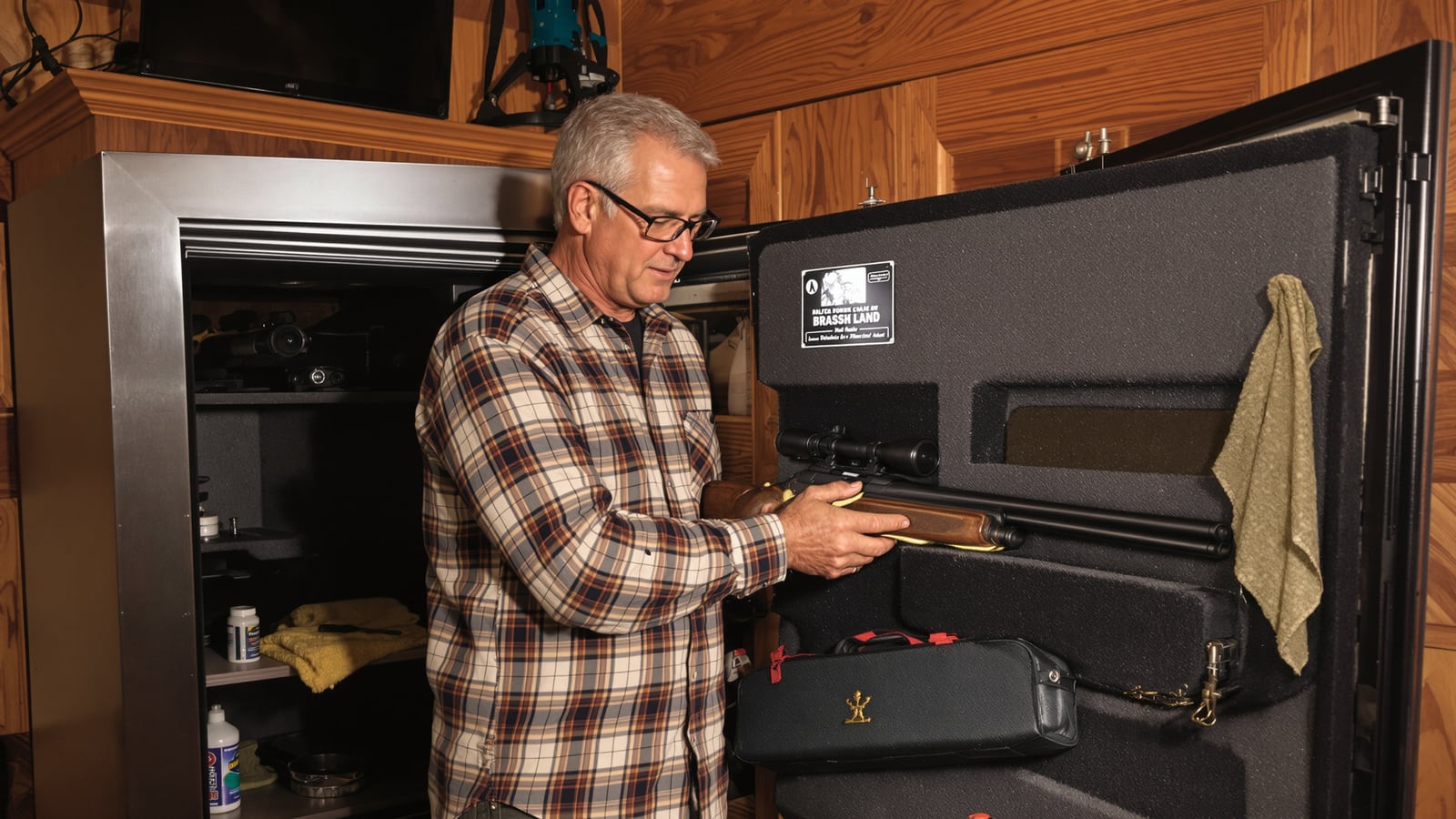
Quick answer: Clear the rifle and check it twice. Clean from the breech with a bore guide and a one-piece coated rod. Run solvent, brush, and dry patches until the patches come out clean. Leave a thin film of rust preventive in the bore, store it dry and locked, and shoot a few fouling rounds before you trust your zero next fall.
The enemy is water, not powder
Most hunting rifles fire somewhere between three and twenty rounds a year, counting the sight-in. That's not enough to foul a barrel into inaccuracy. What does the damage is a season of cold-to-warm swings in the truck, a wet sling, a muzzle that touched snow, and a rifle that went back in a zippered soft case still damp.
So the job isn't scrubbing. It's getting the bore and metal clean and dry, then keeping them that way for ten months.
That's also why the chore matters more than the gear. A rod, a bore guide, a bronze or nylon brush in your caliber, patches, a copper-removing solvent and a light oil or rust preventive will run you a modest sum at any sporting goods counter. Skip the 40-piece kit with the jointed rod.
Make it safe first
Do this before a patch or a drop of solvent comes out.
- Take the rifle to a room where no ammunition is present. Not the box on the shelf, not the shells in your coat pocket. Out of the room.
- Remove the magazine. Open the action. Take the bolt out if the rifle allows it.
- Look into the chamber and down the bore. Then look again. Treat it as loaded until you've personally checked it twice.
- Open a window or run a fan. Most solvents are unpleasant to breathe in a closed garage, and some are flammable. Wear nitrile gloves, and keep the solvent away from kids and pets.
Used patches and solvent have to be disposed of properly. Rules on household chemical disposal vary by state, province and county, so check what your local waste authority wants rather than guessing. And the same goes for how you store the rifle afterward. Locked storage requirements differ by jurisdiction, but a locked safe or cabinet is the right answer everywhere.
Clean from the breech
The crown is the last quarter inch of the muzzle, and it matters more to accuracy than almost anything else you can damage. A cleaning rod dragged against it, season after season, wears it down.
On a bolt gun, clean from the chamber end. Lay the rifle on a padded rest or a cleaning cradle, muzzle slightly down, and insert a bore guide where the bolt sat. The rod runs through the guide and down the barrel without touching the action or flexing along the way.
Use a one-piece coated rod, not a steel one and not a jointed aluminum one. The coating protects the rifling. The single piece keeps the rod from bowing and rubbing.
If your rifle can't be cleaned from the breech, as with some lever and pump designs, use a muzzle guard on the crown and go slowly. Check the owner's manual.
The sequence
- Wet patch. Push a patch soaked in solvent through the bore in one direction, from chamber to muzzle. Don't pull it back. Pick it off at the muzzle and start fresh.
- Let it sit. Follow the solvent's label for time. Fifteen minutes is common, but read yours. Some solvents, especially ammonia-based copper removers, shouldn't sit in a bore for long. Never leave one in overnight unless the label says so.
- Brush. Wet a nylon brush and push it all the way through and out the muzzle before you reverse. Don't turn it around halfway down the bore. Use bronze only if the nylon isn't getting it done.
- Dry patches. Run clean, dry patches through until they come out mostly clean.
- Repeat if the patches are still dirty.
The first patch will look terrible. Black and brown is carbon and powder residue, and it's normal. A blue or green tint on a patch means the solvent is dissolving copper from the bore, which is also normal. Stop when the patches quit turning blue.
Don't chase perfection. Some shooters scrub for hours trying to get a snow-white patch from a barrel that was never going to give one. Past a certain point you're wearing the barrel for no benefit.
What goes wrong
A patch can jam. A jag too small, or a patch folded wrong, can wedge in the bore. If it does, stop. Don't force it, and never fire a rifle with anything in the barrel. Take it to a gunsmith. It's a cheap visit compared with a ruined barrel or a worse accident.
And don't over-oil. A heavy coat of oil left in the bore collects dust and can shift your first shot next year. A thin, even film is all you want.
Put it away dry
After the bore, wipe the outside down: barrel, receiver, bolt, trigger guard, floorplate. A silicone-treated cloth or a light coat of oil on a rag does the job. Look at the muzzle with a flashlight for dings.
Check your stock screws. Loose ones can walk your zero, so snug them to the manufacturer's spec if you know it. If you don't, ask whoever mounted your scope or look it up for your model.
Then store it properly. A soft case is a carrying bag, not a storage unit. Foam and fabric hold moisture against the steel. Leave the rifle in a locked safe or cabinet, standing or lying flat, with a desiccant rod or a dehumidifier in the safe if your basement runs damp.
If you borrowed a rifle from your father or a friend this season, clean it before it goes back. Bring it back better than you got it.
Next fall: your zero will move
Before opening day, wipe the bore dry with a clean patch to remove the oil. Then fire three to five rounds before you judge where the rifle is shooting. A clean, freshly oiled barrel often throws the first shot or two a little differently than a barrel that's been shot a few times. Some rifles don't care. Some do. You won't know which one you own until you find out at the bench.
That's also a good reason to sight in weeks before the season, not the night before. Sight in six weeks early, not the night before walks through how. And if you're still deciding on a rifle and optic you'll actually keep, Your first hunting rifle and the optic that earns its keep covers it.
Muzzleloaders are a different job. Many propellants, especially black powder and its substitutes, are corrosive and need water-based cleanup right after shooting. Follow the maker's instructions to the letter.
A rifle you cleaned once, stored dry and checked in the fall is a rifle you can trust when the shot counts. Wiping off one season's carbon is the easy part. The discipline is putting it away right.
Wes Dunbar
Country & Skills
Grew up on an acreage and never quite left. Covers trucks, trades, land, and how to do the thing yourself.

Watch
Worth an hour of your evening
More from Hunting & Shooting.
From channels we rate. Plays on YouTube.
Read next