

Return it better than he got it
Kids don't pick up respect for other people's things by osmosis. Here's how to build the habit, and what to do the day something gets broken.
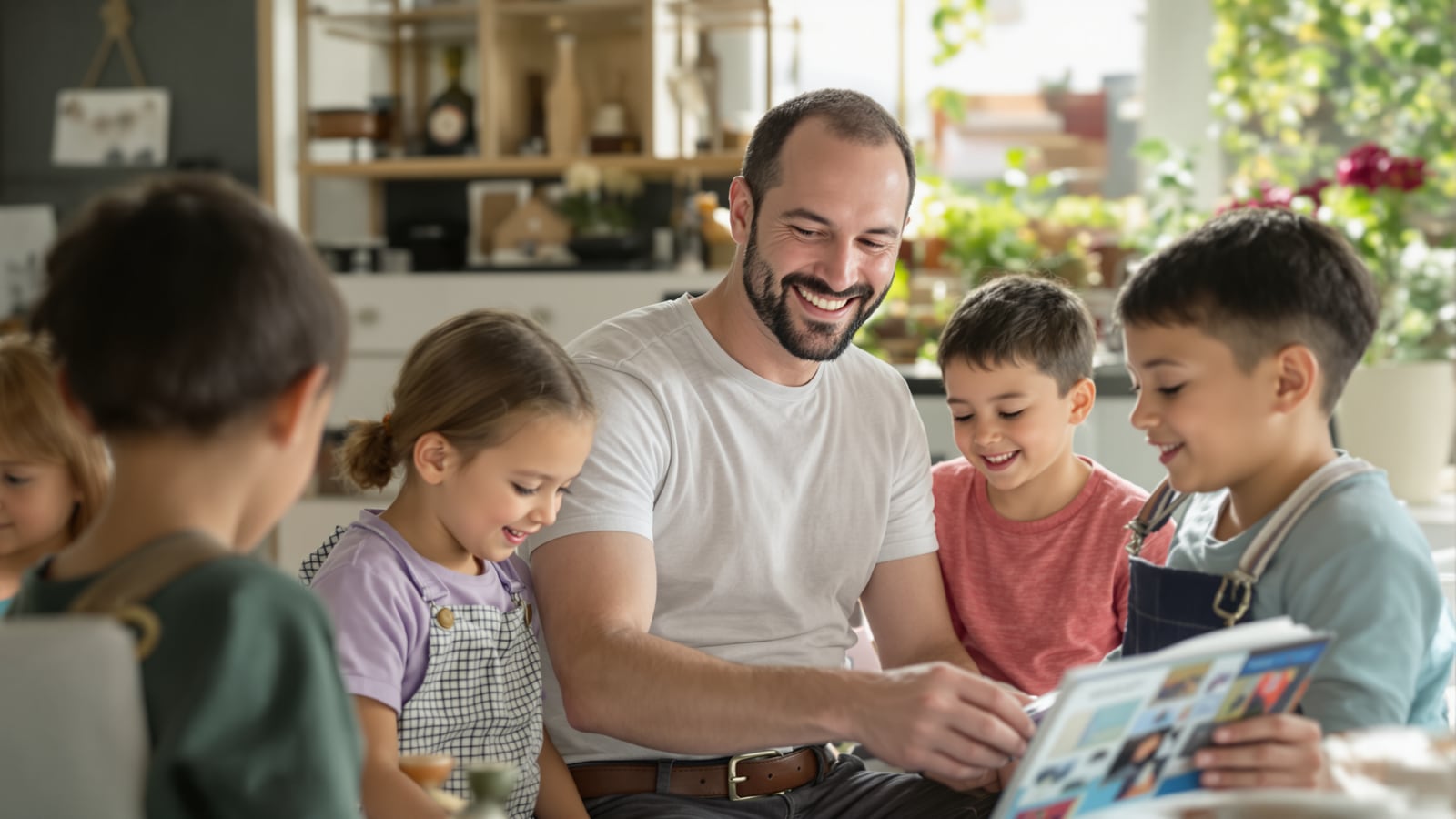
Quick answer: Teach one rule. Whatever's borrowed goes back in better shape than it left. Practice it on small things until it's a reflex, and let your kid fix his own mistakes instead of rescuing him.
Picture a ten-year-old walking a borrowed bike up the neighbor's driveway. The chain slipped off halfway home. He fixed it, wiped the mud off the frame, and knocks on the door instead of leaning it against the garage. "Thanks, Mr. Hadley. The chain came off on Elm Street, so I put it back and checked the tires."
That boy didn't get lucky with his personality. Somebody trained him, probably over years, and probably on things that didn't matter much.
Start with what's his
A kid who has never looked after anything of his own has no reason to care about yours. So begin at home, small. A three-year-old can carry his plate to the sink. A five-year-old can put his shoes where shoes go and fill the dog's water bowl. A seven-year-old can be the one who rolls the trash can back up after pickup.
The point isn't the chore. It's that he learns things don't stay in order by themselves. Somebody has to do it, and today it's him.
If he's never had a thing worth losing, give him one: a baseball glove he oils, a bike he's responsible for locking up. When it ends up in the rain, the glove is stiff for a week. Let it be stiff. That lesson costs less than a borrowed one will later.
The old rule, said out loud
Say it plainly and say it often: it goes back better than it came.
Borrow a car and it comes back washed, with a full tank, even if it came to you dirty and near empty. A tool goes back cleaner and sharper. You don't show up to a friend's house empty-handed, and you don't leave a campsite or a kitchen the way you found it. You leave it better.
Kids love a rule that short. They can repeat it, and they can check themselves against it. Put it to work right away:
- A library book goes back on time, with the cover wiped if it got a smudge.
- A friend's video game controller goes home with a charged battery.
- A cousin's bike gets the tires pumped before it leaves your garage.
- After a sleepover, he strips the sleeping bag, folds it, and thanks the parent by name.
Notice that none of these is about "being careful." Careful is passive. This is active. He's responsible for the condition of the thing when it leaves his hands.
Rehearse it before the real thing
Don't wait until he's holding the neighbor's power washer. Run a drill with something low-stakes, a Saturday project, and give him the sequence.
Before he borrows, he asks out loud, and he says when it's coming back. "Can I use your football until Sunday?" A date turns a vague favor into a promise.
While he has it, it lives somewhere safe. Not on the porch. Not in the yard. A borrowed glove doesn't sit in the back seat of the car.
When he returns it, he hands it over himself, looks the owner in the eye, and says what he did. "I used it twice. The laces are a little loose, so I tightened them." You'll feel ridiculous coaching a nine-year-old to talk like a small tradesman. Do it anyway. In two years he won't need the script.
What to do when it breaks
It will break. Kids lose things, and a rake handle gives out the first time a seven-year-old leans on it. How you handle the next sixty seconds teaches more than any lecture beforehand.
Three moves, in order:
- He tells the owner right away. Not after a week of hoping nobody notices. Walk beside him if he's young, but he does the talking.
- He says what happened, plainly. No story, no blame on the dog. If you've worked on this, teaching a kid to tell the truth when it costs him something covers how to make the honest answer the safe one.
- He offers to fix or replace it. And here's the hard part: he pays, or works, in proportion to his age.
Don't pull out your wallet and settle it in the driveway. A kid who's spared every consequence learns that other people's property is a problem somebody else solves. If he's saving from a three-jar system, the repair comes out of the spend jar. Five dollars that stings is worth more than fifty that doesn't.
Match the cost to the kid, though. A six-year-old who snaps a neighbor's garden stake doesn't owe forty dollars. He owes an apology, a new stake, and maybe an hour pulling weeds with you. Scale it.
And when he does it right, say so. "That was hard, and you did it well." Don't gush. A short line from a dad or mom lands harder than a speech.
Don't raise a pushover
There's a flip side, and it matters. A kid who learns to serve others can get walked on if nobody teaches him a backbone.
Teach him that it's fine to say no. "I'd rather not lend my bike" is a complete sentence, especially to the kid who never brings anything back. He should know that a friend who breaks his things and shrugs is a friend to be a little more careful with.
Teach him to say it kindly. "I'm still saving up for this one. You can use it here, but it stays here." That's not selfish. It's what a grown man or woman does with a good tool.
Also teach him to speak up when someone else is wrecking something that isn't theirs. A kid who sees another kid kicking a neighbor's mailbox and says, "Come on, leave it," is learning to hold a line. Back him when it costs him a little socially.
Your own driveway is the classroom
You can run every drill above and still lose the argument if he watches you keep a neighbor's ladder for six months.
He notices who returns the casserole dish with something in it. He notices whether you pull the borrowed truck up to the pump before you hand back the keys. He notices when you stay after a church supper, a ball game, or a school event and stack the chairs without being asked, and when you don't.
You don't need to announce any of it. Just do it where he can see, and let him ask why. Then give him the short answer: "That's how you treat somebody who trusted you."
Kids aren't born knowing that a thing in their hands is a trust. They learn it from a parent who hands things back clean, owns the cracked windshield, and expects the same of them. Start with the glove and the library book, and the day he's handed the keys to something that really matters, he'll already know what to do with them.
For a sense of what's reasonable at each age, what your four, eight and twelve year old can actually do is a good yardstick. And if he asks why he has to bother, tell him it's simple. People lend to the kid who brings it back better than he found it.
Sam Ortiz
Dads & Family
Father of three. Writes about presence, discipline and the long game, without pretending any of it's tidy.

Watch
Worth an hour of your evening
More from Boys & Girls.
From channels we rate. Plays on YouTube.
Read next