

Somebody stopped showing up. Say something.
Every group has a guy who drifts off, and everyone notices and nobody calls. Be the one who calls. Here's how to do it without making it weird.
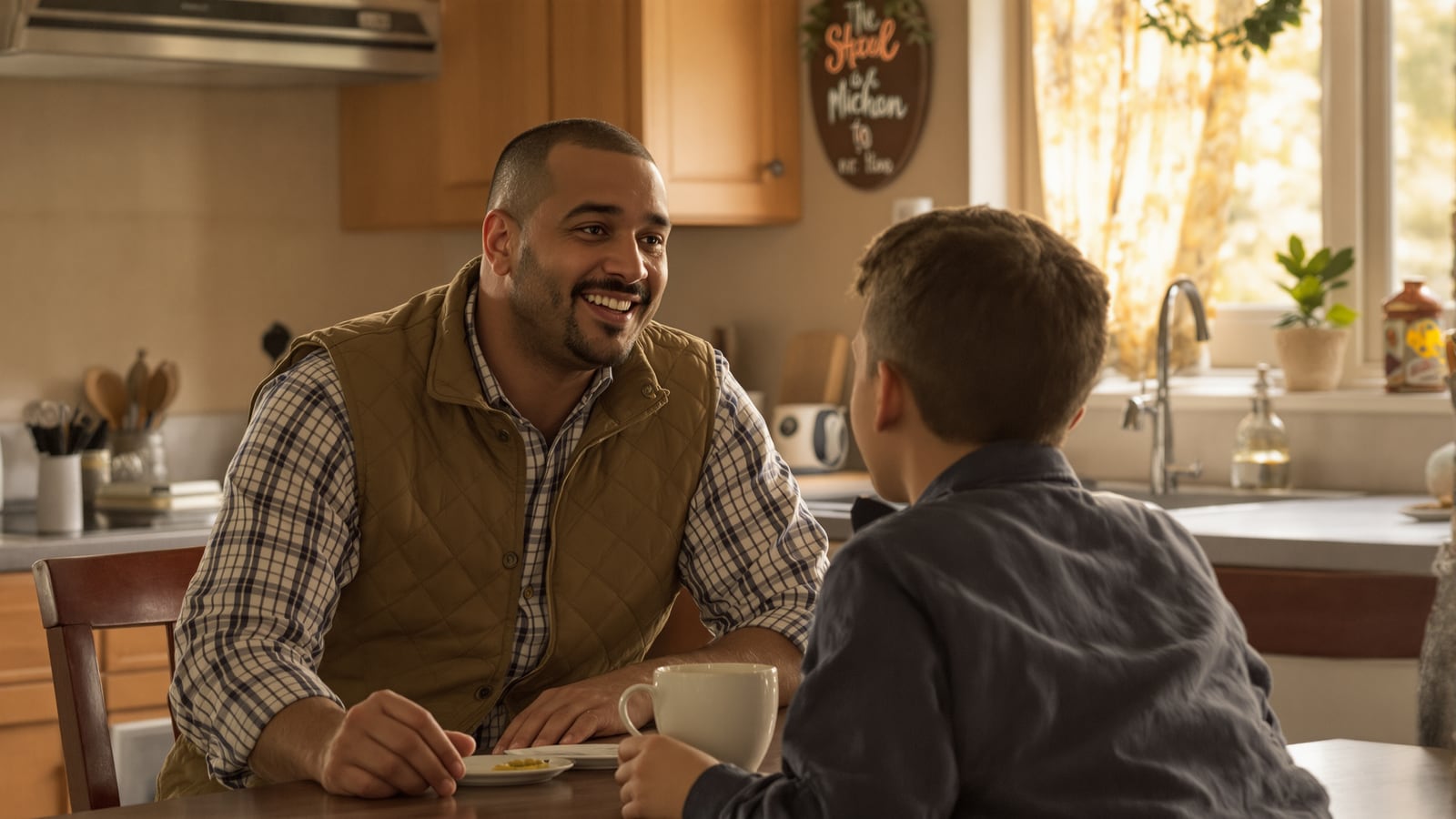
Quick answer: When a regular misses three times in a row, reach out personally within a week. Use a short text that says you noticed, with no accusation in it. Then put something specific on the calendar. Plan on a second try, because the first one usually gets a thumbs-up emoji and nothing else.
The empty chair
Picture a Thursday 6:15 breakfast crew. Seven guys, same booth, same waitress who stopped asking what you want in 2019. One week Dale isn't there. Nobody thinks much about it. Second week, somebody says "Dale's probably traveling." Third week, Dale's name stops coming up at all.
That's how it happens. Nobody decides to let him go. Seven men each assume one of the other six has it handled, and nobody does.
Guys are bad at this. We'll help you move a couch at 7 a.m. on a Saturday without being asked twice. But we treat a missing friend like a closed door, and we're afraid of walking up and knocking.
Why you stay quiet
You've got reasons. They sound sensible, which is the problem.
- He's probably just busy. Maybe. Busy men still answer a text.
- I don't want to make it awkward. It's already awkward. You've just moved the awkwardness onto his side of the table.
- He knows where to find us. Does he? A man who's embarrassed, broke, ashamed or worn out rarely walks back into a room on his own. The longer he's gone, the bigger the return feels.
- It's not my place. If you've sat across from him for two years, it's exactly your place.
A man usually doesn't drop out because he stopped caring about the group. Something happened. A job loss, a marriage that's wobbling, a kid in trouble, a bad diagnosis, or a slow slide he's embarrassed about. The group was the first thing to go because it's the one thing nobody at home would notice.
The message
Send it yourself. Not through the group chat, and not "hey, we missed you all" with six thumbs-up beneath it. One man to one man.
Keep it short and keep it free of guilt:
"Noticed you haven't been at Thursdays. Not keeping score, just wanted you to know the booth's lighter without you. Can I buy you a coffee this week?"
That text has four jobs. It says you noticed. It says he's not in trouble. It says he matters. It asks for one small, specific thing.
Avoid "Everything okay??" because it hands him an easy lie. He'll type "all good, just slammed" and you'll both pretend. Also avoid "we need to talk," which sounds like a summons.
Offer something with an end time. "Coffee, thirty minutes" is easy to say yes to. "Let's catch up sometime" is easy to say yes to and never do.
Make the second move
Say he doesn't reply. Or he says "yeah, definitely, soon" and soon never comes.
Wait four or five days, then try something different. A call, if you texted. If he doesn't pick up, leave a thirty-second voicemail with no pressure in it: "Hey, it's Mark. Thinking about you. Call me back whenever." Or drop by with something in your hands. A box of the donuts he always grabs, a rack of ribs, a part for the mower he mentioned was dying. Stand on the porch for ten minutes and leave.
Bring something when you visit. It's an old rule, and it still works. A man who'd turn away an interrogation will rarely turn away a plate of food.
If he really is slammed, you've lost nothing. If he's struggling, you may be the first person who asked.
Don't make it a project
You aren't his therapist and you aren't a rescue crew. Your job is small. Notice, ask, show up, keep the door open.
That last part needs a backbone. Some men will say "I'm fine" and mean "leave me alone." Respect a clear no. You can still send a text on his birthday, nod at him at the hardware store, and keep his name in the rotation. A man shouldn't have to explain himself to remain welcome.
What you shouldn't do is chase him for months, or let a friend's silence turn into your own resentment. Make the offer twice, plainly. After that, leave the invitation standing and get on with your week.
When it's bigger than a rough patch
Sometimes what he tells you is heavier than a bad month. He's drinking more than he used to. His marriage is coming apart. He says things like "the family would be better off without me," or sounds like he's finished.
Don't argue with him and don't lecture. Listen, and take every word seriously. If he talks about hurting himself, stay with him. Don't leave him alone, and get him medical help right away. If there's immediate danger, contact local police. Then bring in the people closest to him: his wife, a brother, his pastor if he has one, his doctor. You can't carry that alone, and you shouldn't try.
Most of the time it'll be nothing close to that. It'll be a man who's tired and ashamed and forgot how to walk back in the door. Knowing the difference is part of paying attention.
Make it easy to come back
When he does show up, play it cool. No speech, no "look who finally decided to join us." Slide the coffee across and say, "Good to see you." Somebody should ask how the truck's running, and nobody should ask where he's been.
If he wants to talk about it, he will. Maybe not that morning. Don't make him pay for the absence with an explanation.
A group that handles a return gracefully teaches every member something. If I disappear, somebody will come get me. That kind of loyalty is rarer than it should be. It's also what holds a group together when people are going through the hard seasons, and everybody goes through them.
Build the habit before you need it
Don't wait for a crisis to be the guy who notices. Make it routine.
- When someone's gone twice, you reach out. That's the rule. No committee.
- Keep a short list in your head of the five or six men in your orbit. Ask yourself once a week who you haven't heard from.
- Pick up the phone. Four hours a day on a phone costs more than the hours, and a lot of what gets lost is exactly this kind of ten-minute call. If the phone isn't the problem, the default is, make calling a friend your default.
- Let your kids see you do it. They won't remember your speeches, but they'll remember that Dad drove across town with a casserole. That's how values actually pass down.
Show up early, stay to stack the chairs, and keep count of who's missing. Everybody leaves a room eventually, so be the man who goes and gets them.
Cal Brennan
Fitness
Strength coach. Trains fathers, tradesmen and desk workers, which means programs that survive a bad week.

Watch
Worth an hour of your evening
More from Life.
From channels we rate. Plays on YouTube.
Read next