Pick up a fiddle and your guitar gets better
A second instrument that's hard on your ears at first, and the best thing you can do for the old tunes and your own playing.
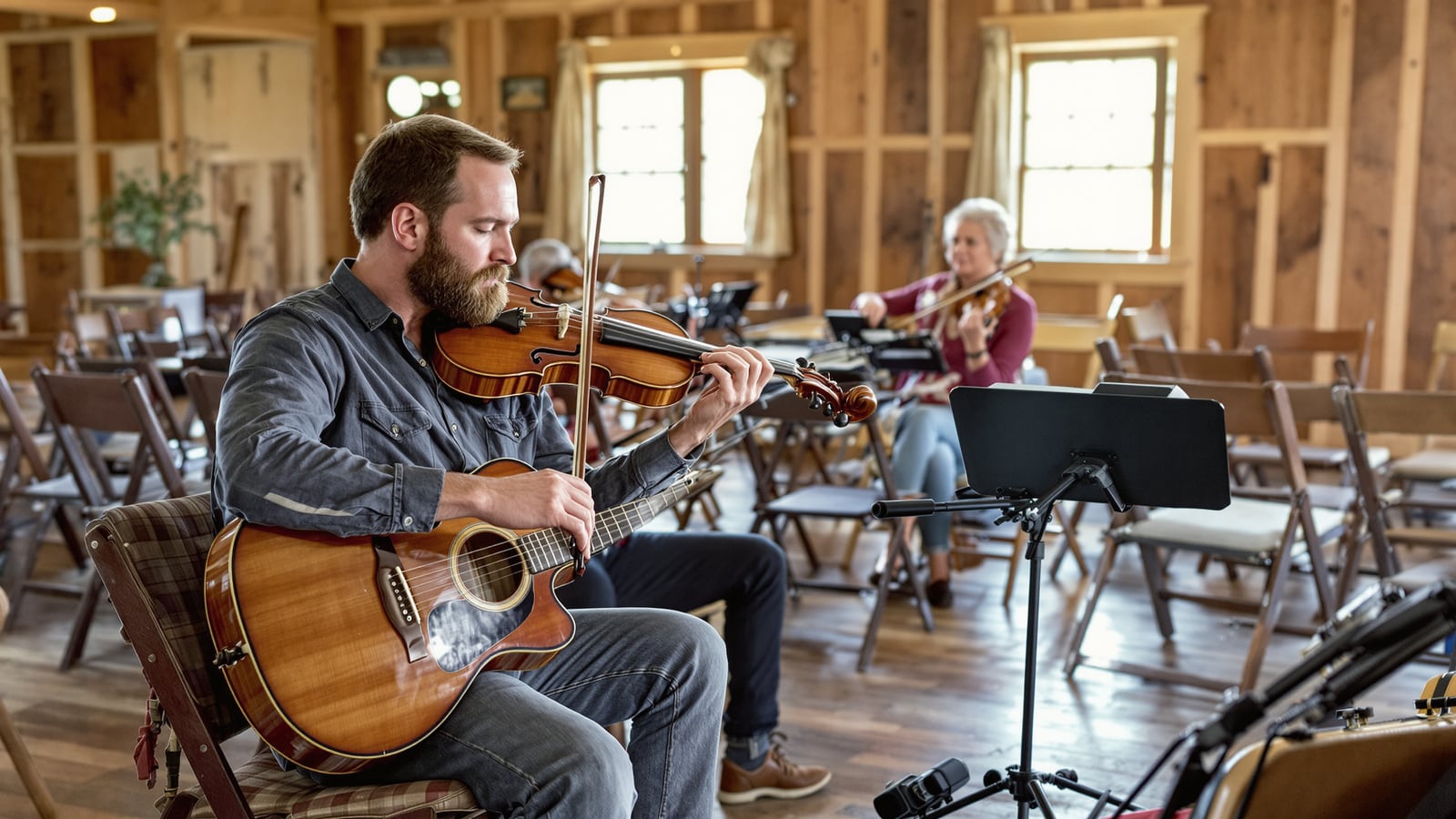
Quick answer: Rent a fiddle, don't buy one. Tune it in fifths (G, D, A, E), learn one tune by ear, and expect the first two months to sound rough. In return you'll hear melody the way a guitar never makes you hear it, and you'll be one of the few people keeping the old tunes alive.
The jam where you finally notice
Somebody at the Saturday jam calls "Soldier's Joy." The guitarist nods, finds a D chord and strums along. He's keeping time. He's not playing the song.
That's fine for the first year. Then you start to wonder why the fiddler across the circle seems to know where everyone's going before they get there. The answer is that she's carrying the tune. The tune is the thing. The chords are a fence around it.
Guitar lets you hide from that. A fiddle doesn't. One note at a time, in the open, where everybody can hear it.
Why this matters beyond you
Fiddle tunes are the oldest working layer of American traditional music. Old-time, bluegrass, western swing and a good share of early country were built around the fiddle and the people who could play it for a dance. Bill Monroe's band leaned on fiddlers like Kenny Baker for decades. Bob Wills fronted a band where the fiddle was the engine.
Most of those tunes were never written down properly. They moved from one player to the next, by ear, at kitchen tables and church suppers and barn dances. If one generation stops handing them on, they don't go into a museum. They just stop.
A guitar player who learns the tune can do something useful. He can sit beside an old fiddler, learn it from him, and play it back. That's how it has always worked.
What it does for your guitar
Learn "Old Joe Clark" or "Angeline the Baker" on fiddle and three things change.
- You hear the structure. Most fiddle tunes have two parts, an A and a B, each played twice. Once you've played them, you know when the change is coming. Your chord changes stop being a guess.
- You hear which chords the melody wants. Sometimes the tune sits on a note that tells you a G beats a D. You'll stop strumming over the top of it.
- You get a bow arm's sense of rhythm. The little pulse in a shuffle bow pattern, long-short-short, is the same lilt a good rhythm guitarist is chasing with his right hand.
You don't need to become a fiddler for this. But you'll need to try it long enough to be a bad one.
The annoying part
Be honest with yourself going in. There are no frets. If your finger lands a hair flat, it sounds flat, and everybody in the house knows. The bow can scratch. A new rosin job makes noise before it makes music. Your neck will complain.
Three ways to take the sting out:
- Rent first. A fiddle outfit from a local string shop usually means a rental you can return if you quit. Ask them to set it up with decent strings and check the bridge. A bad setup makes a good fiddle sound like a bad one.
- Mark the fingerboard. A tiny piece of tape for the first, second and third finger positions on the A and D strings gets you close to the right pitch while your ear catches up. Pull the tape off as you improve.
- Use a tuner every time you play. Not just to tune the strings. Play a note, check it, adjust. It's slow, and it works.
If you can, take a few lessons with an actual teacher. Bow hold and posture are easy to learn wrong and hard to fix later. Then shift to learning tunes by ear.
Learn by ear, even if it's slow
Written music has its place. But traditional fiddle is an ear tradition. Find a recording of a tune, slow it down on your phone, and work out the first four bars. Play it ten times. Come back tomorrow.
Fiddle tunes are short, and they repeat. That's the gift. You can learn a whole tune in a week or two, even as a beginner, and you get to play something real. Start with an easy one in D or A. "Boil the Cabbage Down," "Old Joe Clark" and "Soldier's Joy" are all common starters.
Same rule as any instrument. A short, daily practice beats a big Sunday one. The guitar version of this advice in Twelve Minutes a Day Beats an Hour of Arguing works here too. Twelve minutes a day gets you further than a weekend binge, and your left hand will thank you.
How to behave at a jam
You'll be tempted to bring the fiddle to a jam in month two. Go. But know the manners.
- Sit near the edge until you know the room.
- If you don't know the tune, play very softly or lay out. Nobody minds a quiet fiddle. Everybody minds a loud wrong one.
- Don't call a tune you can't play at speed. Ask what they'd like to hear.
- Stay to the end. Help stack chairs, wind the cords, carry the amp.
Show up early, leave the room better than you found it. The old pickers notice. They'll teach a tune to a young man who does.
Taking care of the instrument
Wipe the rosin dust off the strings and the top of the fiddle with a soft cloth after you play. Loosen the bow hairs before you put it away. Don't leave the case in a hot truck or a freezing garage. If you borrowed or rented it, bring it back cleaner than it left. The shop will remember.
Where to start tonight
If you already play guitar, start with The First Ninety Days of Learning Guitar as a Grown Man as a reminder of how a hard instrument becomes a familiar one. Then call a string shop and ask about rentals.
Pick one tune. Learn the first four bars by ear. Get it wrong forty times.
On the forty-first, you'll play something your great-grandfather would have recognized. That's worth the squeak.
Dean Shaw
Gear & Garage
Reads the warranty, the parts list and the long-term owner reviews before anything else. Trucks, tools, watches, and the cheap version that costs more.

Watch
Worth an hour of your evening
More from Music.
From channels we rate. Plays on YouTube.
Read next