The Old Answer to I'm Bored Was a Bucket and a Job List
Three months, no camps, no schedule, and a screen door that slammed forty times a day. What that actually taught kids, and how to run a version of it this week.
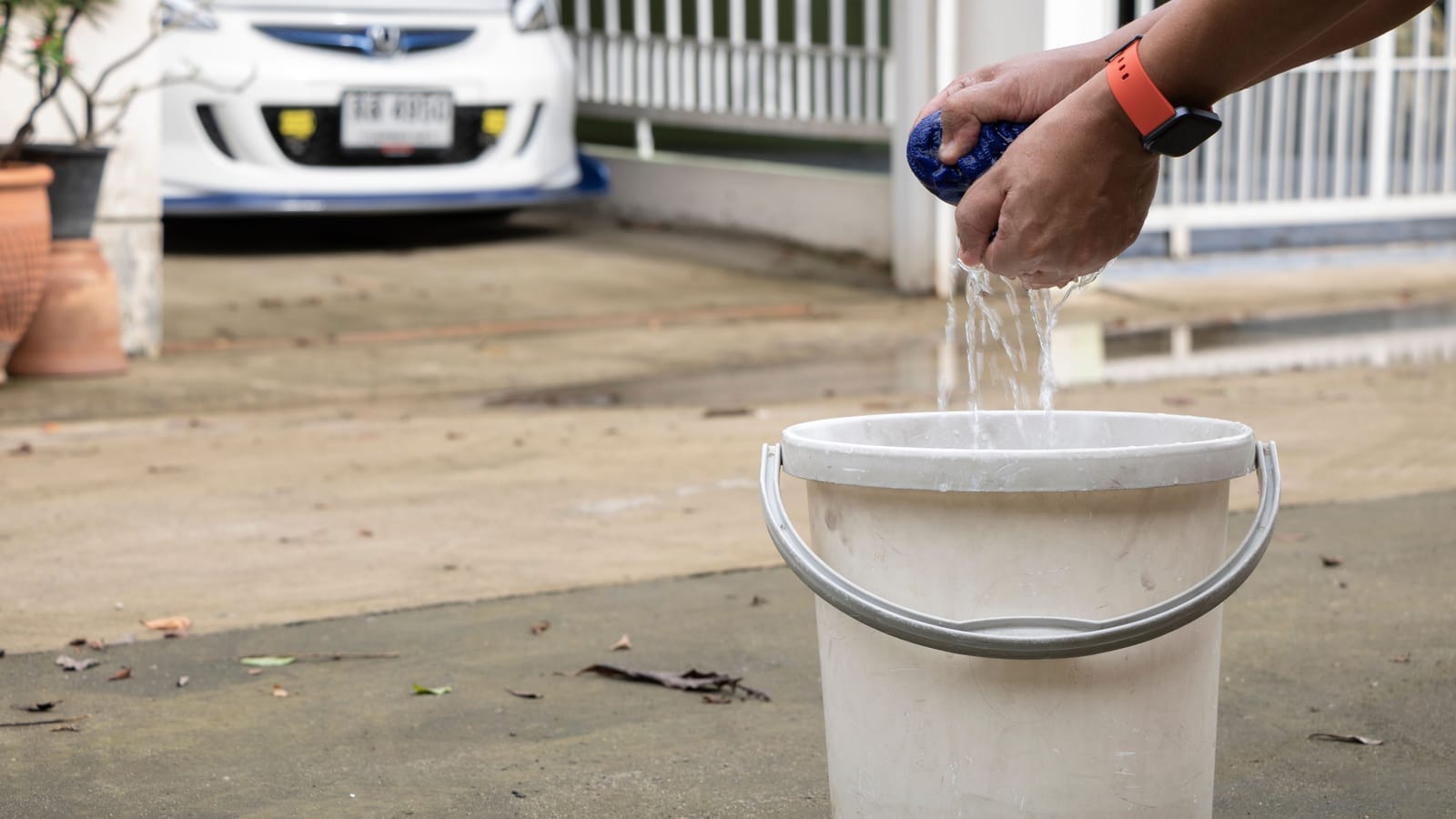
Say "I'm bored" in my grandmother's kitchen and you had, without knowing it, volunteered.
She'd turn from the sink, perfectly pleasant, and say, "Well, good. The baseboards in the hall need wiping." Not as punishment. She said it the same way she'd offer you a peach. The second time you said it she had the porch steps for you. By the third time she'd stopped suggesting and just handed you a bucket.
We learned fast. Boredom was a private condition, to be solved privately, out of earshot.
That sounds harsh written down. It wasn't. She wasn't ignoring us, and she wasn't running some parenting theory she'd read about. She just refused to be the entertainment. She had four rows of green beans and a wash to hang, and she'd already figured out what most of us are relearning the hard way: a kid who has never once had to sit in an empty hour never develops the machinery for filling one.
What the day actually looked like
Out the door after breakfast. Back at noon for a bologna sandwich and a glass of milk, back again when the streetlight on the corner came on. That's the whole schedule. Three items.
Nobody drove us anywhere. There were no camps that summer except church camp for one week in July, and that was as much for the adults as for us. Nobody had a printed calendar on the fridge. The fridge had a magnet holding up a fishing license and a list of chores in her handwriting, and that was the extent of the household planning.
What filled the hours was junk, mostly. A coffee can of bent nails Grandpa let us straighten on a rock. Scrap pine off the woodpile. A garden hose. Cardboard from the appliance store when somebody in town got a new refrigerator, which was a genuine event. A pocketknife when you were old enough, and you got it after a fifteen-minute lecture on cutting away from your thumb that you'd get again every time he caught you doing it wrong.
The first hour outside was usually aimless and a little sour. That's normal. That's the part everybody quits on.
Day three is when it works
The first afternoon of an unscheduled summer, a kid mopes. Lies on the floor. Follows you around narrating how there's nothing to do in a voice designed to break you.
Hold the line and something changes around the third day. The kid stops waiting for the world to start and starts it himself. Suddenly there's a rope involved. There's a dam in the ditch. There's a fort with a rule system so elaborate it has appeals. Two of my cousins spent most of one August building a go-kart out of a busted lawnmower frame that never once rolled more than nine feet, and they would both tell you today it was the best summer of their lives.
That's the whole mechanism. Boredom isn't the goal. Boredom is the empty space where initiative shows up, and initiative won't show up while somebody's still offering options.
Here's the part that trips people up. A kid with a phone is never bored, and never will be. He's occupied, which looks like the same thing from across the room and is the exact opposite. The screen is engineered by very smart people to fill precisely the gap where a fort would have gone. Don't blame the kid for taking the easy thing. You'd take it too. You do take it.
Build the fence first, then let go
My grandmother's version wasn't a free-for-all. There was a fence, and it was clear.
Geography. You could go as far as the Wheeler place one way and the bridge the other. Cross the highway and you were done for the week. Everybody knew the boundary, including the neighbors, who would absolutely tell on you.
Time. Noon and dark. Miss either one and the boundary shrank.
Check-in. Somebody always knew roughly where you were. Not exactly. Roughly.
Your version depends on where you live, and honestly a cul-de-sac in 1978 isn't the same asset as a cul-de-sac now, because the other kids aren't outside. If you live on a busy road with a six-year-old, the geography is the backyard and the fence is the gate. That's fine. The size of the territory matters less than the fact that inside it, nobody is managing them.
The job list does double duty
Put a list on the fridge. Six to ten things, written out, each one a whole job with a clear finish: sweep the garage, pull everything along the west fence, wash the inside of the car windows, stack the firewood, wipe the kitchen chairs including the legs.
Now "I'm bored" has a price, and the price is cheerful and instant. You don't argue, you don't lecture on gratitude. You say "perfect timing," and you point.
Two things happen. Some days the kid takes the job, because a real task with a visible finish is genuinely satisfying, and a nine-year-old who has stacked a cord of wood walks differently. Most days the kid discovers he wasn't that bored after all and finds his own way out the door. Either outcome is a win, which is why it's the best trick on this list.
Pay for some of it, don't pay for all of it. Some work you do because you eat here.
Stock the raw materials, not the activities
The difference between a kit and a pile is that a kit has one right answer.
Keep a bin in the garage. Scrap lumber, a coffee can of nails and screws, a roll of mason line, duct tape, a couple of tarps, cardboard, a hand saw with a dull enough set that it's more tedious than dangerous, a hammer that's actually theirs. Add a bucket, a shovel, and something with wheels that's already broken.
That's the whole investment. You can assemble most of it out of things already in your garage and one trip to the hardware store, and unlike the plastic thing with a screen in it, none of it goes obsolete.
Then the hard part: when they build something ugly and structurally questionable, let it stand. Don't improve it. Don't take over the saw. A fort you fixed is your fort.
Where the old way doesn't transfer cleanly
It'd be dishonest to pretend you can just rerun 1965.
The neighborhood isn't full of kids at loose ends anymore, so a kid who goes outside alone may genuinely find nobody there. Fix that on purpose. Trade afternoons with two other families. Be the house with the popsicles and the hose, and accept that this means your yard gets destroyed and your grass gives up by August. Worth it.
Both parents working changes the math too, and "unstructured summer" is easy to say when somebody's home. Sometimes camp is the answer because camp is the answer, and there's no shame in it. Aim for pockets, then. Two unscheduled hours on a Saturday. The whole week between camp sessions. One evening where dinner's early and nobody goes back inside afterward.
And some kids, especially the ones who run anxious, do worse with a blank day than a loose plan. Know the kid in front of you. My grandmother wasn't running a system. She was running us, specifically, and she'd have told you the neighbor boy needed something to do every hour or he'd take a fence apart.
Run it this week
Pick one afternoon. Say at breakfast that phones and tablets go in the drawer from one o'clock until dinner, so nobody's ambushed. Put the list on the fridge. Set the boundary out loud, including the time they're due back. Then go do your own work in front of them, because a parent scrolling on the porch while the kids are told to go play is a policy nobody respects.
Expect complaining. It's the toll you pay at the front of the afternoon.
Somewhere around the second hour, you'll hear them stop asking you for something and start negotiating with each other. That's the sound you're listening for. My grandmother heard it through the kitchen window forty times a summer, and as far as I could tell she never once looked up.
Cal Brennan
Fitness
Strength coach. Trains fathers, tradesmen and desk workers, which means programs that survive a bad week.

Watch
Watch how it's done
Picked for this article.
From channels we rate. Plays on YouTube.
Jenny On the Spot
Why Unstructured Time Matters for Tweens | Jenny On The Spot
Read next