A tarp, two poles and a plan beats a tent in the rain
A flat tarp pitched low keeps you dry and the wind off, weighs a fraction of a tent, and costs less. The trick is knowing how to put it up.
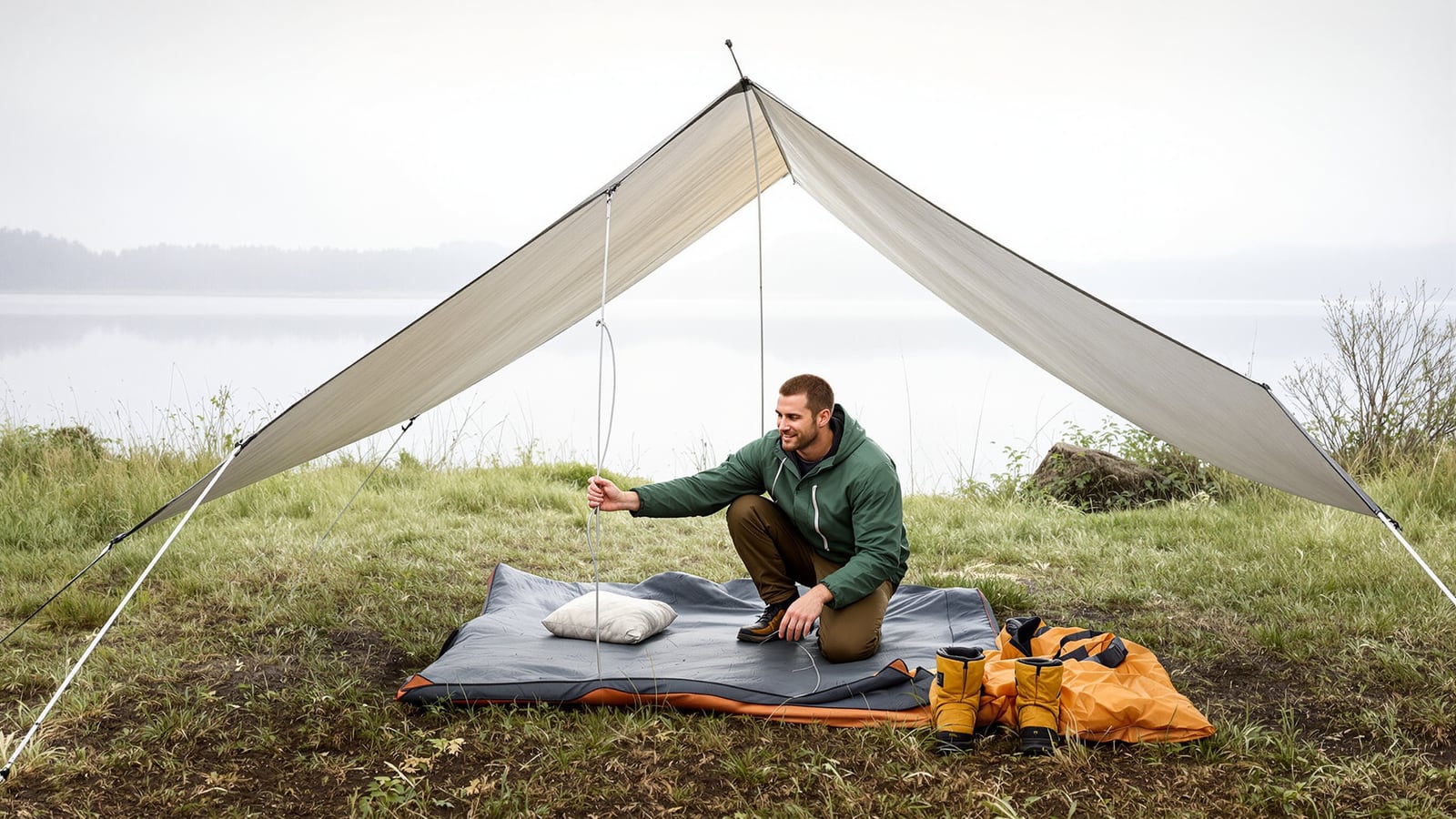
Quick answer: Carry an 8x10-foot tarp, two trekking poles, six to eight stakes, 50 feet of cord and a groundsheet. Pitch it as a low A-frame with the tail end facing the wind. Put a pad under you. That's the whole shelter.
Why it's better than it looks
Picture 2 a.m. and a steady rain. You're under a sheet of fabric strung between two poles. Your boots are dry beside your head. You can see the weather, and you can hear it. Nothing is zipped around you, so nothing drips from the inside of a wall onto your bag.
A tent is a box you carry so you can stop thinking. A tarp makes you think. That's both the complaint and the appeal.
Most guys who dislike tarps pitched one badly once. They hung it high and tight like a pavilion, a crosswind turned up, and the rain came in sideways. The tarp didn't fail. The pitch did.
What you need
- A flat tarp, roughly 8x10 feet. Coated nylon is the standard. Look for tie-out loops along the edges and at the center of each side. Smaller works for one person, but 8x10 gives you room for a pack and a margin when the wind swings.
- Two trekking poles, or two straight sticks you cut yourself if you're on private land with permission. Don't cut live branches on public land.
- Six to eight stakes. Carry a few more than you think. One always bends in rocky soil.
- About 50 feet of cord, cut into pieces for ridgeline and guy lines.
- A groundsheet. A cut-to-size piece of polyethylene sheeting or housewrap works. It keeps your bag off wet ground and keeps your pad clean.
- A sleeping pad and bag. More on that below.
A bivy sack is optional. It's a waterproof shell for your sleeping bag, and it adds a layer against splash and wind. It also adds a place for condensation to collect. Think of it as insurance, not a requirement.
The pitch that works
Start with the wind. Stand where you plan to sleep and feel which way it's coming from. Then point the low, closed end of the shelter at it.
- Lay the groundsheet where you'll sleep, then lay the tarp over it with the ridge running along the length of your body.
- Stake the two corners on the windward end firmly, angled away from the tarp so they resist the pull.
- Set a trekking pole under each end of the ridge and tie off the guy lines. Stake those out at a roughly 45-degree angle.
- Pull the sides down and stake them. Keep the edge about a hand's width above the ground at the lowest point. Lower means better wind protection. A gap of a few inches keeps air moving and cuts condensation.
- Check the tension. Flapping fabric wears out faster and keeps you awake. Snug it up until it's quiet.
Lower is almost always better. You don't need headroom to sleep. You need a roof that doesn't catch the wind. Sit up and read for an hour under a low pitch and you'll adjust quickly.
Pick the spot before the tarp
Where you put it matters more than how pretty the pitch is.
Look up first. Dead branches and leaning trees come down in wind. Don't pitch under them, no matter how good the shade looks.
Look down second. A shallow dip collects runoff. If the ground feels soft or you see dried silt lines, move. Slightly raised, well-drained ground is what you want.
Keep your distance from water. Camp at least 200 feet from lakes and streams. That protects the shoreline and keeps you out of the cold air that settles there at night.
Use ground that's already been used. An existing site is better than a fresh one. If there isn't one, pick durable surfaces like gravel, dry grass or bare dirt. Don't trench around the tarp. Rain that runs under you means you picked the wrong spot, and digging only damages the site.
Staying warm is a ground problem
The tarp stops rain. It doesn't stop the cold coming up from below. You lose heat to the ground faster than to the air, and that's where most people get cold on a tarp night. We covered the physics in The Ground Steals Your Heat Before the Air Ever Does. Short version: a pad rated for the season, with insulation you can trust, matters more than the bag.
Two more habits help. Keep your head toward the closed end of the tarp and your feet toward the opening. Wear dry layers to bed, and keep a hat on. And never cook under the tarp. Fire, stoves and nylon don't mix, and carbon monoxide builds up faster than you'd think under a low roof.
Where a tarp loses
Be honest with yourself about the limits.
- Bugs. A tarp is open. In mosquito country, you need a bug net or a bivy with mesh.
- Hard wind. Exposed ridges and open alpine terrain can overwhelm a tarp. If the forecast calls for sustained gusts, use a real tent or pick a different campsite.
- Heavy snow. Snow load collapses a tarp quicker than a good tent. Winter use takes practice, and you need to know your gear.
- Real storms. Lightning, flash flooding and sustained high wind are reasons to move, not to tighten a guy line. The Weather That Kills Hikers and How to Read It in Time covers how to see it coming. Always have a plan for retreat, and tell somebody where you're headed and when you'll be back.
A tarp is also a shelter you should carry alongside the basics, not in place of them. If you're building your kit from scratch, start with The Ten Essentials and Why Veterans Still Carry Them.
Practice in the backyard
Pitch it in daylight, in the yard, with a hose. Get it low, get it quiet, and then have your kid spray the windward side. Water finds every mistake. Fix the pitch while the stakes are still easy to pull.
Do that three times and you can do it in the dark with cold hands, which is the only version of this skill that counts.
Leave it better
When you break camp, pull every stake and check the ground for dropped cord and scraps of sheeting. Fluff the flattened grass with your hand. If someone left trash at the site before you, take that too. The next person should have no idea you were there, except that the place is a little cleaner.
Thirty minutes of practice and a few pieces of cord is a cheap price for a night that's dry, warm and quiet. The rain will do its worst, and you'll be listening to it from under a roof you pitched yourself.
Wes Dunbar
Country & Skills
Grew up on an acreage and never quite left. Covers trucks, trades, land, and how to do the thing yourself.

Watch
Worth an hour of your evening
More from Outdoors.
From channels we rate. Plays on YouTube.
Read next