Your Truck Is Already an Overland Rig
Skip the $3,000 rooftop tent. The gear that actually keeps you out of trouble on a forest road fits in a milk crate.
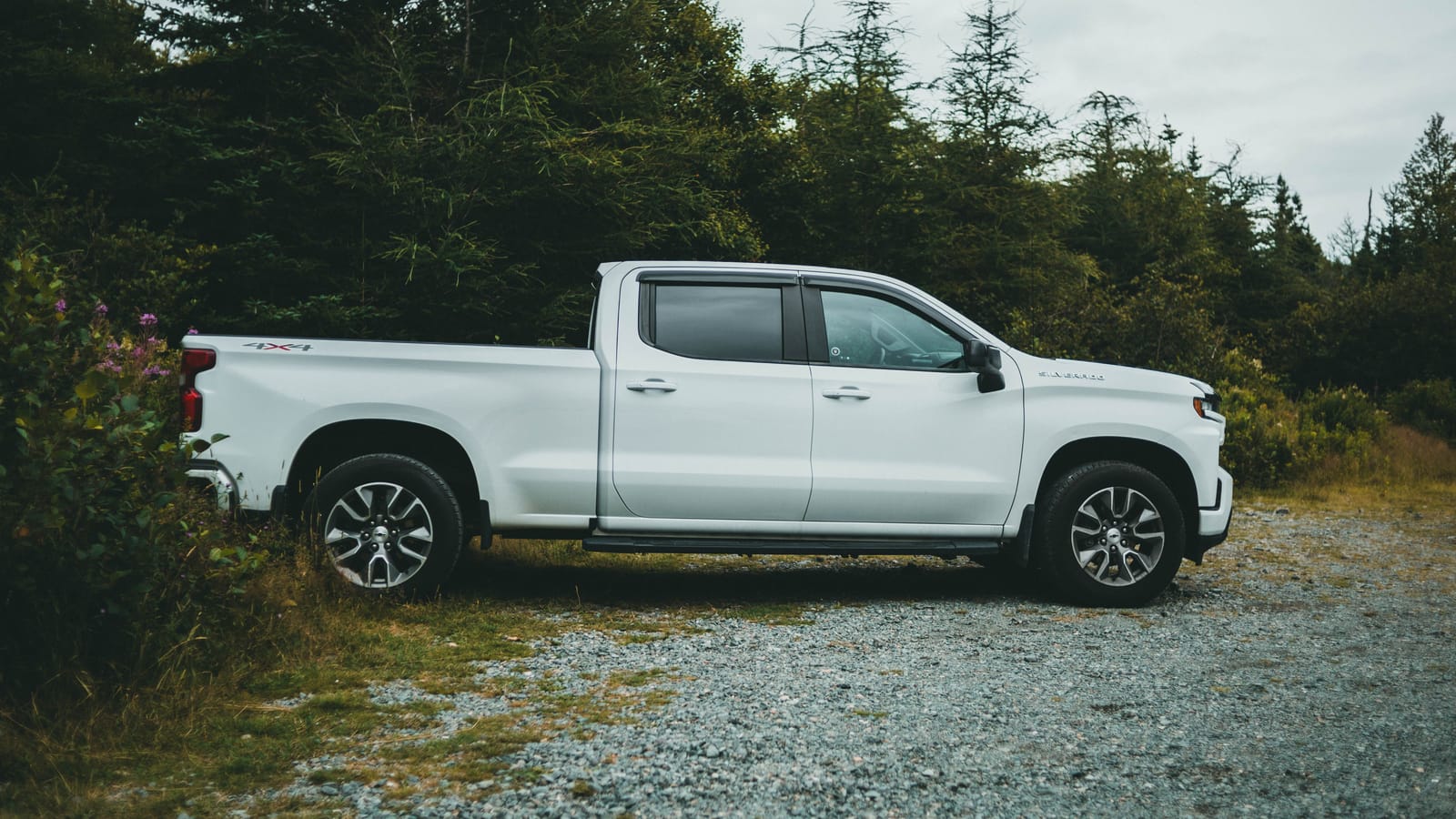
The best upgrade you can make to your truck this year runs about thirty bucks and lives in a cup holder. It's a tire deflator with a gauge you can actually read. Drop your tires from 35 psi to 18 before you hit the washboard, and your half-ton stops skating across the gravel like a shopping cart. The ride softens. Traction roughly doubles in sand. You'll wonder why you spent two seasons beating the fillings out of your teeth.
That's the whole spirit of budget overlanding. The rig you already own is 90 percent of the way there. What's missing isn't a $3,000 rooftop tent or a snorkel. It's a short list of cheap, boring items and the judgment to turn around before you need them.
Start with the trip plan, because that's the part that kills people
Write down where you're going and when you'll be back. Give it to somebody who will actually notice you're missing. Include your plate number, the color of your truck, and the trailhead or forest road number you're starting from. "Somewhere in the Coconino" isn't a search area.
Then download the Motor Vehicle Use Map for the national forest you're headed to. It's free from the Forest Service, it's a PDF, and it tells you which roads are legally open to a full-size vehicle, which are seasonal, and where dispersed camping is allowed along the corridor. Half the "no trespassing" confrontations and most of the resource-damage citations come from guys who assumed a two-track was public because it was dirt.
Cell coverage disappears about four miles up most forest roads. A satellite messenger like a Garmin inReach Mini or a ZOLEO costs a couple hundred plus a monthly plan you can pause in winter. If you camp alone, buy one. If you camp with your kids, buy one twice as fast.
Carry paper. A National Geographic Trails Illustrated map for the area and a compass weigh nothing and don't care about your battery.
Spend in this order
Tires first. Not a lift. Not lights. Your factory highway tires are the reason you're stuck. A set of all-terrains in the stock size, load range C or D depending on your truck, will do everything a weekend overlander needs and still be quiet at 75 on the interstate. Skip the mud-terrains unless you genuinely live in clay.
Recovery second. A minimum kit fits in a milk crate:
- Traction boards. The Maxtrax-style originals are expensive; the knockoffs work fine until you spin on them, which you shouldn't do anyway.
- A folding shovel with a real steel blade, not the surplus-bin tin one.
- A kinetic recovery rope and two rated soft shackles. Never a chain, never a ball hitch. A ball hitch that lets go becomes a cannonball.
- A tire plug kit and a 12V compressor. You aired down. Now you have to air back up before pavement, or you'll roll a bead on the first fast corner.
Sleep third. Here's the part where budget wins. A sheet of 3/4-inch plywood cut to your bed, four 2x6 legs to clear the wheel wells, and a 4-inch high-density foam topper gives you a flat, dry, elevated bed for a fraction of a rooftop tent. Add a cheap canopy or a bed tent if you want headroom. You'll sleep better than the guy on the roof, because you're not climbing a ladder at two in the morning.
I'll concede the other side. A rooftop tent is genuinely excellent: fast to deploy, comfortable, keeps your bed free for cargo. If you've got the money and your truck's roof or bed rack is rated for the dynamic load, go enjoy it. Just check that rating. A lot of factory crossbars top out around 150 pounds moving, and a hardshell tent plus two adults blows past that in a hurry.
Water, food, power
One gallon per person per day for drinking and cooking, plus a couple extra for dishes and washing up. Two 5-gallon jugs covers a weekend for two people with margin. Blue jerry-style cans from any farm store beat the collapsible bladders, which always fail at the seam on the second trip.
You don't need a 12V fridge. A decent roto-molded cooler with block ice will hold four days in shoulder season. Freeze water bottles instead of buying bagged ice and you get drinking water as they melt. The fridge is the single best luxury purchase in overlanding, and also the one that drags a dual-battery setup and a few hundred watts of solar along behind it. Buy it third season, not first.
For power, a jump pack with a USB output runs your phone, headlamps, and a fan for a long weekend. Anything more than that and you're into a lithium power station, which is great and which nobody needs to boil coffee.
Cook on a two-burner propane stove. Fire bans are common from June through September across most of the West, and a stove is legal in nearly every restriction level short of a total closure. Check the forest's current fire order the morning you leave, not the week before.
Where to actually go
Public land in this country is absurdly generous, and most of it is empty on a Friday night. Dispersed camping on BLM ground and in most national forests is free, with a 14-day limit in a given spot. The rules vary by district, so read the page for the specific unit.
Good first trips where a stock truck won't get in over its head: the forest roads west of Flagstaff in the Coconino, the Black Hills around Deerfield, the Ouachita National Forest in Arkansas and Oklahoma, Uwharrie in North Carolina for eastern guys, and the BLM land outside Moab if you can stomach the crowds. Alabama Hills in California now requires a permit for dispersed camping in places. Check before you drive nine hours.
Pick a camp within sight of the road you came in on. Turn the truck around and point it out before you shut it off. Future you, at 5 a.m. in the rain, will be grateful.
Leave it better, and mean it
Camp on an existing spot. The whole point of a truck is that it carries enough gear to make a fresh scar in the dirt, and there are already more fire rings on public land than anyone needs. If there's a ring, use it. If there isn't, don't build one.
Pack out everything, including the orange peels and the pistachio shells and the wad of paper towel you used on the stove. Bury human waste in a cathole six to eight inches deep, at least 200 feet from any water. In the desert, where nothing decomposes, use a wag bag. Scatter dishwater well away from camp and any stream.
Stay on the existing track. Every set of tire prints across a meadow is an argument for the next gate that gets locked.
The part nobody puts in the brochure
You're going to get stuck. Probably in about eight inches of nothing, probably within sight of a graded road, probably at dusk. The fix is almost never horsepower. It's airing down another three psi, digging the high spot out from under the frame, and backing out the way you came.
And the best skill in this whole hobby is the one that costs nothing: looking at a hill you're not sure about, and deciding you don't need to know.
Dean Shaw
Gear & Garage
Reads the warranty, the parts list and the long-term owner reviews before anything else. Trucks, tools, watches, and the cheap version that costs more.

Watch
Worth an hour of your evening
More from Outdoors.
From channels we rate. Plays on YouTube.
Read next