Flip the kayak on purpose before the lake does it for you
Capsizing isn't what hurts people. Panic and cold water are. Here's a one-hour Saturday drill that takes the fear out of both, solo or with your kid.
Quick answer: Wear a properly fitted life jacket, dress for the temperature of the water instead of the air, and practice tipping over in waist-deep water before you paddle anywhere that matters. A flip you've rehearsed is an annoyance. One you haven't is how a nice afternoon turns into a news story.
Most people who tip a kayak for the first time are surprised by exactly one thing: how fast it happens, and how loud their own brain gets. The boat rolls, the water closes over your head, and every sensible thing you ever read leaves you at once.
That's the part you can train out. Not by reading. By doing it, on purpose, somewhere you can stand up.
The real danger isn't the flip
A tipped kayak is a wet inconvenience. What turns it dangerous is cold water, which hits harder than most people expect. Plunge into cold water and your body gasps involuntarily, and if your face is under when that happens, you inhale water. The first minute is about getting your breathing back. Strength and coordination in your arms fade in the minutes after that, which is why a strong swimmer can fail fifty yards from shore.
A rule of thumb many paddling instructors use: add the water temperature to the air temperature. If the total is under 120 degrees, dress for the water. That means a wetsuit or drysuit, not shorts and a T-shirt because it's sunny. A May lake in the Northeast can be 55 degrees under a 75-degree sky. That's a 130 day with a water problem, so you'd still want to know the water number by itself.
Check it. Marinas, state park offices, and local paddling groups usually know what the lake is doing.
Gear that earns its place
You don't need much. You need the right few things, and you need to wear them.
- A life jacket you wear, not one you carry. A vest bungeed to the deck is a vest you'll watch float away. Buy one cut for paddling, with big armholes, so your shoulders don't fight it all afternoon.
- A whistle clipped to the vest. Three blasts is the universal distress signal. Your voice carries less than you think over water and wind.
- A boat that suits your level. If you're new, a wide sit-on-top is the forgiving choice. You can climb back on it from the water and it doesn't fill like a bathtub. Sit-inside boats are faster and drier, but they ask more of you after a flip.
- A dry bag with your phone, keys, and a spare layer. A cheap waterproof pouch on a lanyard is fine for the phone, as long as you've tested it with a paper towel inside first.
The Saturday drill
Pick a calm, warm morning. Pick a spot with sandy bottom and water about waist deep. Wear your life jacket and, if the water's cool, your wetsuit. Bring a friend on shore if you can. Then run this.
- Tip it on purpose. Lean over until you go in. Let it happen. Open your eyes under water for a second. It's less scary than you think.
- If you're in a sit-inside, do the wet exit. Lean forward, find the edge of the cockpit, push the boat off your legs, and surface. Keep a hand on the kayak. The boat is your float, so don't let go of it.
- Breathe before you do anything else. Count ten slow breaths if you have to. Nothing has to be fixed in the first ten seconds.
- Flip the boat back upright and, in a sit-on-top, get back on from the stern or side: kick your legs, pull your chest across the middle, and swing a leg over. It's clumsy the first time. It gets easier by the third.
- Do it again. Three flips in a row. Somewhere around number two, the fear drains off and the thing becomes a chore.
That last step is the whole point. You're not learning a technique so much as you're retiring a panic.
One honest limit: a sit-inside kayak in deeper water is a bigger project. Re-entering takes a paddle float or a rescue from another boat, and a book won't teach it. A two-hour class at a local outfitter is worth every dollar if you plan to paddle anywhere you can't stand.
Doing it with your kid
Your kid should be in a life jacket sized to their weight, not their age. Check the label. Then do the lift test: tighten it, pull up on the shoulders, and if it rides up over their ears, it's too big. Most states require kids to wear one on a boat, so check yours.
Don't start by putting them in the water cold. Start with the shallows on a warm day and make the flip a game. "Let's see who can tip the boat over first" lands better than "we're going to practice emergencies." Kids who've laughed their way through a capsize don't freeze when it happens for real.
Two more things about kids:
- Tandem or two boats? A tandem keeps a little one close and lets you do the steering. Two boats let an older kid feel like a captain. Under eight, I'd go tandem. Over ten, give them their own, close enough to hear you.
- Set one job for them. "You're the lookout for turtles." "You tell me when we've gone halfway." A kid with a job is a kid who isn't bored, and a bored kid stands up in the boat.
Tell them one rule and say it plainly. If we flip, hold the boat and wait for me. You'll say it again on the water. They'll roll their eyes. They'll also remember it.
It's the same quiet trade you make teaching them to ride a bike: you let them wobble, and you stay close enough to catch it.
Reading the water, alone or not
Wind does more damage than waves. Paddle into the wind on the way out, so the return is easy, never the reverse. An offshore breeze feels gentle at the dock and pushes you toward open water faster than you can paddle back. If the trees on the far shore are bending, stay home.
Stay within swimming distance of shore until the drill is second nature. That's not timid. It's how you get to paddle for forty years.
Paddling solo means two small habits:
- Leave a float plan. Tell someone where you're launching, which way you're going, and when you'll be back. A text does it. And then actually check in when you're off the water.
- Know your limit and keep a margin under it. If your arms are tired at the halfway point, you've gone too far. Turn around while there's still some in the tank.
If you can get a buddy, do. The same group-chat inertia that kills most weekends away will kill this one too, so put a date on it and book the weekend before the weekend books you. And if your shoulders haven't done anything athletic in a while, ease in like you would with any old sport. Paddling for two hours is more work than it looks.
When you leave, leave the launch cleaner than you found it. Pack out your trash and somebody else's bottle too. Carry the kid's boat to the car, even if they insist they've got it.
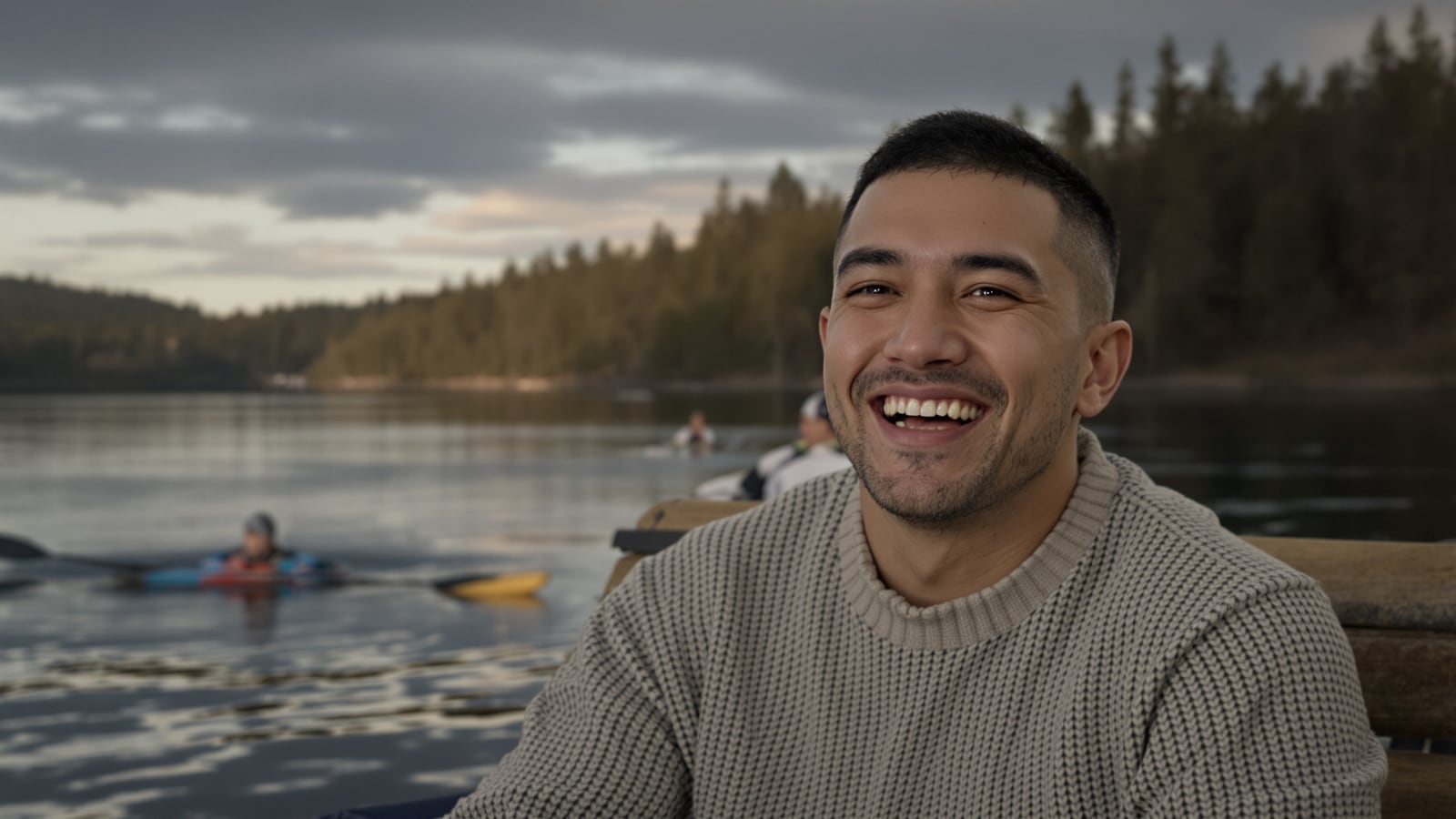
The best sound on a lake is a kid laughing from a boat they just flipped, and then climbed back into on their own.
Marcus Vale
Editor-in-Chief
Twenty years in magazines, most of it deciding what to cut. Writes about work, discipline and the decisions that compound.

Watch
Worth an hour of your evening
More from Play.
From channels we rate. Plays on YouTube.
Read next