How to run a poker night your friends keep coming back to
A fixed buy-in, a hard stop, and food that isn't on the cards. Most bad poker nights fail on structure, not on cards.
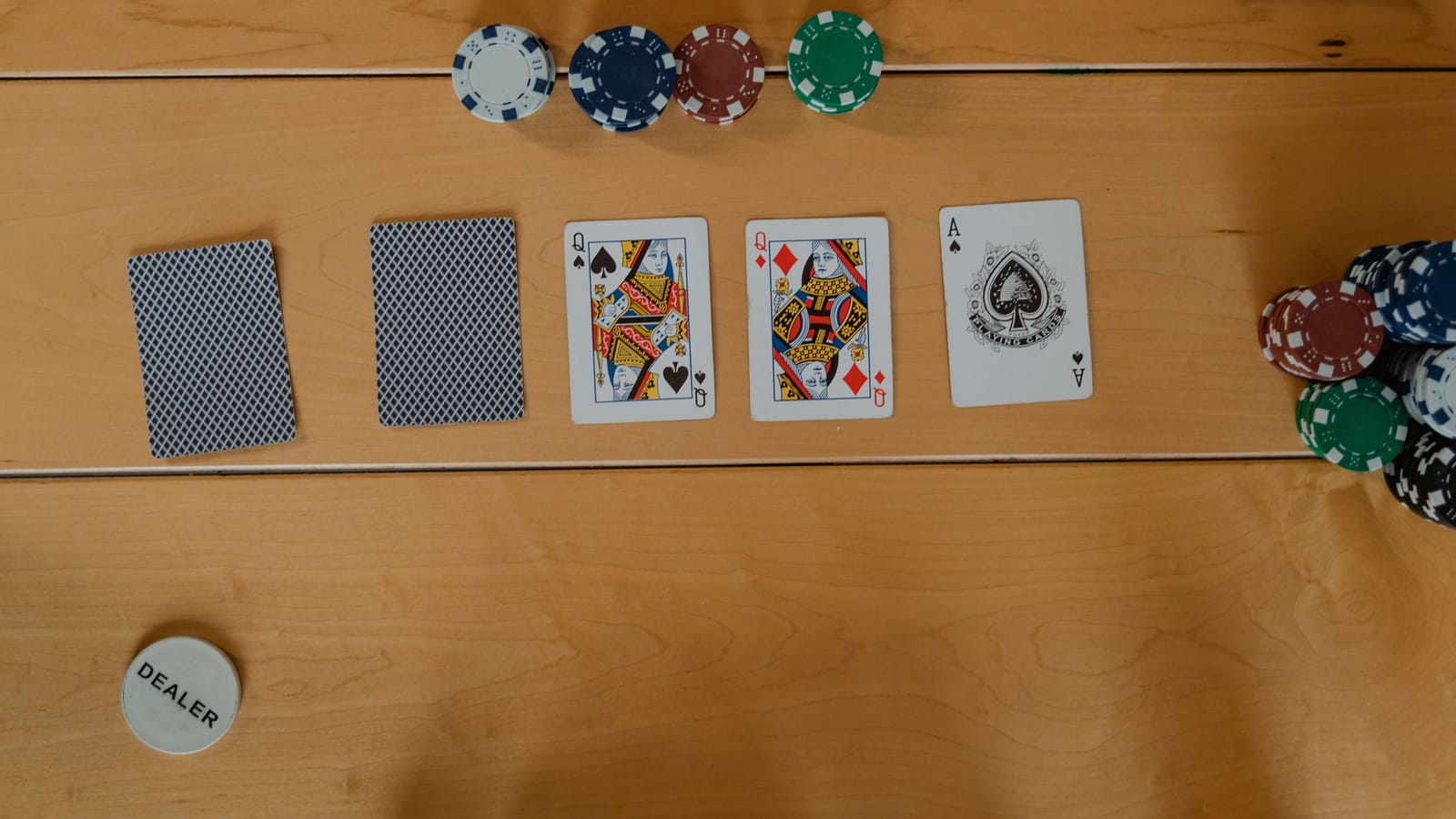
Run a tournament, not a cash game. That one decision fixes about eighty percent of what goes wrong.
In a cash game, a guy can sit down with forty dollars, lose it in twenty minutes, buy back in for eighty, and drive home at 1 a.m. having lost a number he doesn't want to say out loud. In a tournament, everybody pays the same amount once, everybody gets the same stack, and the worst thing that happens to anyone is that they lose that one amount and then eat chili and talk for an hour. Nobody goes home quiet.
That's the whole game, really. You're not hosting a card game. You're hosting a reason for eight men to sit in one room for four hours without their phones.
Set the buy-in where losing it's boring
Pick a number that the guy with the tightest budget at your table can lose without thinking about it on the drive home. Twenty dollars is plenty. Forty if everybody's comfortable. The pot isn't the point, and the second it becomes the point you've got a different kind of evening on your hands.
Collect it at the door, in cash, before a single card comes out. One person holds it in an envelope on the shelf. No IOUs, no Venmo-me-later, no side bets, no lending between players. If a man can't cover the buy-in that night, he deals and eats and plays the next one. Do that quietly and nobody's embarrassed.
That rule sounds rigid until the first time it saves you. Money between friends is the fastest way to end a friendship, and the thing that ends it's never the amount.
The structure that actually works
Eight players at one table. Nine is the practical maximum; six is fine and plays faster.
- Starting stack: 10,000 in chips. Use big numbers. It feels better and the math is easy.
- Blind levels: 15 minutes early, 20 if you want a longer night. Set a timer on a tablet where everyone can see it.
- Blind structure: 25/50, 50/100, 75/150, 100/200, 150/300, 200/400, 300/600, 500/1000, and keep roughly doubling. Eight players at 15-minute levels lands you around three and a half hours.
- Re-entry: one, available only during the first four levels. After that you're out for good. This keeps the night from sprawling and stops anyone from spending real money.
- Payouts: eight players, pay two — 65 percent and 35 percent. Ten players, pay three.
Announce the payout structure before you deal. Arguing about money at 11 p.m. with a short stack on the line is a bad way to spend a Thursday.
Buy decent chips and plastic cards
A 500-chip clay-composite set runs less than a nice dinner out and lasts a decade. Light plastic chips slide, stack badly, and make the whole thing feel like a kids' game. Weight matters here more than you'd think.
Two decks of plastic playing cards, alternating. Paper cards get bent, marked, and greasy inside three sessions, and then you've got a marked deck whether anyone meant it or not. Plastic decks wipe clean and run for years.
Add a dealer button and a cheap felt mat if you've got a hard table. Skip the folding poker table unless you've already got the storage.
Feed people before, not during
Something in a slow cooker. Chili, pulled pork, carnitas, a pot of beans. Set it up in the kitchen, tell people to eat when they arrive, start cards thirty minutes after the stated time.
What you don't want is wings and dip on the table. Greasy fingers on plastic cards is survivable, on paper it isn't, and either way somebody's knocking a plate onto the felt by level five. Keep the table to drinks and maybe a bowl of pretzels.
On drinks: have good non-alcoholic options and mean it. Some of your guys don't drink, some are driving, and a table where nobody's tracking that's a table somebody quietly stops coming to. And one man who's had too many will slow the game, misread hands, and turn a friendly pot into a thing. You're the host. You get to say when someone's done.
The rules that prevent the actual arguments
Post these or say them out loud at the start. They're not about being strict, they're about everyone knowing the same thing:
- Verbal is binding. If you say "raise," you raised.
- No string bets. One motion, or announce the amount first.
- One player per hand. No coaching, no looking at a friend's cards, no discussing a live hand.
- Cards speak at showdown. Table your hand face up. The best hand wins whether the owner spots it or not.
- Don't splash the pot. Bets stay in front of you until the action is complete.
- No slow rolling. If you've got the winner, show it. Making a man sweat a hand he's already lost is the one sin at a poker table that people actually remember.
Print a hand-ranking card for each seat. Nobody who's fuzzy on whether a flush beats a straight is going to ask out loud, and you'd rather they didn't have to.
Protect the beginners or you'll lose them
If you've got one guy who plays regularly and one guy who's never played, the regular is going to take his twenty dollars in forty minutes and the beginner is never coming back. That's a hosting failure, not a poker outcome.
Fix it before the cards. Tell the experienced players their job for the first hour is to explain, not to punish. Let people ask what the blinds are. Let someone take back an obvious misclick in the first level. And when a new guy gets stacked early, that's what the re-entry window is for.
The skilled players lose nothing by being generous. They'll still win over a year.
Hard stop, and how to end clean
Pick an end time when you send the invite. Eleven, eleven thirty. Say it plainly.
When the clock's nearly out and two or three players are left, offer a chop: the remaining players split the prize money proportional to their chip stacks and stop there. It's a completely normal way to end a tournament, everybody leaves whole, and you're not running blind level fourteen at 12:40 a.m. while somebody's wife is texting.
Better to end early and leave people wanting the next one than to grind out a winner while half the room is on the couch checking scores.
Make it the same night every month
The third Thursday. The first Tuesday. Whatever it is, make it fixed, put it in a recurring calendar invite, and send it whether or not you've heard from anyone. The consistency is what builds the thing. Guys plan around a standing date in a way they will never plan around "we should do poker again sometime."
Keep a running score across the year if you want a spine to it — points for finishes, a cheap traveling trophy, bragging rights in January. It gives the guy who busted first in March a reason to show up in April.
And if money's the wrong fit for your group, it works just as well without it. Buy in with a bag of coffee or a six-pack of something, winner takes the pile. The structure is what makes the night, not the stakes.
Six months in you'll notice the poker has become almost incidental. A man will mention that his father's sick, or that work is going sideways, somewhere around level six, in a way he'd never do over a phone call. That's the thing you actually built.
Marcus Vale
Editor-in-Chief
Twenty years in magazines, most of it deciding what to cut. Writes about work, discipline and the decisions that compound.

Watch
Worth an hour of your evening
More from Play.
From channels we rate. Plays on YouTube.
Read next