Your first mountain is a timing problem, not a fitness test
Pick the right peak, start stupid early, and set a turnaround time you actually honor. The summit is the easy half.
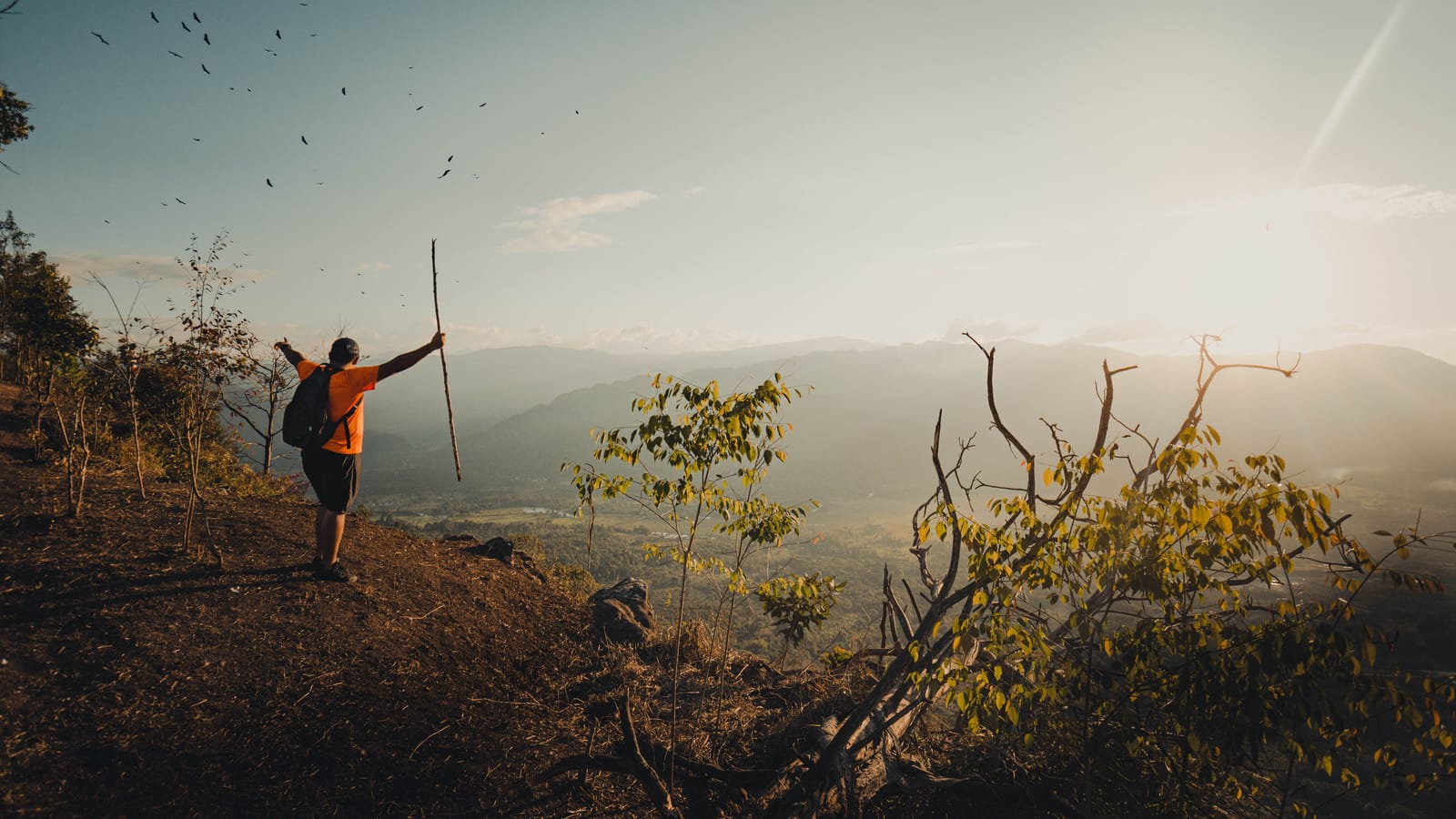
Pick your mountain by elevation gain, not by summit height. A 3,165-foot peak in New Hampshire will hand you a harder day than a 10,000-foot peak in Colorado if the trailhead in Colorado starts at 9,200 feet. Mount Monadnock climbs about 1,800 feet in under two miles on the White Dot trail, which is why people who run 5Ks come off it looking stunned. Mount Si outside North Bend, Washington, stacks roughly 3,150 feet into four miles. Old Rag in Virginia is a nine-plus-mile loop with a rock scramble in the middle that will have you using your hands.
Gain is the number that hurts. Find it before you commit.
Match the mountain to the body you actually have
Be honest about the last time you walked uphill for two hours straight. Not jogged. Walked, loaded, uphill, without stopping to answer anybody.
For a genuine first mountain, look for something in the 1,500 to 2,500 feet of gain range, somewhere between three and six miles round trip, on a trail that's marked and popular. Popular matters more than you'd think. On a busy trail, somebody comes by every ten minutes, and that's a real safety margin when you roll an ankle.
The trade-off is that popular means parking. At the good trailheads in summer, the lot is full by 7 a.m. on a Saturday, and the overflow is a mile of shoulder parking that adds two miles to your day before you've started. Go on a weekday if you can. If you can't, get there before sunrise.
The turnaround time is the whole discipline
Before you leave the car, write down a time on your phone. That's the time you turn around whether you're at the summit, on a false summit, or staring at the summit from three hundred yards away.
Then honor it. That's the part people fail.
Use a rough planning rule that mountain folks have been using forever: figure two miles an hour on the flat, and add an hour for every 1,000 to 1,500 feet you climb. A four-mile round trip with 2,000 feet of gain is roughly two hours of walking plus an hour and a half of climbing, so call it three and a half hours, then add a half hour for breaks, photos, and the guy in your group who has to re-lace his boots twice. Four hours. Now work backward from sunset and subtract another hour, because dusk in the woods on the east side of a ridge comes about forty-five minutes before the app says it does.
The summit isn't the halfway point of your day in terms of effort. It's about 45 percent. Descending is faster in minutes and harder on the body.
Your feet decide how the day goes
You don't need $280 boots. You do need shoes with real tread and a pair of socks that isn't cotton. Merino wool or a synthetic blend, roughly $20 to $25 a pair for the good stuff, and that single purchase prevents more misery than anything else you'll buy.
Cotton socks hold water, water makes friction, friction makes a blister the size of a quarter on your heel at mile three. Then you're limping down a rock staircase for two hours. I've watched a strong twenty-eight-year-old man reduced to a shuffle by one sock.
Trail runners work fine on maintained trails and dry rock, and they're lighter. Boots give you ankle support and keep your toes intact when you kick a root. Either is defensible. What isn't defensible is brand-new footwear you've never walked in. Wear them to the grocery store, on the dog walk, around the yard, for a week minimum.
Lace them tight on the way down. Loose laces let your foot slide forward, and your big toenail pays the bill about two weeks later.
What goes in the pack
A 20-liter daypack is plenty. Load it the night before, not in the parking lot.
- Water. Two liters minimum for a half-day hike, three if it's hot or you sweat heavily. A liter of water weighs about 2.2 pounds, which is why people cheat on this. Don't.
- Food. More than you think. A sandwich, a bag of trail mix, two bars. Calories fix a shocking number of problems that feel emotional.
- Rain shell. Even if the forecast is clean. Mountains write their own weather.
- An extra insulating layer. Fleece or a light puffy. The summit can be twenty degrees colder than the trailhead once you add wind, and you'll be soaked with sweat when you get there.
- Headlamp. Not your phone. A real headlamp, around $30, with fresh batteries. This is the item that turns an epic into an inconvenience.
- First aid basics. Blister pads, ibuprofen, a few bandages, tape.
- A paper map or a downloaded offline map. Cell service dies about ten minutes above the trailhead.
That list is most of the classic Ten Essentials. The rest is fire and a knife, and you should carry both.
Tell somebody, and mean it
Text one person who isn't on the hike: the trailhead name, the trail you're taking, and the time you'll check in when you're back at the car. Then actually check in, or they'll be calling the sheriff while you're ordering a burger in a dead zone.
This is basic adult behavior, and it costs you thirty seconds.
The descent is where people get hurt
Most sprained ankles, most blown knees, most falls happen going down, in the last third, when your legs are cooked and you've mentally already finished.
Two things help. First, trekking poles. They look fussy in the parking lot and they take a meaningful load off your knees on every single step down. Cheap aluminum ones do the job. Second, slow down deliberately on steep, loose sections and put your whole foot down instead of the ball of it.
Eat something on the summit before you start down. Drink. Then walk like the day isn't over, because it isn't.
Bring the right people
Your first mountain is better with two or three people than with eight. Eight people move at the speed of the slowest person minus the patience of the fastest, and somebody always wants to renegotiate the plan at the trail junction.
Take your wife. Take your twelve-year-old. Kids do far better than adults expect on climbs and far worse on long flat approaches, so a short steep mountain is the right shape for them. Give a kid a job. Let him hold the map, count the blazes, call the break times. He'll come off that mountain three inches taller.
And put the phone in the pack for the middle hour. Not for the view. For the quiet, which most men haven't had in months and don't realize they've been missing until a ridge line hands it back to them.
When to turn around and feel good about it
Thunder anywhere. A member of your group who's stopped talking. Fog thick enough to lose the trail. Any sentence that begins with "I think this is still the trail."
The mountain will be there in October. Come back and take it then. Guys who make a habit of turning around are the same guys who get to do this for another forty years.
Marcus Vale
Editor-in-Chief
Twenty years in magazines, most of it deciding what to cut. Writes about work, discipline and the decisions that compound.

Watch
Watch how it's done
Picked for this article.
From channels we rate. Plays on YouTube.
Train to Summit
How I Went From Hiker to Mountaineer (Mistakes to Avoid)
Read next