Write the Phone Numbers Down Before the Battery Dies
Your phone remembers every number you've stopped learning. A card in your wallet and another on the fridge cover the day it can't.
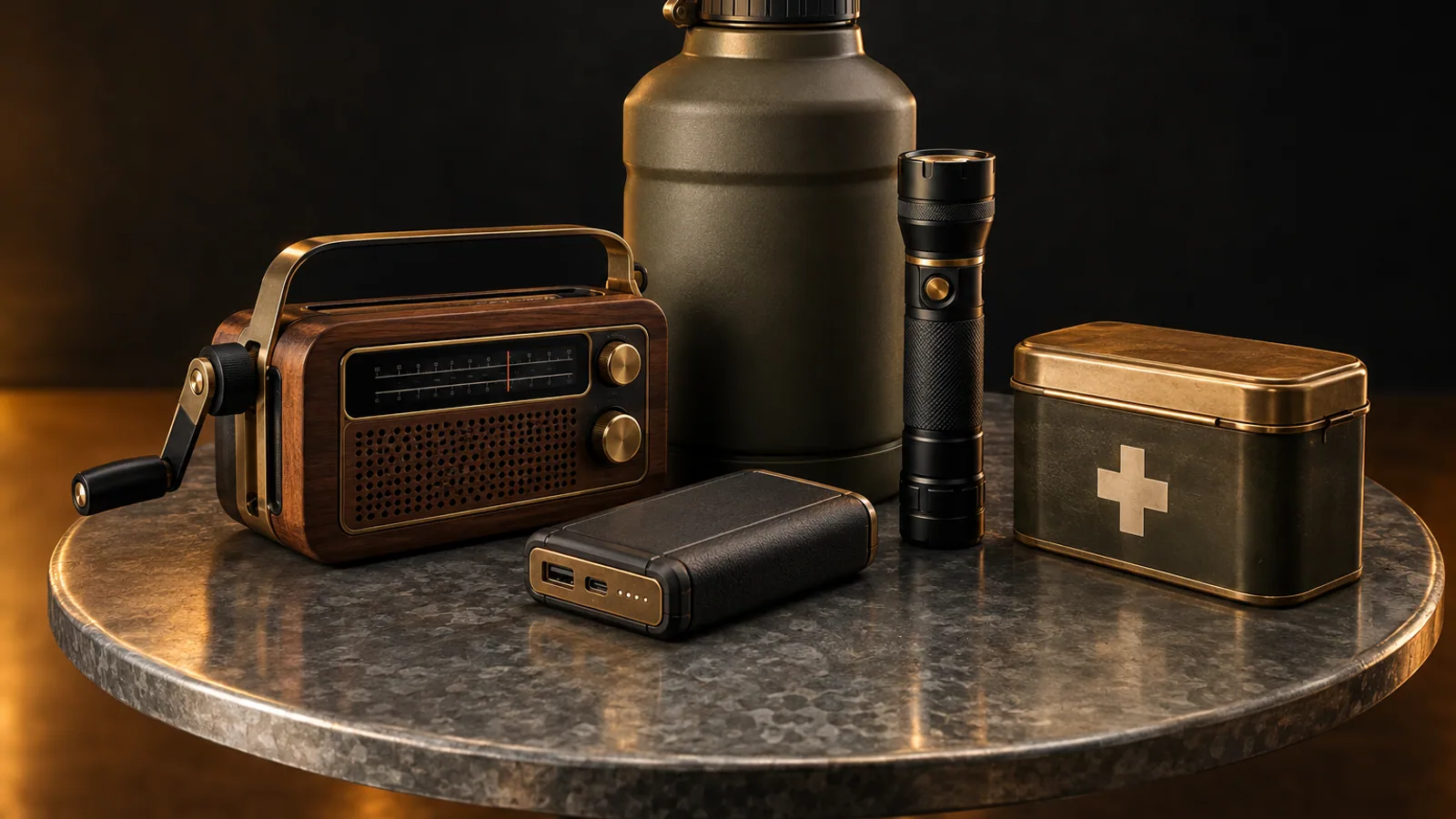
Quick answer: Write 10 to 15 essential numbers on an index card in pen. Make four copies: wallet, fridge, go-bag, glovebox. Put one number on it that belongs to someone out of state. Check it twice a year.
Picture an ice storm. Your truck is in a ditch on a county road, your phone is at 3 percent, and a farmer you've never met says you're welcome to use his landline.
What's your wife's number? Not her name. The digits.
Most of us know our own and maybe one other. Everything else lives in a glowing rectangle that dies after a day without a charge. A paper list is the cheapest piece of preparedness you'll ever make, and it takes about twenty minutes.
The list is for the person helping you
Here's the angle most people miss. You probably know where to find your own information. The card isn't mainly for you.
It's for the neighbor holding your dead phone. The paramedic going through your wallet. The ten-year-old who has to tell an adult who to reach. The stranger with a landline and good intentions.
So write it for someone who doesn't know you. Print in block letters. Put the name, the relationship and the number on one line each. "WIFE, Karen" beats "K." A stranger can't dial "K."
What goes on the card
Keep it to what you'd need in the first 24 hours of a bad day.
- Household. Every adult's cell number, and the home number if you still have one.
- Out-of-state contact. One person who lives well outside your region, such as a brother in another state or an old Army buddy. Ready.gov and the Red Cross both recommend this. Local lines get jammed in a regional emergency, and it's often easier to reach someone far away. Everyone in the family reports to that one person, and they pass word along.
- Work. Your employer's main line and your spouse's. People forget this until they need to explain why they won't make a shift.
- Kids. School office, daycare, and the adult on the pickup list who lives closest.
- Medical. Your family doctor, your pharmacy, and a line each for allergies, regular medications and blood type if you know it. Keep it short. A paramedic wants facts, not a history.
- Neighbors. The two nearest people you'd trust with a key.
- Utilities. Your electric company's outage line and your gas company's emergency line. Look them up once, on a calm day. Your insurance agent's number goes here too, because you'll want it the morning after a storm.
- Local police. The non-emergency number for your department, written down ahead of time.
- Landlord or property manager, if you rent.
- Vet. If you have a dog, you have a vet. You'll want the number on a bad night.
That's about fifteen lines. If it's running longer, you're writing a phone book.
What stays off it
A card in your wallet can get lost. Leave off passwords, PINs, bank account numbers and anything with a Social Security number. If someone finds the card, they should learn who loves you and nothing else.
Same goes for the copy on the fridge. Don't list your work schedule or when the house sits empty. It's a contact list, not a map of your habits.
Four copies, four places
One card is a plan with a single point of failure. Make four.
- Wallet. Behind your license, where first responders look.
- Fridge door. Under a magnet, where a babysitter or houseguest finds it in seconds.
- Go-bag or 72-hour kit. If you've built one, this goes in the front pocket. The seventy-two hour kit your family will actually use is the place for it.
- Glovebox. In a zip bag, along with a pen.
Use a pen, not a pencil that smudges. A ballpoint survives rain better than a gel pen, and clear packing tape over the card works as cheap lamination. It'll get soft at the corners. That's fine. A beat-up card that works beats a nice one you never made.
Teach the kids to read it
A card in a backpack does nothing for a seven-year-old who doesn't know it's there.
Sit down with each child and show them the card. Have them find Mom, Dad and the out-of-state contact by name. Once a year, make a game of it: "Your phone's dead and we're lost. Who do you ask for?" Five minutes, and they'll remember.
Older kids should memorize two numbers. Yours and one other. That's one more than most adults can do.
Pick two places to meet
While you've got the pen out, add two lines at the bottom: where the family meets if you can't get home, and where you meet if the neighborhood itself is closed off.
The first is near the house. A neighbor's porch or the end of the street works. The second is outside the neighborhood, such as a church parking lot, a school, a relative's place or a gas station you all know. Write both addresses on the card.
Official guidance from FEMA and the Red Cross says the same: a plan only works if everyone already knows it.
Keep it honest
A stale list is worse than none. A dead number sends someone down a blind alley when time matters.
Pick two dates a year and tie the card to something you already do. Daylight saving time changes in March and November. Swap smoke detector batteries, glance at the card, fix whatever changed. New job, new number, new school, new neighbor? Update it that week, while it's fresh.
Do it for the people who rely on you
Make a second card for your parents, or for the older neighbor down the street. Large print, one page, taped where they'll see it. Add your number and your brother's. Their own phone may be the one that's dead, and they may not remember a single number. The list of what your parents need before a three-day outage covers the rest of what belongs in their house.
If you live alone, this matters twice as much. Nobody in the house is going to say your number out loud for you. What to do before the power goes out when you live alone walks through the rest.
After the card, the rest
The card handles the "who" problem. The rest of the plan handles "how." A battery radio gets you news when the cell towers don't, and the radio still works when the internet goes down. Keep some cash where you can reach it too, since card readers don't work in a blackout, which the piece on your emergency fund and the cash you can actually reach lays out.
But start with the card. Grab an index card and a pen tonight. Write your wife's number from memory, then check it against your phone.
If you got it wrong, you just learned something for the price of a pen.
Wes Dunbar
Country & Skills
Grew up on an acreage and never quite left. Covers trucks, trades, land, and how to do the thing yourself.

Watch
Worth an hour of your evening
More from Preparedness.
From channels we rate. Plays on YouTube.
Read next