

Your Backup Sewer Is a Five-Gallon Bucket
When a long outage knocks out the pumps and the treatment plant, nobody's coming to save your toilet. A bucket, a bag and a plan will.
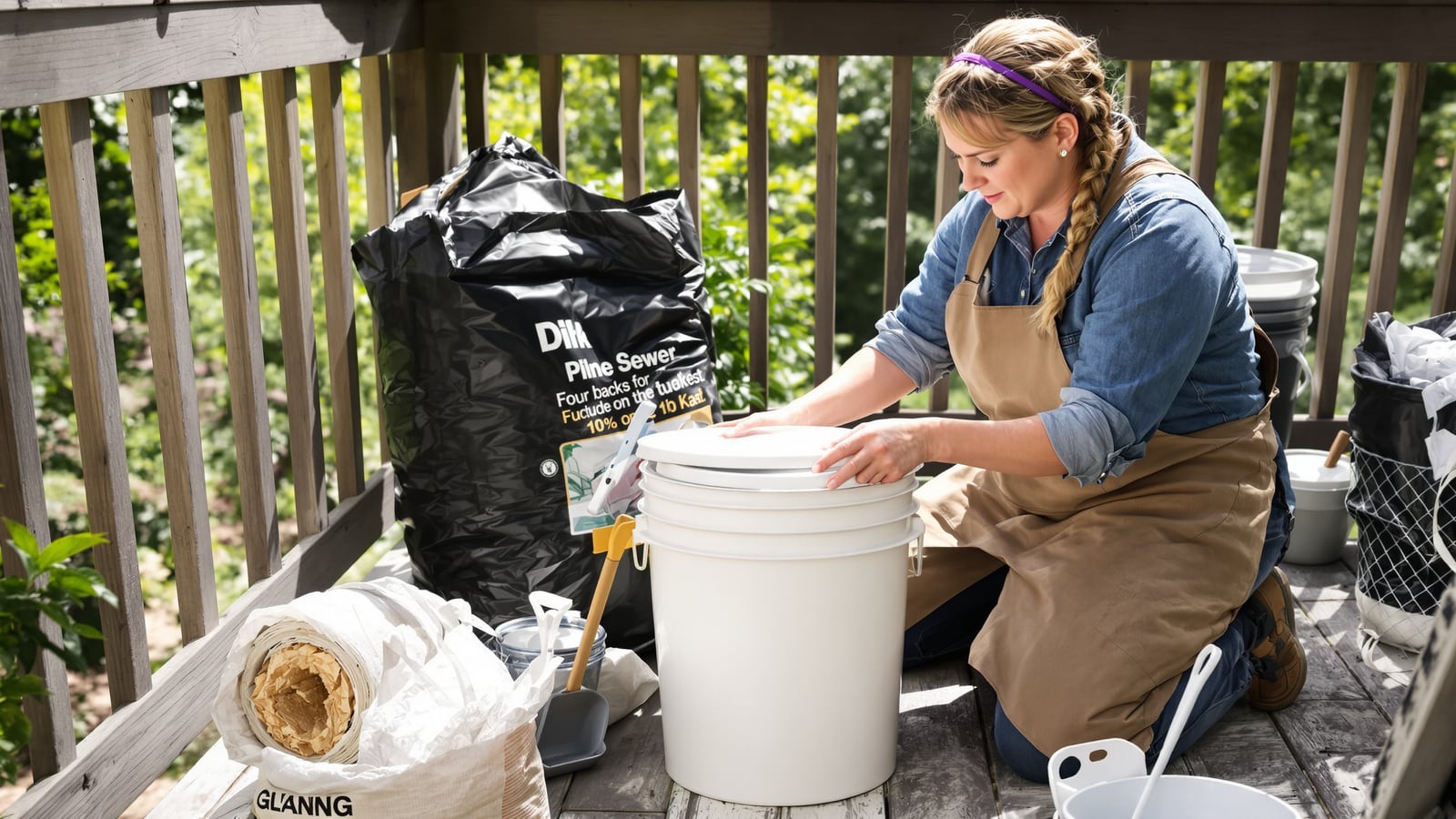
Quick answer: There's no backup sewer to call on. If the system fails, your backup is a bucket toilet, a stack of heavy bags and a clear idea of which kind of system you're on. Build it for about thirty dollars and a Saturday morning.
What actually stops working
Most people picture one big pipe to a plant. The reality is a chain, and several links run on electricity.
Sewage moves by gravity where the ground slopes the right way. Where it doesn't, a lift station pumps it uphill. Utilities usually keep generators or backup power at those stations, but a multi-day outage over a wide area, a flooded station or a fuel shortage can still beat them. Then the treatment plant has its own power needs on top.
When it goes wrong, the first sign is rarely dramatic. Your utility asks customers to cut back on water use. Take that seriously. Every flush, shower and load of laundry adds to the pipe the system can no longer empty.
The worst case is a backup into the lowest drains in the house, usually a basement floor drain, a basement toilet or a tub. That's why the first job is knowing your own setup.
Find out which system you're on
Three questions. Answer them this week, not during the outage.
- Sewer or septic? Your water bill or property records will tell you. If you pay a sewer charge, you're on municipal.
- Does your sewer line go uphill anywhere? Some homes have their own ejector pump in the basement. It needs power, and without it the basement fixtures can't drain.
- Do you have a well? If so, no power means no pump and no water in the toilet tank.
Septic owners have a small edge. A standard septic tank works by gravity and doesn't need electricity. But if yours uses a pump to move effluent to the drain field, it goes dark with the rest of the house. And a septic system is still a finite thing. Heavy water use during an outage can overload it.
If you're on a sewer and your house sits low, ask a licensed plumber about a backwater valve. It's the one piece of hardware that keeps a street-side backup out of your basement. I won't guess at the cost. Get a quote.
Flush with a bucket, if the pipes still work
Sometimes the sewer is fine and your house just has no water pressure, whether from a dead well pump or a boil-water situation. In that case you don't need the bucket toilet yet.
Fill a bucket with several gallons of water, any water that isn't fit to drink. Pour it into the bowl in one fast motion. The rush does what the tank would have done. Bathtub water drawn before a storm is perfect for this.
But if your utility says to stop using the sewer, or you see water backing up in a low drain, stop flushing. Move to the bucket.
Build the bucket toilet
The CDC's emergency-toilet guidance is simple, and it works. Here's the kit:
- A sturdy five-gallon bucket with a lid. Buy a second one. You'll want it.
- A snap-on toilet seat made for buckets. Sitting on a bucket rim for a week gets old by about hour two.
- Heavy-duty contractor bags that fit inside the bucket. Buy more than you think. Thirty is a fair starting point for a family.
- Something absorbent for each use: cat litter, sawdust, wood shavings or dry ash.
- Unscented household bleach, for disinfecting per the CDC's instructions.
- Soap, a jug of water for washing and hand sanitizer with at least 60 percent alcohol.
- Disposable gloves, paper towels and a lidded bin for used bags.
- A shower curtain or sheet for privacy, if the bathroom doesn't have a door that closes.
Line the bucket with a bag. After each use, add a scoop of the absorbent. Don't let it fill past about half, because a full bucket is a heavy, sloshing bucket. Tie off the bag, double it, and put it in the lidded bin.
That bin goes outside, in the shade, away from the house and away from any well. Keep it where animals and kids can't get to it.
What you can't do with the bags
This is where people improvise, and the official guidance is blunt about it.
Don't dump anything in a storm drain, a creek or a ditch. Don't bury it near a well or a water source. Don't put it in with regular household trash unless your local officials say that's the way. After a widespread outage, authorities usually announce a disposal method. Wait for it. Check the radio if your phone's dead, and our piece on what the radio still does when the internet goes down covers how.
Hands, water and the part nobody plans for
A toilet problem becomes a stomach problem through dirty hands. Wash with soap and clean water after every trip and before any food. Sanitizer works when you can't wash. But it's a second choice. It doesn't do much on hands that are visibly dirty.
The official benchmark for drinking water is a gallon per person per day. Plan more for washing. That number alone is a good reason to read what a week without power actually takes before you decide what you're storing.
If sewage backs up into the house
It happens. Floor drains are the usual route.
Stop using water. Keep children and pets out. Wear rubber boots, waterproof gloves and eye protection, and don't touch it bare-handed. Anything porous that got soaked, like carpet, cardboard or a stuffed chair, is generally written off. Hard surfaces can be cleaned and disinfected following CDC flood-cleanup guidance. Never mix bleach with ammonia or other cleaners. The fumes are dangerous.
If someone gets sick afterward, with vomiting or diarrhea, especially a child or an older person, get medical help. Dehydration moves fast.
Generators and the one pump that matters
If you have an ejector or sump pump, a generator can keep it running. That's one of the best uses for a small one. But the rules on placement aren't optional, and twenty feet from the house and the other generator rules is worth ten minutes before you pull the cord.
The Saturday project
Buy the buckets, the seat and the bags. Pack the kit in one of the buckets, snap the lid on, and put it where you can grab it in the dark. Write the utility's outage line on the lid in marker.
Then do something that feels a little silly. Show your kids the bucket, tell them what it's for, and let them roll their eyes. Better that than a first lesson in the dark with a flashlight in somebody's teeth.
You'll probably never use it. A fire extinguisher works the same way. It's cheap, it's boring, and the one night you need it, you'll be the only house on the block with a plan.
Wes Dunbar
Country & Skills
Grew up on an acreage and never quite left. Covers trucks, trades, land, and how to do the thing yourself.

Watch
Worth an hour of your evening
More from Preparedness.
From channels we rate. Plays on YouTube.
Read next