

An assumable mortgage only saves you on the part you inherit
Taking over a seller's low-rate loan can save thousands a year. It can also leave you hunting for a six-figure gap. Do the math before you fall for the rate.
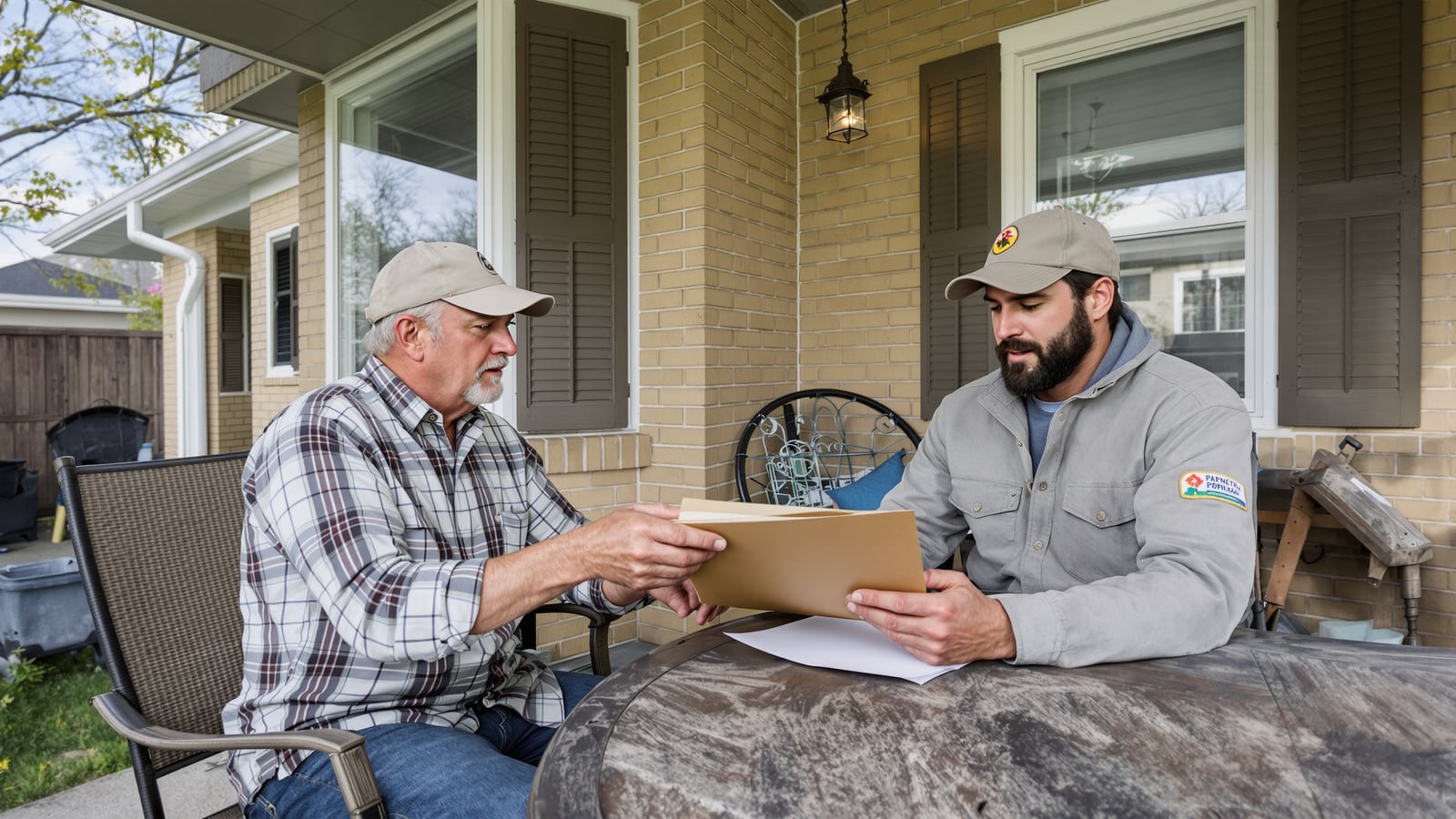
Quick answer: An assumable mortgage lets you take over the seller's existing loan, rate and all. It pays off when the seller's balance is close to the price, or when you have the cash to cover the difference. It backfires when the gap is big and you have to borrow it at today's rates.
All numbers below are illustrative examples, not market data. Rates, rules and fees vary by lender, state and county.
What you're actually buying
You're not buying a rate. You're buying the right to step into the seller's loan, with the seller's remaining balance and remaining term.
Most conventional loans can't be assumed. They carry a due-on-sale clause, which lets the lender demand full payment when the house changes hands. FHA, VA and USDA loans are generally the exceptions. If the seller has one of those, the loan may be assumable.
Your agent may not know. Ask directly, early, and ask the seller's agent to confirm the loan type in writing. Don't assume anything from a listing that says "assumable" in the remarks. Verify it with the servicer, the company that collects the payments.
The gap decides everything
Say a house sells for $400,000. The seller bought years ago and owes $250,000 at 3 percent. The gap between price and balance is $150,000. That gap is yours to cover, and nobody finances it at 3 percent.
Here are three ways to buy that same house. Payments cover principal and interest only, and they're rounded.
- Assume the loan and pay the gap in cash. Payment: about $1,054 a month. Cash needed: $150,000 plus closing costs.
- Take a new loan, same $150,000 down. The $250,000 loan at 7 percent runs about $1,663 a month. Assuming saves roughly $609 a month, about $7,300 a year.
- Assume the loan and borrow the gap with a second mortgage. At 9 percent over 20 years, $150,000 costs about $1,350 a month. Add the $1,054 and you're at roughly $2,404.
Compare that last one to a plain conventional loan with 20 percent down. That's $80,000 down and a $320,000 loan at 7 percent, about $2,129 a month. The "bargain" loan with a second mortgage costs you more every month.
A low rate on a shrinking slice of the price doesn't make the whole deal cheap. The question is your blended cost on every dollar you need to borrow, and your cash on hand. Run it against your own numbers, and read what moves mortgage rates and what you can actually control so you know what a fair comparison rate looks like.
The process, in order
- Get the loan facts from the seller. Loan type, interest rate, current balance, remaining term, and the servicer's name. Ask for a recent mortgage statement.
- Confirm assumability with the servicer. Not with the seller, and not with a listing. Ask what they require and what they charge.
- Write the contract with an out. Include a contingency for assumption approval and a firm deadline. Servicers can be slow, often slower than a normal closing. Build in room for an extension.
- Line up the gap money. Cash, or a second loan if the program and servicer allow it. Some don't, and some limit how much you can stack on top. Settle this before you commit.
- Apply with the servicer. You'll qualify the way you would for any loan: pay stubs, tax returns, bank statements, credit. You're not skipping underwriting.
- Order title work and inspection. Same as any purchase. The home inspection is still your last cheap exit, and a low rate doesn't fix a bad roof.
- Close. You'll sign an assumption agreement and take the deed. A title company or attorney handles the paperwork, and the servicer's fee is added to your costs.
The fees and the people
You'll deal with the servicer's assumption department, the seller's agent, your agent, a title company or closing attorney, and a lender if you're financing the gap. Fees to expect include the servicer's processing fee, title insurance, recording fees and attorney fees where your state uses them. Get the servicer's fee in writing. Some programs also charge a funding fee on assumption, so ask.
Taxes and insurance usually ride along in an escrow account. Your real monthly payment is higher than the principal-and-interest figures above. The seller is typically reimbursed for the escrow balance at closing, which is one more cash item.
What usually goes wrong
The gap is bigger than you thought. A seller who has paid the loan down for ten years has a smaller balance and more equity. That's good for them and hard on you. A big gap kills more of these deals than any other problem.
The clock runs out. Servicers can take weeks or months. If your contract has a hard closing date and no extension, you can lose the house or your deposit. This is where a sharp agent earns the commission. Put these questions to any agent before you sign.
The seller stays on the hook. On a VA loan, the seller's entitlement can stay tied up unless the buyer is an eligible veteran who substitutes their own. On any loan, a seller who isn't formally released can be liable if you stop paying. If you're the buyer, don't leave a man exposed to your mistakes. Make sure the release is in the paperwork.
Mortgage insurance carries over. An FHA loan's insurance premium may stay for the life of the loan, depending on when it was written and how much was put down. Ask for the original terms before you do the math.
Somebody suggests skipping the lender. A "subject-to" deal, where you take title and the seller's loan stays in his name without the servicer approving, triggers the due-on-sale risk. Some seminar circuit people push it. It can end with the lender calling the whole balance due. Don't do it. Do it with the lender's approval or don't do it.
When it's a win, and when to walk
It's a win when you have cash for the gap, the balance is close to the price, the rate is well under what you'd pay on a new loan, and the monthly payment fits your income with room to spare. It's also a win for a seller who wants a way to move a house in a slow market, since a transferable low rate is something to sell.
Walk away when the second mortgage turns your blended rate into a loan you wouldn't have taken otherwise. Walk away when the payment only works if nothing goes wrong. The bank may approve you for more than you should carry, and that's a problem on any loan. Buy the house you can afford in a bad year, not a good one.
Before you act, talk to a licensed real estate attorney in your state, a lender who knows assumptions, and a CPA about the tax side. Laws and customs vary by state and county, and this is general education, not individual financial, legal or tax advice.
A low rate is a nice thing to inherit. Just make sure you can afford the house it comes attached to.
Ray Okonkwo
Money & Business
Former commercial banker turned small-business owner. Covers salary, credit, margins and the arithmetic nobody does before signing.

Watch
Worth an hour of your evening
More from Real Estate.
From channels we rate. Plays on YouTube.
Read next