Ask for five things, not forty, after the inspection
A 40-item repair list reads as a buyer who'll fight over everything. Sort the report, ask for what matters, and keep the deal and your leverage.
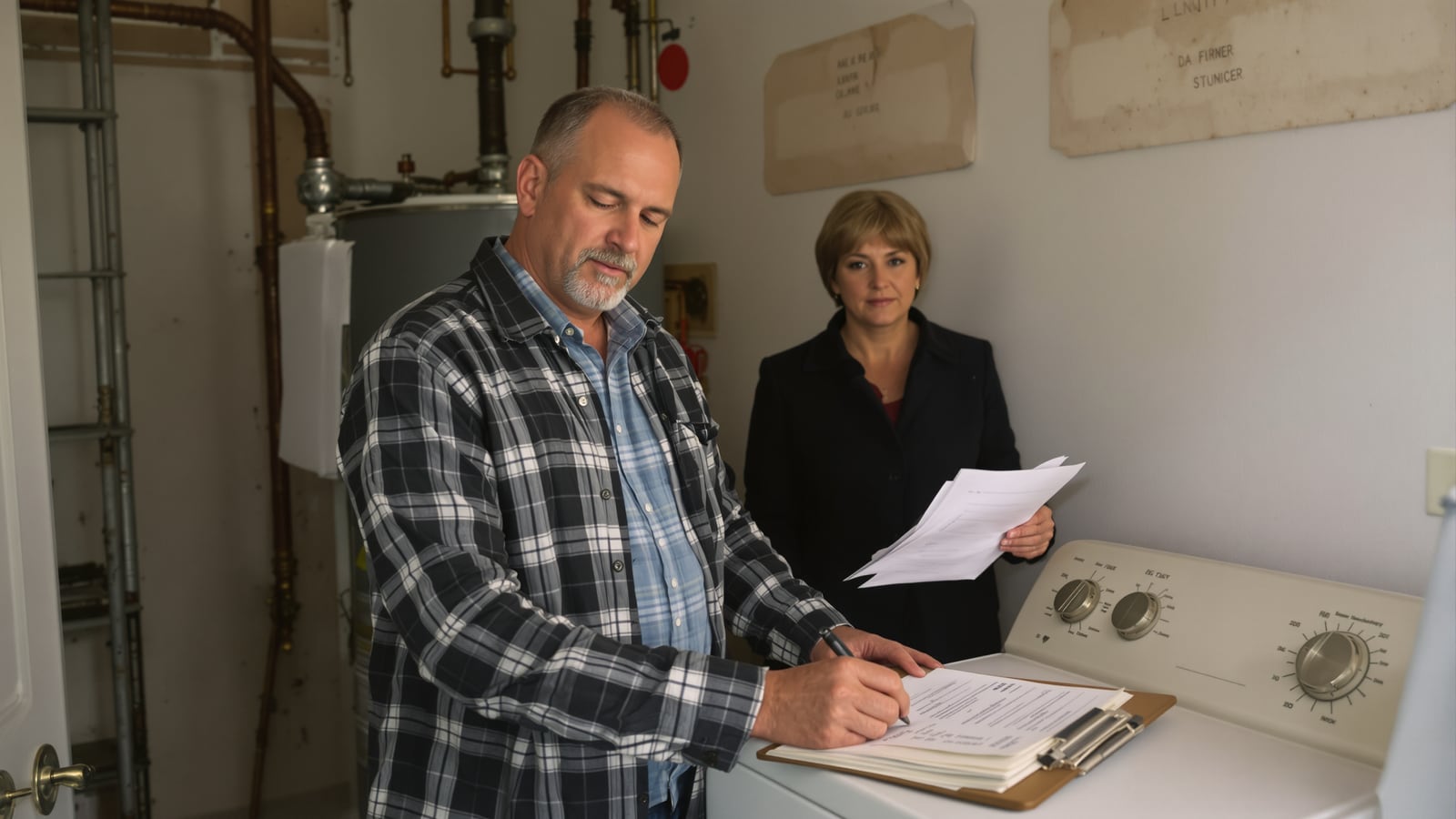
Quick answer: Sort the report into safety, structure and water first, everything else second. Ask for the few items that could cost you real money, pick repair, credit or price cut on purpose, and get every agreement in writing before your inspection deadline passes.
Find your deadline before you open the report
Your purchase contract has an inspection contingency, and it has a clock. Depending on your state and your contract, it might be seven days or ten, and it may be shorter in a fast market. When it runs out, you generally lose the right to walk away or renegotiate over what the inspector found. Your earnest money can be at stake.
Read the contingency paragraph the day you sign. Write the date on the fridge. If you need more time to get a roofer or a plumber out to look at something, ask your agent for a written extension before the deadline, not after it.
Rules, forms and even the names of these documents vary by state and county. In some states a real estate attorney handles this stage, and in others your agent does. Ask who owns it for you.
Sort the report like a grown man, not a nervous one
A typical inspection report runs dozens of pages and lists dozens of findings. Most of them are noise: a loose cabinet pull, a missing outlet cover, a worn caulk line. Every house has them. Don't send them to the seller.
Sort what's left into three piles.
- Pile one: safety and structure. Active roof leaks, foundation movement, electrical panel defects, gas leaks, no working smoke detectors, signs of water intrusion or mold, failing sewer line.
- Pile two: big systems near the end of their life. A furnace, water heater or roof that works today but is clearly on borrowed time.
- Pile three: everything else. Maintenance, cosmetics, small stuff. This is your house now. You'll handle it.
Piles one and two are your negotiation. Pile three is where you show the seller you're reasonable.
Get a real number before you ask for anything
"The inspector says the roof looks old" isn't a request. "A licensed roofer quoted us $9,200 to replace the failing section" is.
If the report flags something serious, call the type of specialist it names: a roofer, a structural engineer, a licensed plumber with a camera for the sewer line, an electrician. Get a written estimate. Many will give you a quote for free or for a modest fee. That paper becomes your leverage, because it turns an opinion into a cost.
The amounts below are an example for illustration only, not market data:
- Active roof leak, written estimate: $4,500
- Outdated panel with a safety flag, estimate: $2,800
- Sewer line needing repair, estimate: $6,000
That's $13,300 of real problems on a hypothetical $380,000 house. A request built around those three items is credible. A request for 40 items, including the dripping outdoor spigot, is a fight.
Repair, credit or price cut: pick on purpose
You've got three ways to ask, and each has a catch.
Seller makes the repair. You get no cash, and you get whatever quality the seller's cheapest contractor delivers. If you go this route, require a licensed contractor, written receipts, permits where the work calls for them, and the right to have your inspector re-check it. Otherwise you may inherit a patch job and a nice invoice stamped "paid."
Credit at closing. The seller covers part of your costs, and you fix the problem yourself with someone you chose. It's usually the cleanest option. But lenders cap how much seller money can go into a deal, and the cap depends on the loan program and your down payment. Call your lender before you write the number down.
Price reduction. It lowers your loan and your payment for the life of the loan. It may also have to square with the appraisal. Sellers resist this one most, because it can reset what the neighbors' homes are worth in their minds.
For safety items, repair by a licensed pro is often the right call. For aging systems, a credit usually works better, because it's your money and your choice of contractor.
Keep your lender in the loop on all of it. Some loan programs require certain repairs to be made no matter what you and the seller agree to, if the appraiser flags them. Our piece on the twelve steps from preapproval to keys shows where the appraisal lands in the sequence.
Write the request so it's hard to dismiss
Your agent sends the request, usually on a repair addendum or amendment form, though the name varies. Attach the relevant report pages and the estimates. Keep the tone businesslike.
A good request has:
- A short list, five items or fewer if you can manage it
- The specific finding, with the report page
- The cost, with the estimate attached
- What you're asking for: repair, credit or price cut
- A response deadline, usually 24 to 72 hours
Don't tell the seller's side how much you love the kitchen. Don't tell your agent in a way that might travel. Your leverage lives in the fact that you can still leave, so the other side should never be sure you won't.
What usually goes wrong
Missing the window. It happens more than anyone admits. The deadline passes, the contingency ends, and the leverage goes with it.
Over-asking. A long list makes sellers dig in and often sours the whole relationship before closing, when you still need their cooperation. In a competitive market, a demanding request can lose you the house to the next offer in line.
Under-documenting. A handshake agreement in a text message isn't an agreement. Anything you negotiated needs to be in a signed amendment.
Skipping the re-check. If the seller made repairs, check them at the final walkthrough. Look for receipts. Run the water. Test the outlet. Do it before you sign, not after.
Negotiating from fear. You're not obligated to buy a house just because you've spent money on the inspection and the appraisal. That's money already spent. Our piece on the home inspection as your last cheap exit makes the case for walking when the problems are bigger than the price.
Sometimes the right answer is nothing
If you won a bidding war and the report shows only normal wear, your best move may be to ask for nothing and keep the goodwill. There's more on that approach in how to win a bidding war without waiving your inspection. A reasonable buyer who asks only about what matters gets a faster yes, and a seller who's glad to see the deal close.
If you're the seller
Fix the safety items before you list, and a lot of this conversation never happens. Hand the buyer receipts instead of promises. And leave the place better than you found it: broom-clean, with the manuals in a drawer and the spare keys labeled. It costs you an afternoon, and it's the difference between a closing and a grudge.
Before you act
Everything above is general education. Numbers in the example are illustrations, not current prices. Contracts, contingency periods, disclosure rules and who handles the paperwork differ by state and county. Before you sign a repair amendment or let a deadline pass, check with a licensed real estate attorney, your agent and your lender, and with a CPA if there are tax questions.
Ray Okonkwo
Money & Business
Former commercial banker turned small-business owner. Covers salary, credit, margins and the arithmetic nobody does before signing.

Watch
Watch how it's done
Picked for this article.
From channels we rate. Plays on YouTube.
The Real Estate Lawyer
4 Ways to Negotiate Repairs After an Inspection - How to handle repairs and avoid disputes
Zach McDonald Seattle Real Estate
How to Negotiate a Home Inspection (Buyer)
Read next