

The number on your truck should outlive your phone
A second phone isn't the point. A business number you own, that rings where you choose, is worth more than most of your tools.
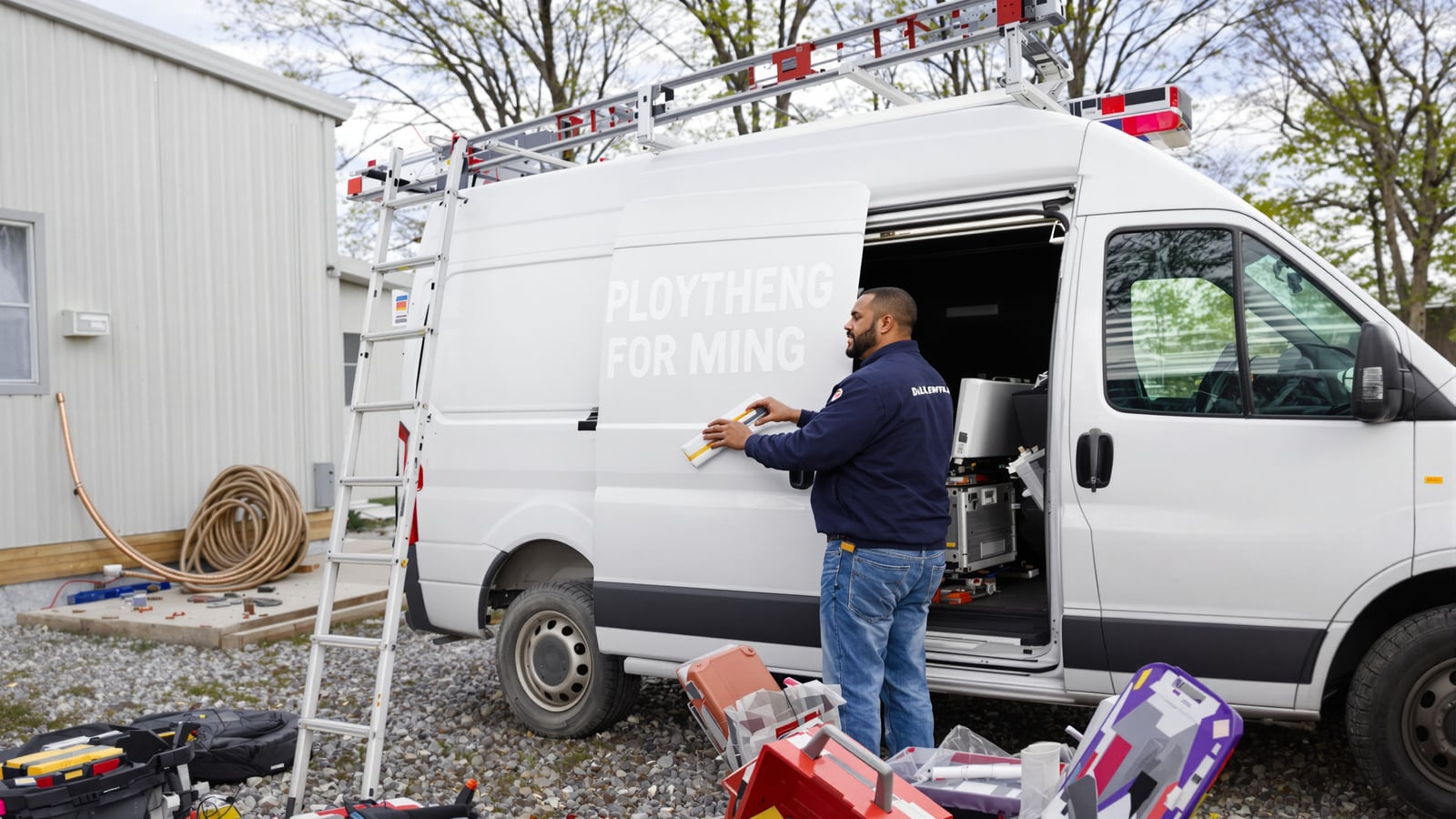
Quick answer: Get a separate business number, and make sure you own it. You don't need a second phone. An app or a forwarding line that rings your current cell will do. What matters is that the number on your truck, invoices and website isn't the one your kid's school calls.
The number is the asset
Think about everywhere your cell number lives right now. The side of the truck. Business cards in forty kitchen drawers. Invoices going back years. A Google listing. A guy's contact card under "Mike the electrician" that he'll pull up in three years when the panel trips.
All of that is goodwill, and it's pinned to a SIM card in a device that can be dropped in a lake.
I've watched a man lose a phone off a ladder, then spend a month rebuilding contacts and getting the carrier to reissue a number. Another changed carriers, lost his number in the move, and had every old customer reach a stranger. Neither made a mistake you could have predicted. Phones die, get stolen, get upgraded. A business number should be built so that doesn't matter.
What a separate line actually buys you
Control over when you're at work. This is the one nobody mentions and the one that matters most. When your personal and business numbers are the same, every call is a possible customer, so you answer at the dinner table, at your daughter's game, in church parking lots. Your family learns that the phone beats them.
A business line fixes that. It rings on your hours. After 6, it goes to a greeting you recorded yourself: "You've reached Dan at Hollis Electric. I'm back on the job at 7. Leave your name and address and I'll call you first thing." Customers respect that more than you'd think. It sounds like a man with a schedule, not a man who'll answer anything.
Serve your customers well, but don't let them walk over your family. A greeting is a boundary that doesn't require an argument.
A clean handoff when you hire. When you bring on your first helper, he'll need to take calls, text customers, or confirm arrival times. You don't want him holding your personal number and every private thing on that phone. Point the business line at his phone for a week, or put it on a shared app, and take it back when he's off the clock. If you're weighing whether he's an employee or a contractor, read your first helper is probably an employee, not a 1099 guy first, because it changes how much of your business he should be touching.
Less junk. Any number that's been on a website for a few years gets robocalls and scam texts. Better those hit a line you can screen than the number your mother calls.
Cleaner records. A business line has its own bill, and its own call and text history. When you sit down with your accountant, you'll have a clear record of what the phone costs the business. How much of a phone expense you can deduct, and how to document it, depends on your situation. Ask your CPA. Don't guess from a forum thread.
Own it, or you're renting it
This is where guys get burned.
Lead services and some answering platforms hand you a "tracking number" so they can count the calls they sent you. It works fine until you stop paying them. Then the number goes dark, and so does every card and sign that carried it.
Before you put any number on a truck, ask one question: if I cancel this service, can I take the number with me? The word to look for is "port." A number you can port is yours. A number you can't is a lease.
Quick test:
- Is the account in your business's name, with your login?
- Can you move the number to another provider if you want?
- Does it ring somewhere you control, not only inside one company's app?
Three yeses and you're fine. A no on the first or third means you're building on borrowed ground.
Three ways to set it up
A forwarding or app-based line. The cheapest and the one most people should start with. You get a new local number that rings your existing cell through an app. Google Voice is the free-ish entry point. Paid business apps add shared inboxes, texting for a team and set hours. Look at the monthly cost against what one saved job is worth, and pick the one that does what you need.
A second physical phone. Cleaner separation, since you can leave it in the truck or turn it off at home. The trade-off is a second device and plan to pay for and keep charged. Worth it if you tend to answer every call even when you've told yourself not to.
A landline-style line for a shop. If you have a storefront or a yard with a bay, a desk line still reads as legitimate. Probably overkill for a one-man outfit.
For most solo tradesmen, the first option is plenty. You can upgrade later without changing the number, which is the whole point.
What it's worth, as an example
Say your average job is $350 and you'd estimate one real customer in five calls is a repeat or referral who could send you more. These are made-up numbers, so swap in your own. If you miss two calls a week because you're at your kid's recital with your phone off, and a quarter of those would've booked, that's a job every two weeks you're not even aware you lost. A decent business line with a voicemail greeting and a text-back message ("Got your call, I'll ring you back by noon") catches a lot of that. It costs less per month than one tank of gas.
The other cost is harder to price. The call you take in the middle of a family dinner. That one comes out of something that isn't on your invoice.
How to switch without losing anybody
You've got a number on the truck and a hundred customers who know it. Don't flip a switch.
- Get the new number first. Set up the line, record the greeting, test it from a friend's phone.
- Update the places you control. Website, Google Business Profile, invoice template, estimate form, email signature.
- Add it to the truck and cards next time you reorder. No need to repaint tomorrow. Put a sticker or magnet over the old number if you must.
- Text your best customers directly. "New business line: [number]. Same me, same work." A message like that also reminds them you exist. If you've been sitting on a list of past customers, call the people who already paid you before you spend a dime on leads, and the new number gives you a natural reason to reach out.
- Leave the old number running as a backup for six months. Anyone who calls it still gets you. Then retire it, or keep it for family only.
Put the monthly fee in the same account as the rest of your overhead. The habit in one business account and a Friday habit beat any software will keep it from drifting onto a personal card.
The test
Imagine your phone is at the bottom of a lake tonight. Tomorrow morning, can customers still reach you at the same number they've always had?
If the answer's no, fix it this week. It takes an afternoon and a few bucks a month, and then the number on your truck belongs to your business, not to a piece of glass in your pocket.
Ray Okonkwo
Money & Business
Former commercial banker turned small-business owner. Covers salary, credit, margins and the arithmetic nobody does before signing.

Watch
Worth an hour of your evening
More from Self-Employed Men.
From channels we rate. Plays on YouTube.
Read next