Ask Your Doctor to Take Something Off the List
Eleven prescriptions is a decision nobody actually made. A proper medication review is free, it takes one appointment, and you have to ask for it.
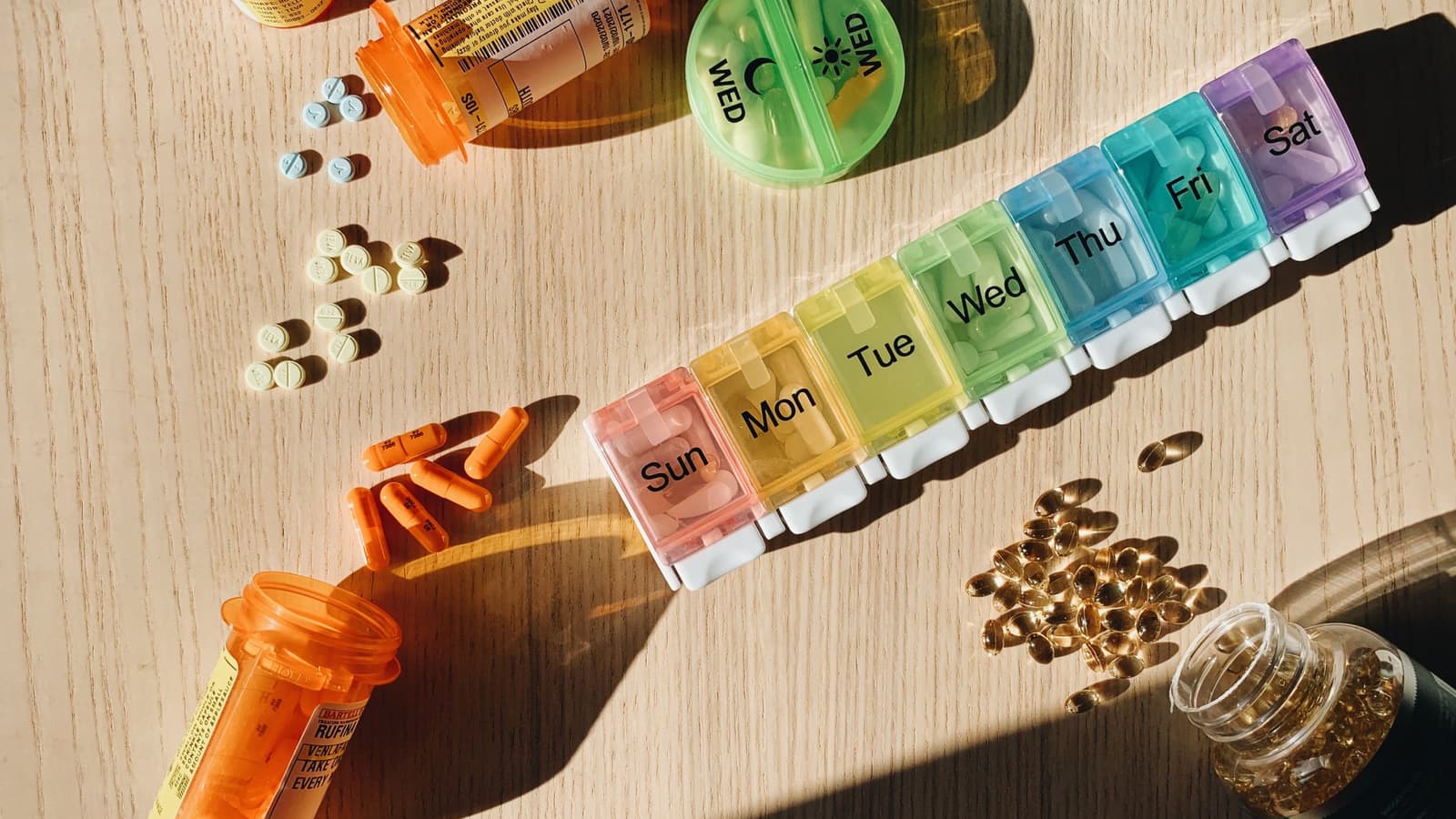
Count the bottles on your counter. Not the vitamins, not yet. Just the orange ones with your name on them. If the number's north of five, at least one of them is probably doing a job that ended years ago, and nobody has looked at the whole set in one sitting since the Obama administration.
That's not a knock on your doctor. It's how the system works. A cardiologist adds one. A urologist adds one. The hospital sends you home after a gallbladder with two more and a sheet of paper you filed somewhere. Every one of those decisions was reasonable on its own. Added up, they're a list nobody designed.
The fix has a name. Deprescribing, or plainly, a medication review. It's a real appointment with a real agenda, and it's one of the few things in medicine where the win is subtraction.
The thing that makes the list grow
The mechanism is called a prescribing cascade, and once you see it you can't unsee it.
A drug causes a side effect. The side effect looks like a new condition. The new condition gets its own drug. That one has a side effect too.
A blood pressure medicine causes ankle swelling. The swelling gets a water pill. The water pill drops your potassium, so now there's a potassium supplement, and the extra trips to the bathroom at 3 a.m. get an over-the-counter sleep aid. Four bottles, one original problem.
Nobody in that chain did anything wrong. But nobody owned the whole list either. That job is open, and you're the only person qualified to hire for it.
Book the appointment as its own appointment
Don't raise this at minute twelve of a fifteen-minute follow-up about your knee. You'll get a nod and a "let's look at that next time," and next time will be about the knee again.
Call and say exactly this: "I want to schedule a visit to review all my medications. Not a refill visit. I want to go through the whole list and see what I still need."
Ask for the longest slot they've got. Some offices will slot you thirty minutes for that request. If you're on Medicare and haven't used your annual wellness visit this year, that visit already includes a medication review as part of it, which makes it an easy hook to hang this on.
Bring everything, including the stuff you don't think counts
The old-school name is a brown bag review, and the brown bag isn't a metaphor. Put the actual bottles in an actual bag.
Everything:
- Every prescription, including the ones from specialists your primary doctor may never have seen
- Eye drops, inhalers, patches, creams, injections
- Over-the-counter items, every one. Aspirin, ibuprofen, antacids, laxatives, allergy pills, sleep aids
- Supplements. Fish oil, turmeric, magnesium, the big vitamin your daughter mailed you
- Anything you take "only when I need it," with an honest answer about how often that's
Supplements matter more than most people think, because several of them interact with blood thinners and blood pressure drugs, and because they don't show up in any pharmacy record. If it goes in your mouth, it goes in the bag.
While you're at it, write one line per bottle before you go: drug name, dose, who prescribed it, what you believe it's for, roughly when you started it. The "when" column is where the interesting stuff hides. You'll find things you started in 2016 for a six-week problem.
The five questions
Go down the list, bottle by bottle, and ask the same five things about each one.
What's this actually treating? Not the category. The specific reason, in your chart, for you.
What happens if I stop it? Sometimes the answer is serious and the conversation ends there. Good. Now you know.
Was this meant to be permanent, or was it a short course that never got stopped? Acid reflux medicines are the classic. A lot of people started one for eight weeks after a rough patch and are still on it a decade later, because refills are easy and nobody ever wrote an end date.
Is this one on the Beers list? The American Geriatrics Society publishes what's called the Beers Criteria, a list of medications that often cause more trouble than they're worth in older adults. Your pharmacist knows it cold. Naming it out loud tells the room you came prepared.
If we keep it, when do we look at it again? Put a date on it. A drug with a review date is a decision. A drug without one is inertia.
What often turns out to be doing less than you'd hoped
General education, not a recommendation for you personally, and nothing here's a reason to touch a bottle on your own.
Anticholinergic load is the one most worth learning. A pile of common drugs, including older antihistamines, some bladder medicines, some antidepressants and most over-the-counter nighttime sleep aids, all pull on the same system. Any one of them, fine. Three or four together and you get fog, dry mouth, constipation and unsteadiness that everybody around you chalks up to your age instead of your cabinet. Diphenhydramine is in more products than you'd guess. Read the small print on the blue box.
Sedatives and sleep medicines deserve a hard look because of what they do to balance at 2 a.m. A broken hip is a life-changing event, and the road to one is often a hallway in the dark.
Daily anti-inflammatories are worth a conversation if you're also on a blood thinner or have any kidney history. Two blood pressure medicines can become one too many if you've lost twenty pounds since they were prescribed, which is a good problem and still a problem.
The counter-argument, which is real
More is sometimes right. A statin after a stent, an anticoagulant for atrial fibrillation, a thyroid pill, a well-controlled diabetes regimen. Those aren't clutter. Getting the list down to four isn't the goal, and any review that treats the number as the scoreboard is a bad review.
The goal is that every bottle has a reason you could explain to a stranger. Some men will finish this process on ten medications and be in better shape than the man who talked himself down to three.
Two rules after the appointment
Change one thing at a time. If you stop two medicines the same week and feel worse, you've learned nothing. One at a time, with a taper when the doctor calls for it, and a couple of weeks between moves.
Never stop on your own. Several classes are genuinely dangerous to quit cold, including beta blockers, benzodiazepines, steroids and some antidepressants. Stopping abruptly can be worse than the drug. This is the one place where being decisive works against you.
Use the pharmacist, who is standing right there
Pick one pharmacy and use only that one, so a single system is checking every interaction. Then ask your pharmacist for a comprehensive medication review. Under Medicare Part D, some enrollees on multiple drugs for chronic conditions qualify for Medication Therapy Management, which includes exactly that review at no extra cost. Ask whether you're eligible. Plenty of people are and never hear about it.
And update your list every single time you come out of a hospital. Discharge is where lists get scrambled, where the home dose and the hospital dose end up both in the bag, and where the pills you were told to stop stay in the organizer because they were already sorted.
Keep the current list on a card in your wallet. Not in your phone. In your wallet, where a paramedic will find it without asking you to unlock anything.
You've spent sixty-some years deciding what you carry. This is the same job, smaller bottles.
This is general information to help you think things through, not medical, legal or financial advice. Please check with your doctor, pharmacist or a qualified adviser before making a change.
Marcus Vale
Editor-in-Chief
Twenty years in magazines, most of it deciding what to cut. Writes about work, discipline and the decisions that compound.

Watch
Watch how it's done
Picked for this article.
From channels we rate. Plays on YouTube.
Centers for Disease Control and Prevention (CDC)
STAND STEADI: Aging and Deprescribing Medications
Cognitive Decline Partnership Centre
Dr Emily Reeve interview on deprescribing medication
Read next