Fix the rocking toilet before it eats your subfloor
A wobbling bowl has already broken its seal. Reseating it takes an afternoon, a few dollars of parts, and one bolt you must not overtighten.
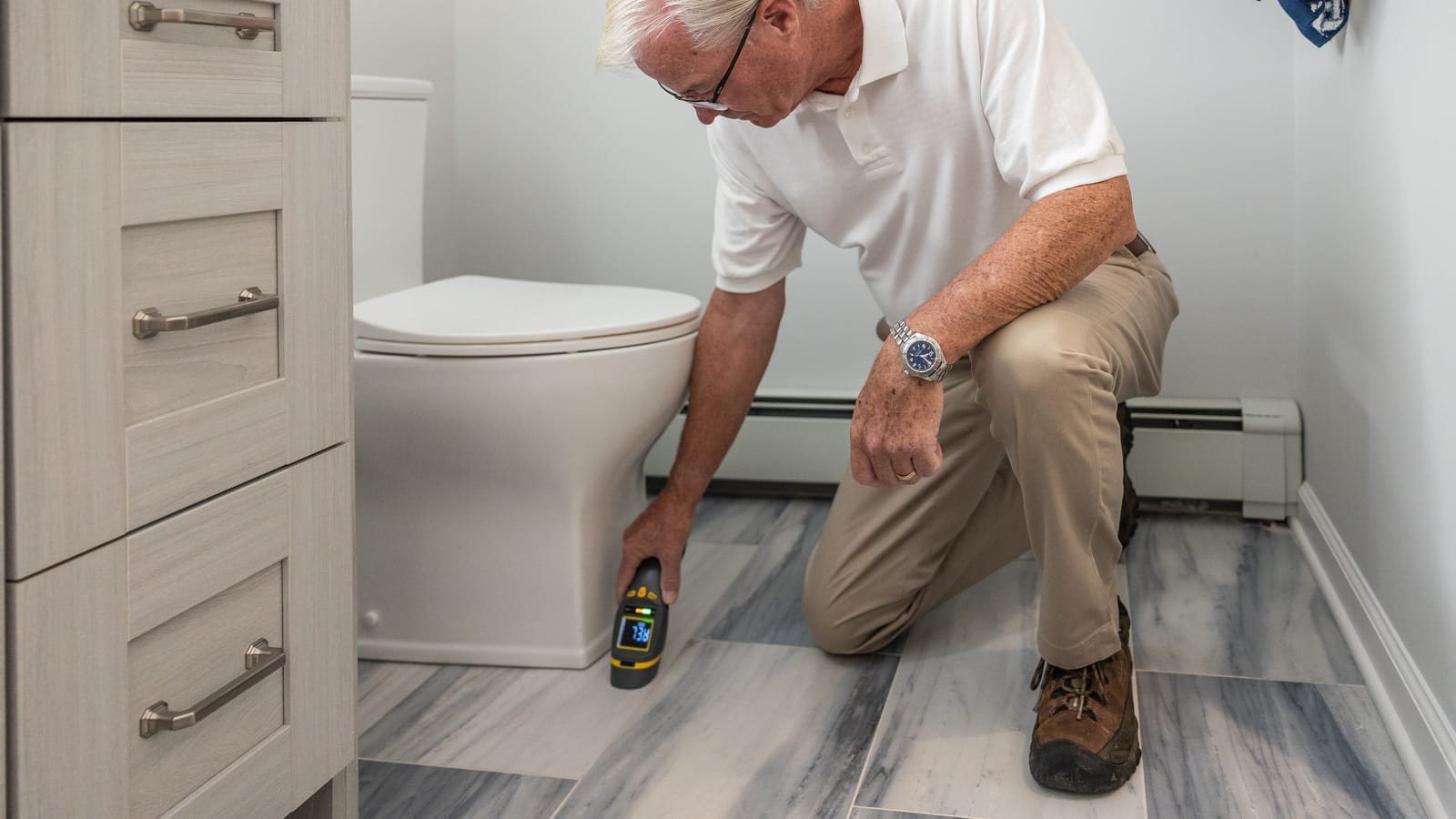
A toilet that moves when you sit down isn't a toilet with a loose bolt. It's a toilet with a broken seal. Wax doesn't flex. The moment the bowl started rocking, that ring cracked, and every flush since has been pushing a little water and a little worse under your floor.
So you've got a window. Reseat it now and you're out a wax ring, two brass bolts, a braided supply line and an afternoon. Ignore it for two years and you're cutting out subfloor.
First, figure out what's actually moving
Straddle the bowl and rock it gently. Front-to-back, then side-to-side.
If the bowl slides on the floor and the bolts are loose, that's the simplest version of this job. If the bowl is tight to the floor but the whole assembly shifts, the flange underneath is cracked or its bolt ears have snapped off. Both get fixed the same day.
Now press your thumb into the floor right at the base, especially at the back. Spongy tile, a loose grout line, a dark ring in the vinyl, or a soft spot in the subfloor means water's been sitting there a while. Same story if there's a brown stain on the ceiling below a second-floor bathroom. That's not a wax ring job anymore. That's a floor job, and if you're not ready to pull up flooring and sister a joist, call somebody.
Smell is a tell too. A bathroom that smells faintly like a bathroom after it's been cleaned is usually sewer gas coming past a failed seal.
Buy the parts before you start, including the ones you hope you don't need
Nothing kills a Saturday like a hardware store run with the toilet sitting in the hallway.
Get a standard wax ring with the plastic horn, or a waxless seal like the Fluidmaster Better Than Wax if you'd rather not deal with the mess. Get new brass closet bolts with the plastic retainer washers. Get a new braided stainless supply line. Get a set of plastic toilet shims. And get a flange repair ring, the metal half-moon or full-circle kind, because there's maybe a one in three chance you pull that bowl and find a broken flange ear staring at you. Return it if you don't use it.
Total is under thirty dollars at any big-box store. A plumber's minimum call-out isn't.
Tools: adjustable wrench, utility knife, stiff putty knife, small hacksaw or an oscillating multi-tool with a metal blade, a sponge, a bucket, a shop vac if you have one, and rags. Gloves, obviously.
On the waxless versus wax argument: wax is cheaper and has sealed toilets for a century. Waxless wins on exactly one thing, and it's a big one for a first-timer. If you set the bowl crooked and have to lift it back up, wax is done and you start over. A waxless seal you can lift and reset.
Shut it down and drain it properly
Turn the angle stop behind the toilet clockwise until it stops. If it's an old multi-turn valve that hasn't moved since the Clinton administration, it may seize or start weeping at the packing nut. Don't force it. Shut the house main instead, and put a new quarter-turn stop on your list.
Flush and hold the handle down to dump the tank. Then sponge out what's left in the tank, and sponge or shop-vac the bowl until the trap is dry. You want it dry. A toilet holds a couple of gallons in places you can't see, and it all comes out when you tip it.
Disconnect the supply line at the tank. Have the bucket under it.
Get the bolts off without a fight
Pry off the bolt caps at the base with a flat screwdriver. Under them you'll find two nuts, usually crusted white.
Hit them with penetrating oil and give it ten minutes. Then try the wrench while holding the bolt still from above if you can grip it. Half the time the bolt just spins in the flange slot. That's your cue to stop wrestling and cut it. A mini hacksaw blade wrapped in tape, or a multi-tool with a metal cut-off blade, will slice through a brass bolt in under a minute. Slide a putty knife under the bowl to protect the floor while you cut.
Run your utility knife around the caulk line at the base, all the way around, before you lift.
Lift it straight up
A one-piece toilet runs eighty to a hundred and twenty pounds of awkward porcelain. If yours is two-piece, take the tank off first: two or three bolts inside the tank, held from below with a wrench. It halves the weight and the awkwardness.
Rock the bowl a couple of inches to break the wax loose, then lift straight up with your legs, not your back. Walk it to a sheet of cardboard or an old towel, and set it down gently. Porcelain chips if you set it hard on tile, and a chipped base leaks.
Now stuff a rag into the open drain pipe. Sewer gas is heavier than you'd think and unpleasant enough to end the job early.
Scrape, inspect, and fix the flange
Scrape every bit of old wax off the flange and off the bottom of the toilet's horn with the putty knife. It comes off in gray sheets and it gets on everything. Bag it as you go.
Then look hard at the flange. It should sit flat and solid, level with or slightly above your finished floor, with two intact slots for the bolts. Check for hairline cracks in the plastic and for ears that have snapped clean off.
If an ear is broken, that's what your repair ring is for. It sits on top of the old flange, gives you fresh bolt slots, and screws down into the subfloor. Use stainless screws and make sure they're biting into wood, not just tile.
If the flange sits more than about a quarter inch below the finished floor, a standard wax ring won't bridge it reliably. Use an extra-thick ring or a flange extender kit.
Dry fit before you commit
This is the step everyone skips and it's the whole reason your toilet rocked in the first place.
Set the bowl back down on the bare flange with no wax and no bolts. Rock it. Find where the gap is, slide plastic shims in until it sits dead solid, and mark their positions on the floor with a pencil. Lift the bowl off again.
Now you know exactly where the shims go and you're not fighting a compressed wax ring while you guess.
Set it, once
Drop the new bolts into the flange slots, rotate them a quarter turn so the heads lock under the rim, and slide the plastic retainer washers down to hold them standing straight up. Without those washers the bolts flop over exactly when the bowl is coming down.
Press the wax ring onto the flange, tapered side up. If your house is cold, warm the ring in your hands for a minute so it isn't rock hard.
Lower the bowl straight down, lining up both bolt holes at once. Don't slide it sideways to correct. When it touches, sit on it with your full weight and give it a small twist. You'll feel the wax squash.
Don't lift it again. If you lift, you buy a new ring.
Slide your shims into the marked spots. Hand-tighten the nuts, then alternate sides, a quarter turn at a time, until the bowl stops moving. Stop there. Cranking these is how people crack a base, and the crack always runs from the bolt hole out. Porcelain doesn't get tighter, it gets broken.
Cut the bolts off about a quarter inch above the nuts and cap them. Snap the shims flush.
Water on, and the last detail
Hook up the new supply line, hand tight plus maybe a quarter turn with the wrench. The rubber gasket does the sealing. Wrenching it cranks the tank bolt area and cracks tanks.
Open the valve slowly. Watch the tank fill. Flush it six or eight times and lay a dry square of toilet paper around the base after each one. Paper finds leaks your eyes won't.
Caulk around the base last, with 100 percent silicone, and leave a two-inch gap at the back. Plenty of codes require the caulk, it keeps mop water and worse out from under the bowl, and it stiffens the whole thing. The gap at the back means if this ever fails again, the water runs out where you can see it instead of going quietly into the floor.
That gap is the difference between doing this job again in ten years and finding out about it from a ceiling.
Wes Dunbar
Country & Skills
Grew up on an acreage and never quite left. Covers trucks, trades, land, and how to do the thing yourself.

Watch
Watch how it's done
Picked for this article.
From channels we rate. Plays on YouTube.
Home RenoVision DIY
90% of Toilets Are Installed Wrong (Here’s the Right Way)
Steve Y the Fixit Guy
TOILET IS ROCKING BACK AND FORTH: How to fix a wobbly toilet that rocks front to back
Read next