
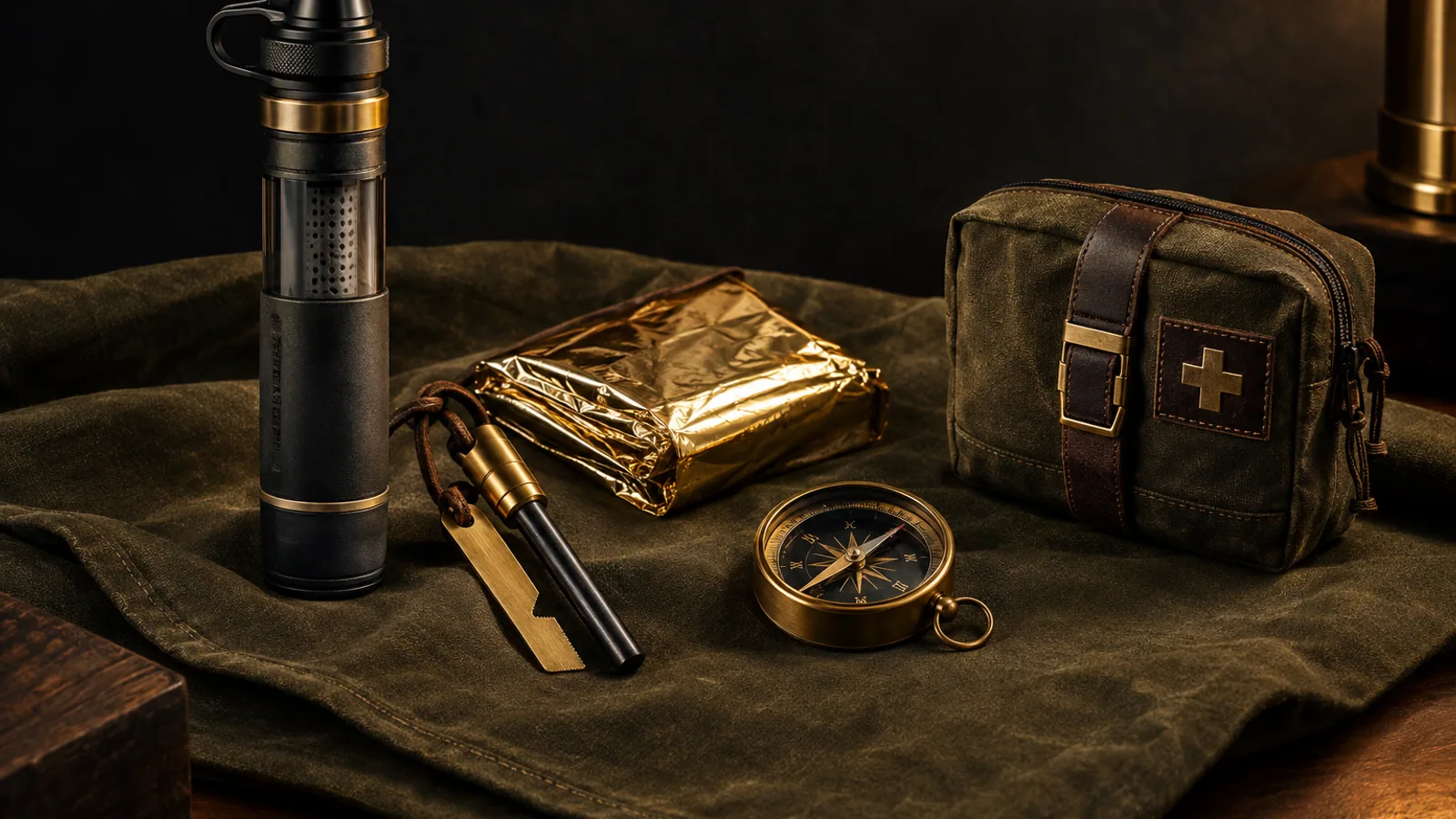
Somewhere past the third mile marker on a gravel road, my eleven-year-old leaned between the front seats. "Dad. If we got lost in the woods, you'd know exactly what to do, right?"
I said yes. I said it fast, the way you tell a waiter everything's fine. My wife kept her eyes on the road and smiled like a woman who had personally packed the extra socks.
She was right to. Here are the questions that followed, and the answers I owe them.
1. Which side of the tree the moss grows on
They think I know: Moss grows on the north side. Nature's compass.
What I actually know: I've said this with total confidence since about 1994. I've never checked it. Neither has anyone I got it from.
What you actually need to know: Moss grows where it's damp and shady, and that can be any side of the tree. Carry a baseplate compass (fifteen to twenty-five dollars) and a paper map of the area. Learn both in the backyard before you need them. Your phone is the backup, and cold drains batteries fast. Tell someone where you're going and when you'll be back. That one habit beats every trick in this column.
2. Which berries are safe
They think I know: Every plant, every berry, every mushroom.
What I actually know: Blueberries. In a bowl. With pancakes.
What you actually need to know: Never eat a wild plant or mushroom you haven't positively identified with a local expert. Poisonous look-alikes are real, and "the birds eat them" proves nothing. The good news is that a healthy adult can go weeks without food. Nobody starves on a weekend. Pack snacks, and worry about water and warmth first.
3. Whether that stream is fine to drink
They think I know: I can tell good water by looking at it.
What I actually know: My method is "clear, cold, and a frog nearby." The frog doesn't count as a lab.
What you actually need to know: Clear water can still carry bacteria and parasites like Giardia. Treat everything. A hollow-fiber squeeze filter runs roughly thirty to forty dollars and weighs next to nothing. Or boil it at a full rolling boil for one minute, three minutes above about 6,500 feet, which is the CDC's guidance. Carry your water from home and treat the rest.
4. Starting a fire with two sticks
They think I know: Give Dad two sticks and a minute.
What I actually know: I once made a thin line of smoke. Then I lost all feeling in my forearms. The smoke was probably the sticks giving up.
What you actually need to know: Carry two ways to light a fire. A lighter in a zip bag costs two dollars. A ferrocerium rod runs ten to fifteen. Add tinder that works when everything's damp, like cotton balls rubbed with petroleum jelly. Practice in the backyard where it's legal, and check for burn bans first.
Clear a ring down to bare dirt, keep water close, and drown the ashes until they're cold to the touch. Every time.
5. What to do when you're lost
They think I know: I'd march us out by dinner.
What I actually know: I once circled a parking garage for twenty-five minutes. My wife just said, "Level four." She's never brought it up since, which is its own kind of mercy.
What you actually need to know: Stop. Think. Observe. Plan. Then, in most cases, stay put. Searchers find people who stay where they are, and wandering is how a small problem becomes a big one. The full first-hour routine is in What to do in the first hour you're lost in the woods. Read it before the trip, not during.
6. What to do about a bear
They think I know: Dad could handle it.
What I actually know: My plan is to say "Hey, bear" in a deep voice and hope it respects the tone.
What you actually need to know: Bear behavior depends on the species and the situation, so read the park service guidance for the exact area you're visiting. The common baseline is to stay calm, never run, back away slowly, and talk in a low, steady voice. Bear spray costs about forty to sixty dollars. Wear it on your hip or chest where you can reach it in two seconds, not at the bottom of the pack. Read the directions and the local rules before you go.
7. How loud a person needs to be
They think I know: Yell and somebody will come.
What I actually know: I'd be hoarse by six o'clock and have nothing left for the actual emergency.
What you actually need to know: A whistle costs about five dollars and carries much farther than a voice. Three blasts is the widely recognized distress signal. Clip one to every kid's jacket zipper. Teach them to blow it if they're separated from you, then stay put and wait. A program called Hug-A-Tree and Survive teaches exactly this to kids, and it works.
8. Building a shelter out of leaves
They think I know: A cozy debris hut, built in twenty minutes.
What I actually know: I've watched this on television. Once I built a lean-to that collapsed onto the dog. The dog forgave me. The lean-to didn't recover.
What you actually need to know: Cold and wet are the real danger, not hunger. Hypothermia can happen at fifty degrees in a steady rain. Skip the cotton jeans. Wear wool or synthetic layers, a rain shell, and a hat. Keep an emergency bivy (fifteen to fifty dollars) or a space blanket (about five) in every pack, and insulate yourself from the ground.
If anyone is shivering hard, stumbling, or confused, get them dry and warm and get help. That's not a bluffing situation.
The one I am glad they asked
Late in the drive, my son said, "Can you teach me all this?"
I told him the truth. I can't teach it, because I don't know it yet. We'll learn it together.
That's the plan, and it's yours too. Pick a Saturday for a backyard overnight. Run the compass drills. Light a fire with a ferro rod while the grown-up fails first, which is good for everyone. Pack one kit together and put a whistle on every zipper. Then sign up for a wilderness first aid course with a qualified instructor. They usually run a weekend and cost a couple hundred dollars, and no amount of confident bluffing in a minivan replaces someone who's done it for real.
While the kids are listening, there's one more conversation worth having at home, and it's about what to do when they find a gun. Your Kid Should Know What To Do When They Find A Gun covers it.
The best thing I ever said to my kids in that van was "I don't know, let's find out." My wife already knew. She just let me get there on my own.
Sam Ortiz
Dads & Family
Father of three. Writes about presence, discipline and the long game, without pretending any of it's tidy.

Watch
Worth an hour of your evening
More from Survival & Self-Defense.
From channels we rate. Plays on YouTube.
Read next