
The water filter that outlasts the trip, and the parts that decide it
A filter can fail without a single visible sign. Here's what wears out, what to read in the warranty, and how to tell a keeper from a one-season gadget.
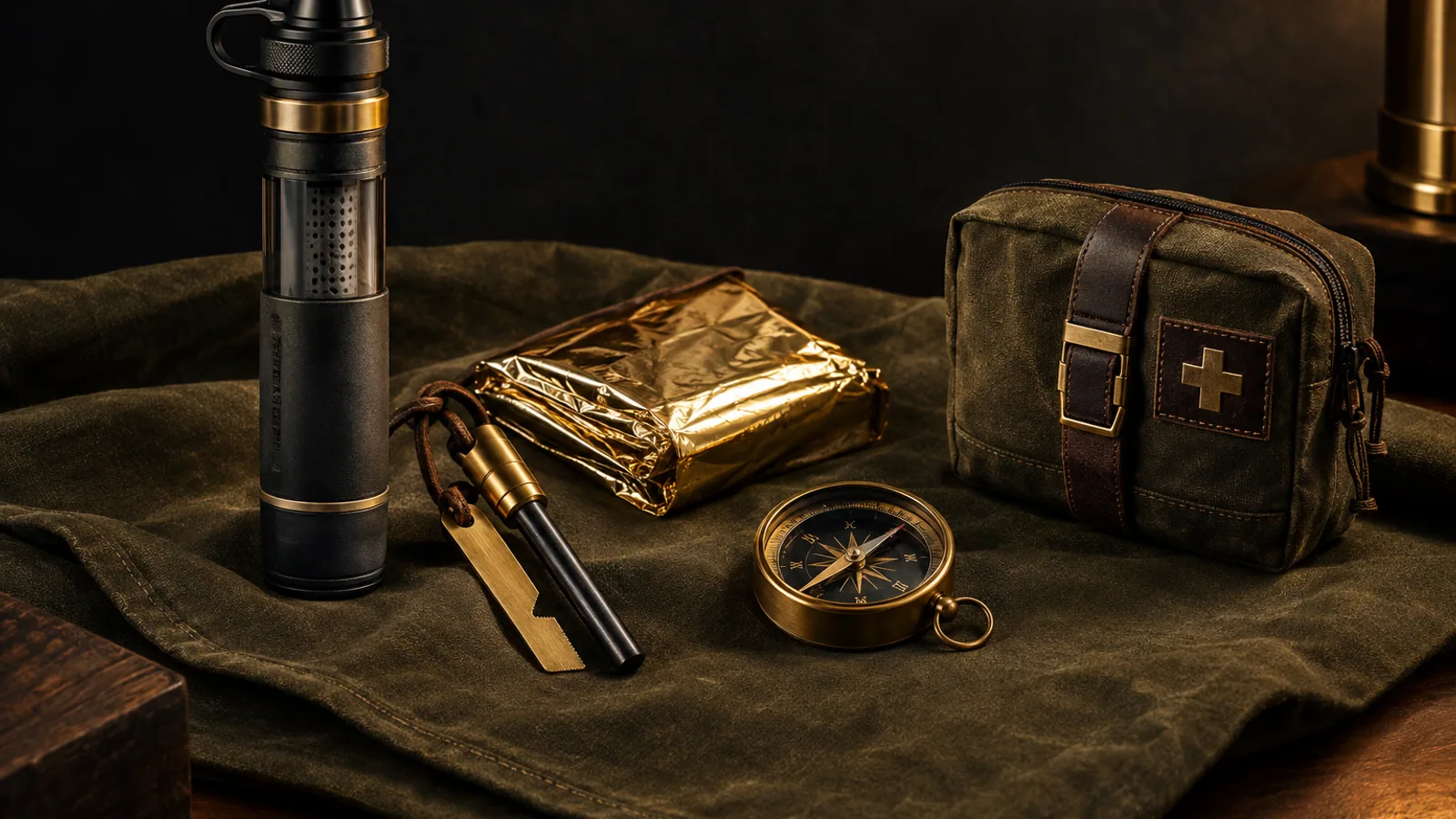
A filter lasts when its one fragile part is protected and its cheap parts can be replaced. Buy the one you can clean, store correctly and check, not the one with the biggest number on the box.
The strange thing about this category is that the worst failure looks like nothing. A cracked stove makes noise. A split tent lets in rain. A damaged filter keeps dripping clear water and tells you everything's fine.
That changes how you shop. You're not just buying water treatment. You're buying something you have to be able to trust when you can't see inside it.
Where these usually wear out
Start with the core. Most lightweight squeeze and gravity filters use hollow fiber membranes, bundles of tiny tubes with pores small enough to stop bacteria and protozoa. They're also delicate. The common warning from makers is that freezing water inside the filter can crack the fibers in a way you can't see. Read the manual for that exact warning. If the filter might have frozen in your pack on a cold night, most makers say to replace it. Follow that.
Ceramic filters have a different weakness. You clean them by scrubbing the outer surface, and every scrub removes a little ceramic. Look for a published minimum thickness and a gauge or marking that tells you when it's spent.
Then the parts that aren't the filter at all:
- O-rings and gaskets. They dry out, flatten and go missing in the dirt at camp. A leaking seal can let untreated water bypass the filter.
- Pump handles and check valves. Pump models have moving parts, and moving parts wear. Look at how the handle attaches and whether the valves are serviceable.
- Hoses and quick-connect fittings. They kink, crack and get stepped on.
- Bags and pouches. The soft reservoirs that ship with squeeze filters are usually the first thing to split at a seam or a cap. Check how they're welded and what the threads look like.
- Carbon elements. If one's included to handle taste or some chemicals, it has a limited life and can't be cleaned like a membrane.
One more limit to know before you trust any of them. A filter and a purifier are different things. Most membrane filters stop bacteria and protozoa but not viruses. Water downstream of heavy human activity, or outside North America, may call for a purifier, chemical treatment or boiling. If you're unsure, boil it. The CDC says a rolling boil for one minute, three minutes above about 6,500 feet.
The warranty, decoded
"Lifetime" is a marketing word until you read the paragraph under it. Ask whose lifetime. The filter's, yours, or a stated volume of water?
Some makers publish a rated volume, either gallons or liters, and say what happens when you reach it. That's more useful than a vague promise, but verify the figure on the manufacturer's own spec sheet. Don't take a retailer's summary.
When you read the actual document, check these:
- Length. A year, five years, a stated volume?
- What voids it. Freeze damage is commonly excluded, and it's the failure you're most likely to cause. Look for language about misuse, unauthorized modification and using the filter outside its instructions.
- Parts versus whole product. Some warranties replace the product. Some only cover defects in workmanship.
- Who pays shipping. A free replacement that costs you twenty dollars to mail in is a smaller deal.
- Registration and proof of purchase. Some require one or both. Keep the receipt in a folder, not in a drawer you'll never find again.
Read it before you buy, not after the trip.
Can you fix it?
A filter you can repair is a filter you can keep. You can answer most of this from the maker's website in ten minutes.
- Does the maker sell spare parts? Search the site for O-rings, couplers, hoses, caps and replacement bags. If the only option is buying the whole unit again, that tells you something.
- Is the filter element replaceable on its own? A cartridge you can swap beats a sealed housing you throw away.
- Are the threads standard? Many squeeze filters thread onto common disposable water bottles. Check the maker's description. That matters, because the bottle's what usually fails or goes missing.
- Can you clean it in the field? Look for a backflush method (a syringe or plunger) and read how the maker says to do it.
- Is there a manual with a maintenance section? A real one covers cleaning, storage, sanitizing and when to retire the thing.
- Is it screwed or glued? If you can't open the housing, you can't inspect it.
What long-term owners report
Anyone can say a filter works on day one. You want the people who've had it for two summers.
Search the exact model name along with phrases like "one year later" and "after two seasons." Skip reviews posted the week the box arrived. Then go to the one-star and two-star reviews and read for patterns, not for one angry person. Five people independently complaining about the same cap thread or the same split seam is information. One person complaining about the color is not.
Also look at where hikers actually talk: backpacking forums, canoe and paddling groups, search-and-rescue volunteers' gear threads. Watch for the same few words: froze, cracked, clogged, slow, leaked. Note which complaints the maker answers and which parts people say they replaced themselves.
Don't treat any single post as a failure rate. It's a lead to check against the manual and the warranty.
Cost per year of use
Say you're comparing two options. These numbers are an example, not a quote.
A filter costs $40 and you add $8 in spare O-rings and a backup bag. Used on 15 trips a year, it lasts ten years because you keep it from freezing and replace the small parts. That's $48 over ten years, or about $4.80 a year, or roughly 32 cents a trip.
A cheaper $15 filter that you replace every two years runs $75 over the same decade. That's $7.50 a year, and it's the one you'll be tempted to push past its life.
Run your own figures in the BRO cost-per-use calculator.
The math ignores the real cost. A trip cut short by a week of being sick is worse than any price tag. Spending a little more for a filter you can inspect and repair is cheap insurance.
Before you buy
- Does the maker say what the filter removes, and does it say what it doesn't (viruses, chemicals)?
- Is the pore size or rated volume published on the maker's own spec sheet?
- Does the manual address freezing, and tell you what to do about it?
- Can you backflush or scrub it clean in the field, and does the maker explain how?
- Are O-rings, hoses, bags and caps sold separately?
- Are the bottle threads standard?
- Does the warranty spell out length, what voids it, and who pays shipping?
- Have you read one-year-later owner reviews, and the one-star ones?
- Do you have a boil or chemical backup in your kit?
- Have you run clean water through it at home before you need it?
Water source choice matters as much as the filter. A hands-on wilderness course from a qualified instructor will teach you how to pick a source, where to collect from and what to avoid. It's worth a weekend. And if the day goes sideways, what to do in the first hour you're lost in the woods starts with the same question: how much water do you have?
Buy the filter you can open, clean and fix. Then take care of it like the thing keeping you well, because it is.
Dean Shaw
Gear & Garage
Reads the warranty, the parts list and the long-term owner reviews before anything else. Trucks, tools, watches, and the cheap version that costs more.

Watch
Worth an hour of your evening
More from Survival & Self-Defense.
From channels we rate. Plays on YouTube.
Read next