
Quick answer: Stay with the vehicle. Walk only if the vehicle itself is unsafe, or if you can name a specific place with help, know how far it is, and can reach it with daylight and water to spare. Walk toward something. Never walk away from something.
Why the vehicle wins
Picture it. It's 4:40 on a November afternoon, you're on a gravel forest road, and a rock has opened the sidewall of your rear tire. The spare is flat. Your phone shows no bars and the sun is already behind the ridge.
Every instinct says move. Go find a signal, go find a house, go do something. That instinct has put a lot of people in worse trouble than the flat tire ever did.
The truck is a shelter that blocks wind and rain. It's a big, bright, metal object that a search plane or a passing rancher can spot from a long way off. It holds your water, your coat, your blanket and your food. And it's where anyone looking for you will look first.
A person walking is small, hard to see and burning water. Add heat, cold or fading light, and a bad day gets serious fast.
The only good reasons to walk
There aren't many.
- The vehicle isn't safe. Smoke or fire under the hood. Water rising in a wash or low crossing. Loose slope above you. Get clear, get uphill or upwind, and then stay put in that new spot.
- You know where help is. Not "there's probably a ranch somewhere." A house you passed 2.2 miles back, with a mailbox. A paved highway you can name, at a distance you can estimate from your odometer.
- Nobody knows where you are. If no one will miss you for three days, waiting for rescue is a gamble. This is the situation you fix before you leave home, but if you're in it, it changes the math.
- Someone with you needs care you can't give. And you can't call. And you've got a realistic route to someone who can.
If none of those fit, you stay.
The test before you take one step
Run through this honestly. If any answer is no, sit back down.
- Daylight: Can you reach the destination before dark? Count on walking about two miles an hour on a road, less with a pack, less uphill.
- Water: Do you have enough to make the trip and a margin? In hot country, walking on a half-gallon is how a bad day becomes the last one.
- Footwear and clothing: Are you in boots or sneakers, a coat or a T-shirt? Blisters end walks.
- Condition: Are you healthy, rested and not already overheated or chilled?
- Destination: Can you point at it?
That last one is the whole rule. A signal on the next hill is a hope, not a destination. If you want to climb for bars, pick high ground you can see from the vehicle and come right back.
If you walk, leave a record
Before you go, put a note on the dash or under the wiper where it can be read from outside. Write the date and time, how many of you are walking, which direction, where you're headed, and how much water you took. Use a Sharpie. Pen dies in the cold.
Stay on the road. It's easier to follow, easier to be found on, and it leads somewhere by definition. Cross-country shortcuts are how people get turned around within a mile of a vehicle. In heat, rest in shade through the worst of the afternoon and move at dawn and dusk. In cold, keep moving enough to stay warm without sweating through your layers.
Read what to do in the first hour you're lost in the woods now, not on the day. The same logic applies when the vehicle is the thing you've lost track of.
If you stay, work the problem
Make the vehicle easy to find. Raise the hood. Tie something bright to the antenna or hang it in a window. Lay a reflective sun shade on the roof. Three of anything is the international distress signal: three whistle blasts, three fires, three flashes of a mirror. A whistle costs about five dollars and carries farther than your voice ever will.
Keep the cabin livable. In cold weather, run the engine in short stretches, ten minutes an hour is the rule of thumb, and check that the tailpipe is clear of snow or mud first. A blocked exhaust is a carbon monoxide problem, and carbon monoxide doesn't announce itself. Crack a window on the downwind side. In heat, stay in shade, not inside a sealed car. The cabin can be hotter than the air outside, so sit under the vehicle's shadow or a tarp strung off the door.
Drink your water. Rationing it while you sit on it doesn't help anyone. Sip steadily and stay out of the sun.
What belongs in the back
None of this is exotic, and most of it is cheap.
- Water: A gallon per person per day of expected trip, more in desert country. Fill jugs at home.
- Wool blanket or sleeping bag: $30 to $60. Cars get cold fast once the engine's off.
- Jump starter: $60 to $100. Beats cables when there's nobody to give you a boost.
- 12-volt air compressor and plug kit: $40 and $15. Fixes the flat that started the whole story.
- Tow strap and gloves: About $25. Rated for your vehicle's weight, not the cheapest one on the rack.
- Reflective triangles or flares: About $20.
- Paper map of the county: $10 to $20. Download offline maps on your phone too, and don't trust either alone.
- Satellite messenger or personal locator beacon: A Garmin inReach Mini or ZOLEO runs roughly $200 to $400 up front plus a monthly plan. A PLB runs about the same up front with no subscription. Newer iPhones can text emergency services by satellite, which is worth knowing but isn't a plan on its own.
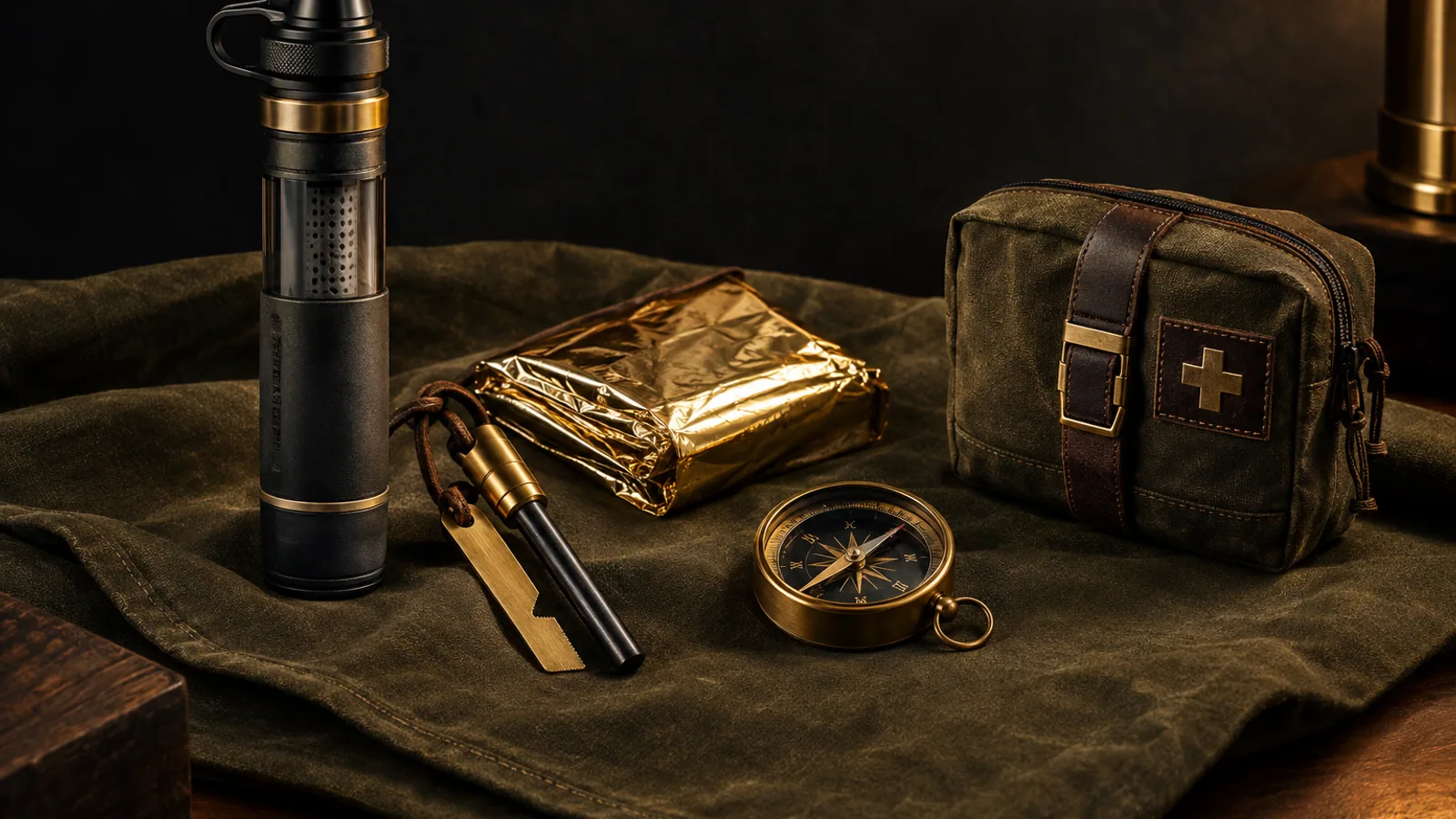
- Whistle, headlamp, spare batteries, a few snacks, a first aid kit you've actually opened.
Take a hands-on vehicle recovery or wilderness first aid class from a qualified instructor if you drive remote roads regularly. A tire plug is easy to learn at a kitchen table and hard to learn at dusk.
Strangers, and what else may be in the vehicle
Most people who stop are exactly what they look like: neighbors. Still, you get to set the terms. Talk through a cracked window. Ask them to call or report your location rather than taking a ride. If something feels off, lock the doors and say, politely, that help is already on the way. Leaving is always better than winning an argument, and you aren't required to explain yourself.
If you carry, the same habits apply. A lawfully owned firearm is a right, and owning one carries a responsibility to know it cold: the four rules, every time, and training from a qualified instructor. Your first firearms class isn't a test you can fail, and it's the right place to start. Keep it secured and out of reach of children whenever you're not carrying it. Laws on transport and carry vary by state, province and city, and a permit doesn't always travel the way you'd assume. Nothing here is legal advice. Check local law and talk to a qualified attorney or instructor. A firearm is a last-resort tool, and it won't fix a flat tire or a dead battery. Water and a plan do that.
Decide it in the driveway
The best call on a remote road is made before you pull out. Tell one person your route, your turnaround time, and when they should start worrying. Put half a tank as your floor, not your target. Check the spare.
Then if the sidewall goes, you've already done the hard part. Somebody knows where to look, and all you have to do is stay visible and stay put until they get there.
Dean Shaw
Gear & Garage
Reads the warranty, the parts list and the long-term owner reviews before anything else. Trucks, tools, watches, and the cheap version that costs more.

Watch
Worth an hour of your evening
More from Survival & Self-Defense.
From channels we rate. Plays on YouTube.
Read next