
Quick answer: Search teams look for a place first and a person second. Give someone at home a written plan and a hard call-in time, carry a whistle, and if you get lost, stay put and make yourself easy to see and hear.
They search a place, not a person
Picture a Saturday. A man parks at a trailhead at 9 a.m., tells his wife he is "doing the ridge loop," and doesn't come back by dark. She calls 911 at 8:30 p.m. What happens next depends almost entirely on what she can say.
In most states the county sheriff is responsible for searches, and the people who do the walking are mostly volunteers. They start with a point last seen or a last known point: the trailhead, a photo timestamp, a text sent from the top. Then they draw a circle around it. How big depends on who's missing, how long they've been gone and what the terrain allows. Hikers, hunters, children and elderly people with memory trouble each behave differently when lost, and teams plan around that.
Then the circle gets worked. Fast teams go first to trails, roads, creek crossings and junctions, because lost people tend to end up on or near linear features. Dogs and trackers follow. Grid searches come last, and they're slow.
Helicopters get the attention, but weather grounds them and thick tree cover hides people from them. Much of the work is done on foot, at night, in the cold, by people with day jobs.
Every vague answer widens that circle. "Somewhere up the ridge" is a lot of ground.
The paper in the drawer
The most useful thing you can do for a rescuer happens before you leave the house. Write it down and leave it with a person, not on the dashboard of a car that might get broken into.
- Trailhead name and your exact route, plus any alternates you might take
- Who's with you, and any medical conditions or medications
- Vehicle make, color and license plate
- What each person is wearing, especially jacket color
- What you're carrying: water, light, shelter, phone, beacon
- A turnaround time and a call-in time, with the second one later than the first
Take a photo of the bottom of your boots and send it along. Trackers read prints, and a clear picture of a lug pattern is worth more than a guess at your shoe size.
Concede the obvious: this feels silly for a two-mile loop. It takes four minutes. The two-mile loop is where people get careless, and the circle for a missing person doesn't shrink because the trip was short.
The call that matters most
Time is the thing nobody gets back. A person who's lost at noon and reported at noon is a different search from one reported at midnight.
So whoever's at home needs permission to act. Tell them plainly: if I'm not back or haven't called by 7 p.m., dial 911 and don't wait to see whether I walk in. Don't apologize for a search that ended in twenty minutes. Teams would rather find you at the truck than at dawn. Most places don't bill for a rescue, though a few can in cases of clear negligence, so check the rules where you hike. Don't let that stop you from calling.
The person calling should have a recent photo, your phone number, your carrier, and the plan above. Some teams can text a link to your phone that sends back your location when you tap it. Keep your phone on, and answer unknown numbers.
If you're the one who's lost
Stop moving. This is the hardest rule to follow and the most useful one. A lost hiker who keeps walking is a moving target inside a search area that grows every hour. A stationary one is found.
Sit down, drink some water, and think through your last known point. If you've been walking for ten minutes since you lost the trail and you're sure of the way back, retracing your steps is sensible. Anything longer, stay.
The exceptions are real. If you're in a flood path, on unstable ground, or getting dangerously cold with no way to shelter, move to the nearest safer spot, then stop again.
Then make yourself findable:
- Whistle. Three sharp blasts, pause, repeat. Three of anything is the standard distress signal. A whistle carries farther than a shout and doesn't wear your voice out.
- Color and shape. Spread a bright jacket, orange bandana or emergency blanket in an open spot. Unnatural geometry, like a big X or a straight line, stands out from the air.
- Light. At night, a headlamp on steady or a slow flash. A signal mirror reaches farther than you'd guess in daylight.
- Phone. Texts often go through when calls won't. Drop it to low-power mode, shut down background apps, and turn it on for short windows. Keep it warm in an inside pocket.
- Shelter. Get off bare ground, out of the wind, and put on every layer you have. Staying warm is the job until someone arrives.
When you hear or see anyone, answer. Stay where you are and let them come to you.
What to carry, and what it costs
You don't need a pack full of gear to be findable. You need a few things you'll actually bring every time.
- Whistle, $5 to $10. A Fox 40 or similar pealess model. Clip it to your pack strap, not the bottom of the bag.
- Headlamp, around $30. Plus spare batteries.
- Signal mirror, about $10. Weighs nothing.
- Space blanket or bivy, $5 to $25. A bright-colored one doubles as a signal.
- Power bank, about $25. A cold phone dies fast.
- Satellite messenger or personal locator beacon, roughly $150 to $400. Messengers need a monthly plan. A PLB usually doesn't, but it only sends a distress call. If you hike alone or beyond cell coverage, this is the best money in the whole kit.
- Offline maps on your phone. Free to cheap, and useless if you didn't download them at home.
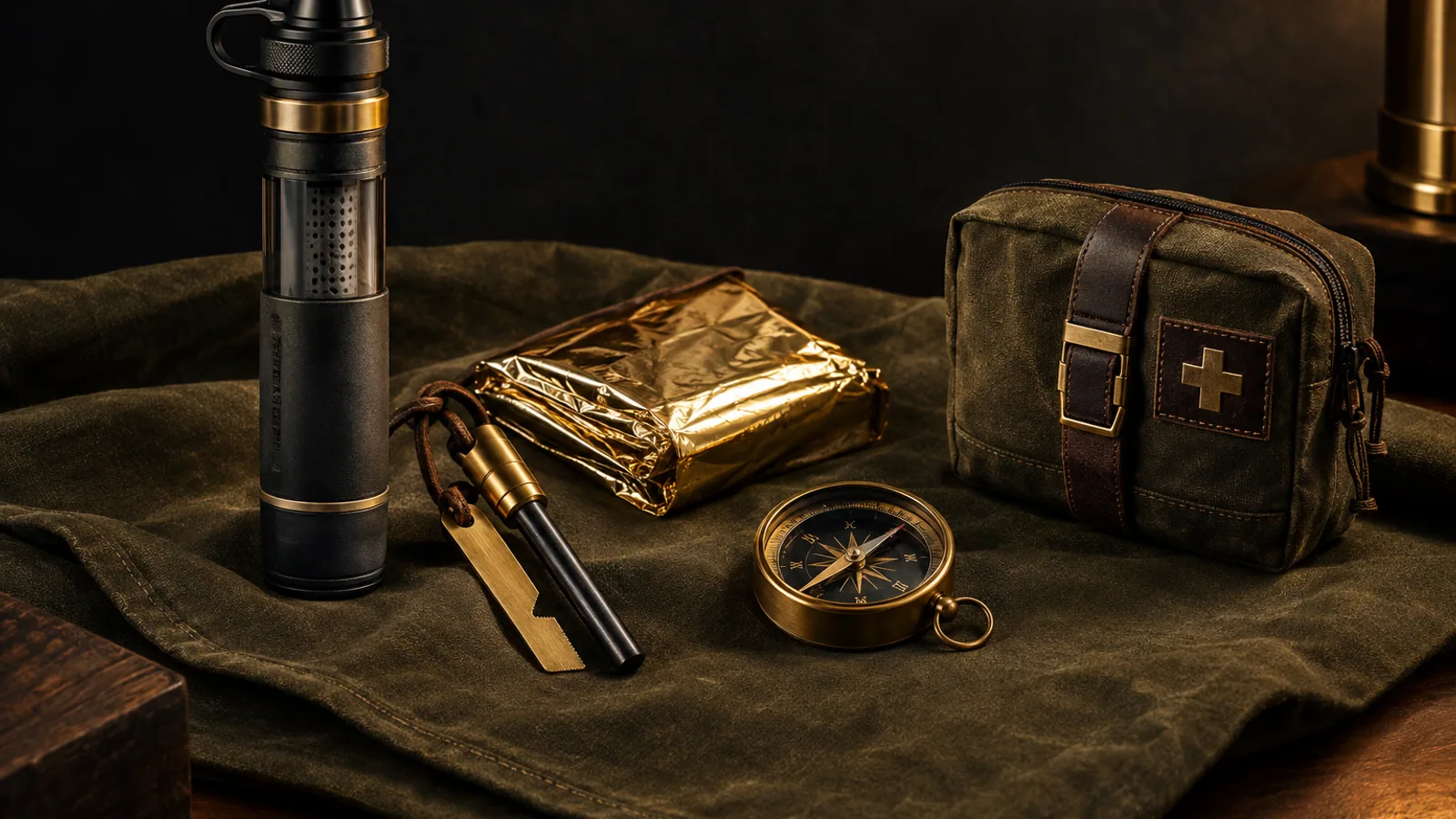
Skip the gadget that does ten things badly. A cheap fire starter, a compass you can't use and a knife the size of your forearm won't get you found. A whistle and a plan will.
Take a class
A tracker's eye can't be learned from an article. If you spend real time in the backcountry, take a wilderness first aid course from a qualified instructor, usually about 16 hours over a weekend, and a basic navigation class. Many local search teams run public workshops or can point you to one. The National Association for Search and Rescue also lists training.
Better still, ask your county sheriff's office how to join the volunteer team. Nothing teaches you what a lost person does wrong quite like going out to look for one.
For what to do in the first hour once you realize you're lost, read what to do in the first hour you're lost in the woods.
The note on the counter weighs nothing. Write it before you leave.
Wes Dunbar
Country & Skills
Grew up on an acreage and never quite left. Covers trucks, trades, land, and how to do the thing yourself.

Watch
Watch how it's done
Picked for this article.
From channels we rate. Plays on YouTube.
PAParksandForests
How to not get lost while hiking
SIKANA English
Hike Safety: What to Do if You Get Lost | Hiking
Read next