
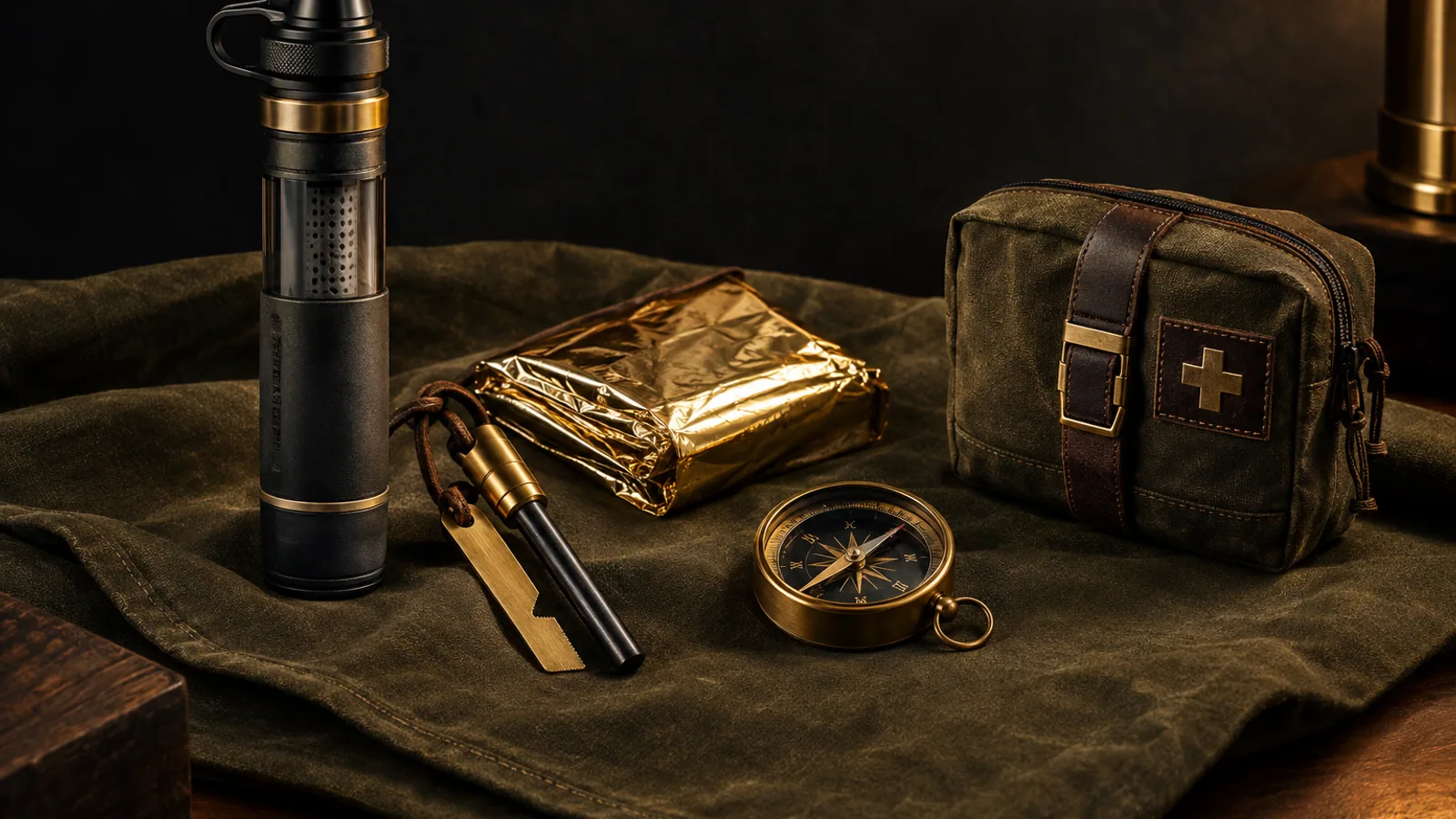
Quick answer: Fear isn't the problem. The urge to do something, anything, to make it stop is. Sit down, slow your breathing, run a short checklist, then pick the smallest useful job and do it.
It's 4:40 on a November afternoon. The trail has split into two forks that look identical, the light is going, and your stomach just dropped into your boots. Every instinct says pick a direction and walk fast.
Distrust that instinct. It's the one that turns an inconvenient evening into a real emergency.
What fear is actually doing to you
Your heart rate jumps. Your vision narrows. Your brain stops weighing options and starts grabbing for the fastest exit. That's old, reliable equipment doing its job. You don't need to be ashamed of it or fight it.
But it wants relief right now, and walking feels like relief. Sitting still feels like giving up. So people move, and keep moving, and end up farther from where anyone would look. Search and rescue crews generally want a lost person to stay put once they know they're lost, because a stationary person is far easier to find than a moving one.
The skill isn't courage. It's tolerating the discomfort of not moving long enough to think.
Slow the body first
You can't reason your way out of a pounding chest. Change the chemistry instead.
- Sit down. Take your pack off.
- Breathe in through your nose for a count of four, out through your mouth for six or eight. The long exhale is what settles you.
- Do it for two full minutes. It'll feel like wasted daylight. It isn't.
- Drink some water and eat something. Thirst and low blood sugar make every decision worse, and you won't notice they're doing it.
That's the annoying part. The first move in an emergency is the least heroic-looking one you could make.
Run the checklist out loud
Most outdoor instructors teach some version of STOP: Stop, Think, Observe, Plan. It's simple on purpose, because a stressed brain can't handle anything clever.
Say it out loud. Hearing your own voice say "I'm lost, I have two hours of light, I have a jacket and a lighter" does something to a spinning mind. It turns a feeling into an inventory.
Then work the priorities in order. The old rule of threes is a rough guide: minutes without air, hours without shelter in harsh weather, days without water, weeks without food. On a cold evening that usually puts shelter and warmth at the top and hunger at the bottom. If you're not sure what to do in that first stretch, what to do in the first hour you're lost in the woods walks through it step by step.
Staying put is a default, not a law. If you can see the road a few hundred yards downhill, or you're standing in a flood zone, or the shelter you need is obviously over the ridge, moving can be the right call. Just make that call after the breathing, not instead of it.
Make small decisions you can undo
Big frightening decisions are where people get hurt. Shrink them.
Before you commit to anything, ask one question: if I'm wrong, can I take it back? Walking fifty yards to look for a landmark and returning is reversible. Sliding down a rocky drainage in the dark is not. Crossing a creek you can't see the bottom of is not.
Pick the reversible move. And give yourself a time to decide again: "I'll reassess at first light." That one sentence takes a huge weight off your head. You don't have to solve the whole night right now. You only have to get to morning in good shape.
Hope is a job, not a mood
Nobody can will themselves into feeling optimistic. But you can do things that give you real reasons for it.
Make a list of jobs. Gather dry wood before it's fully dark. Rig the tarp or bivvy. Check what you've got for water. Put your whistle around your neck and give three sharp blasts at intervals, since three of anything is the recognized distress signal. Each finished job is evidence that you're handling this, and evidence is what hope feeds on.
Keep a reason in front of you, too. Somebody is expecting you home. That's also why you tell a person your plan before you leave: a trailhead name, a turnaround time, who to call if you're not back by dark. It helps rescuers, and it helps your head. Knowing someone will notice you're missing is a quiet kind of company.
Rough costs for the gear that supports all of this:
- Whistle with a lanyard: under $10
- Headlamp with spare batteries: $25 to $40
- Two lighters plus a ferro rod: under $15
- Emergency bivvy or heavy-duty space blanket: $20 to $50
- Satellite messenger or personal locator beacon: roughly $300 and up, and some need a subscription
The headlamp is the one people skip, then wish for. Fumbling in the dark is when small problems start to feel like big ones.
Calm is something you rehearse
People don't rise to the occasion. They fall back on what they've practiced. That's true on a mountain and it's true in a parking lot.
So practice. Build a shelter in the backyard on a Saturday and see what you got wrong. Start a fire in the wind. Sit in the dark with your headlamp off and notice what your mind does.
Then take a hands-on class from a qualified instructor. A weekend wilderness first aid course typically runs a couple hundred dollars, and it teaches you to think under pressure, which no article can. Reading about calm isn't the same as having done the drill once with your hands shaking a little.
The same logic applies to self-defense. Under real stress, fine motor control and memory fade, and you do what you've trained. That's the case for avoidance first: leave early, stay aware, and de-escalate whenever you can, because walking away is the win. If you choose to carry, you owe your family real training from a qualified instructor, the four rules of firearm safety every time you handle a gun, and locked storage away from children. That's what makes the right to keep and bear arms a responsibility you can stand behind. Your first firearms class isn't a test you can fail, and what real defensive gun uses teach about training shows why the practice matters. Laws on carry and self-defense vary by state, province and city. Nothing here is legal advice, so check local law and talk to a qualified attorney or instructor.
Sit down on purpose
Next time you feel that drop in your stomach, on a trail, on a dark road with a flat tire, anywhere, don't fight it. Just sit down on purpose.
Take the long breath out. Drink the water. Say the checklist out loud.
You'll have made the first good decision of the night before anyone has had the chance to make a bad one.
Cal Brennan
Fitness
Strength coach. Trains fathers, tradesmen and desk workers, which means programmes that survive a bad week.

Watch
Worth an hour of your evening
More from Survival & Self-Defense.
From channels we rate. Plays on YouTube.
Read next