The Unwritten Rules of the Public Range
The posted rules cover the basics. Nobody tells you what to do with your hands when somebody calls a cease-fire.
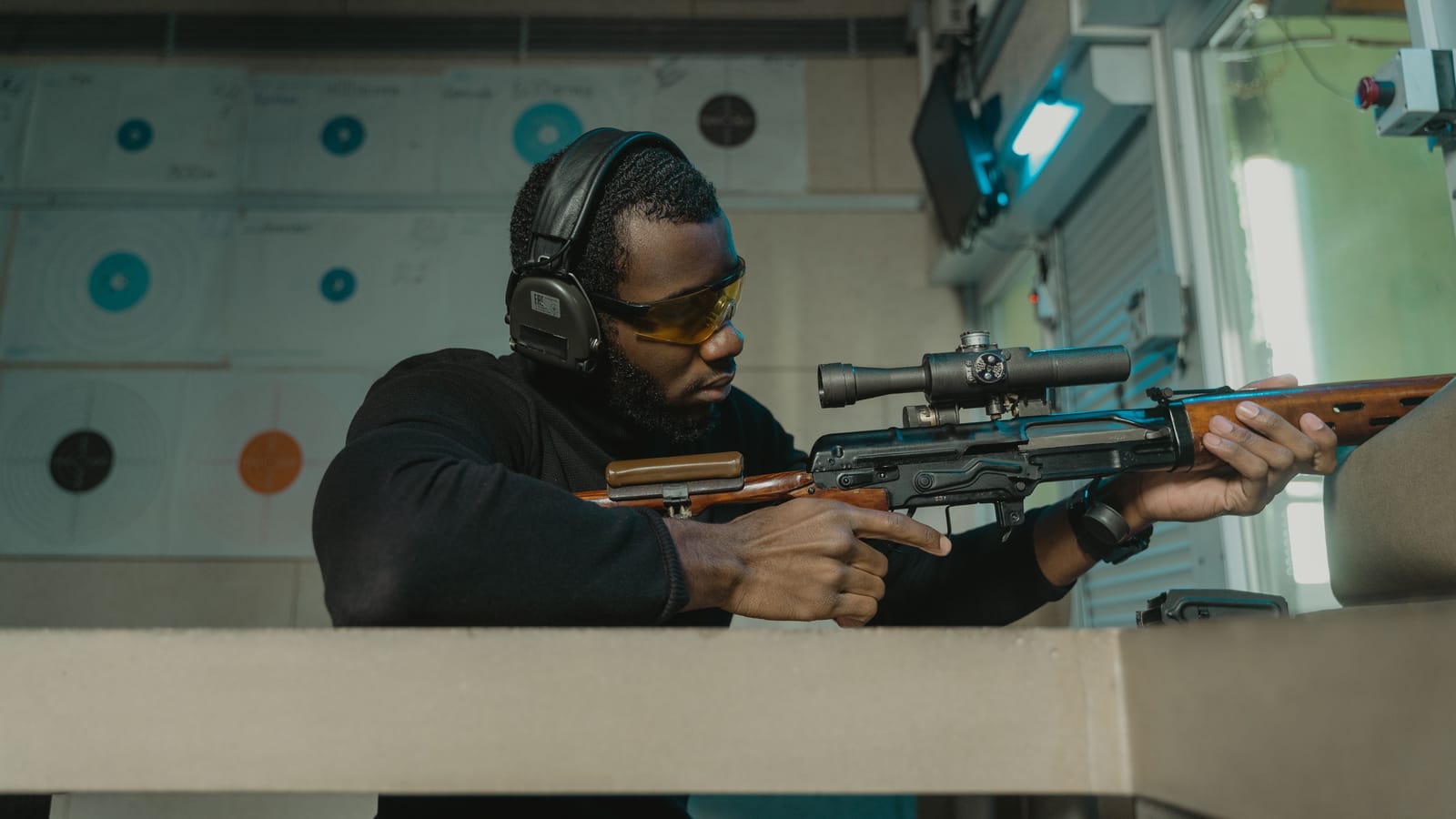
The first cease-fire will catch you off guard. Somebody calls it, every gun on the line goes quiet, and if you don't know what comes next you'll be the only person still holding a pistol while a dozen strangers watch you figure it out.
So learn the sequence before you go. On "cease fire," you stop shooting. You unload if you're told to, set the gun on the bench with the action open and the muzzle pointed downrange, and step back behind the yellow line with your hands off everything. Not leaning on the bench. Behind the line. Then you wait while people walk downrange to hang targets, and you don't touch that table again until the range officer calls the line hot.
That's most of range etiquette right there. The rest is courtesy, and courtesy at a range is just safety wearing better clothes.
Pack the night before
The two things you can't borrow your way out of are eyes and ears, and both are cheap.
- Eye protection. Wraparound shooting glasses, clear or amber, somewhere around $15 to $25. Ordinary prescription glasses aren't rated for this. Get real ones and put them on in the parking lot.
- Ear protection. Passive muffs run about $30. Electronic muffs, the kind that cut the gunshot but let you hear the range officer talking, start around $50 to $70 and are worth every dollar on an indoor line. Buy a bag of foam plugs for a few bucks and wear them under the muffs indoors. Indoor pistol bays are brutal.
- A hat with a brim and a shirt that buttons to the collar. This isn't fashion advice. Hot brass lands where it wants.
- Closed-toe shoes. Some ranges will turn you away in sandals, and they're right to.
- Your gun cased, unloaded, with the action open, plus a couple of magazines and more ammo than you planned on. A 50-round box of 9mm practice ammo usually runs in the teens to low twenties. Buy two.
- A staple gun or painter's tape for targets, if the range doesn't sell target frames with clips.
Budget $15 to $25 for a lane and range fee at most public spots, more in cities. Call ahead and ask two questions: do you have a required orientation for first-timers, and what's your policy on drawing from a holster? The answers will save you a wasted trip.
Carry it in like a professional
The gun stays in the case, unloaded, until you're standing at the lane with the muzzle pointed downrange. Then you open the case. Not in the lobby. Not at the counter while you're paying, unless the staff specifically ask you to present it for inspection.
When you're done, same thing in reverse. Unload at the bench, bench it, case it, then walk out. The parking lot is where careless people get sloppy, and it's the one place where nobody's watching your muzzle but you.
Speaking of which.
The four rules, and the one everybody actually breaks
- Treat every gun as if it's loaded.
- Never point the muzzle at anything you aren't willing to destroy.
- Keep your finger off the trigger until your sights are on target and you've decided to fire.
- Know your target and what's behind it.
Rule two is the one that goes sideways at a public range, and it almost never happens deliberately. It happens when a guy turns around to say something to his buddy with the pistol still in his hand. The muzzle sweeps four lanes on the way, and he has no idea he did it.
Build a habit instead of relying on attention. When you want to turn around, the gun goes on the bench first. Empty hands, then talk. Every time, even when the line is cold and the gun's unloaded and it obviously doesn't matter. Especially then. The habits you build on the easy days are the only ones that show up on a hard one.
Hot brass and the dance you shouldn't do
A .223 case is going to land inside your collar eventually, or in the gap above your glasses, and it will get your full attention. It stings, it leaves a mark for about a week, and it's not worth a single sweep of the muzzle.
The rule is simple and you should say it out loud on the drive over: if brass goes down your shirt, you bench the gun first. Then dance all you want. Nobody will laugh at you. Everyone there has done it.
Things that mark you as the new guy, and which of them matter
Some don't matter at all. Shooting a wide group at seven yards is fine. Asking a range officer to watch your grip is fine, and most of them enjoy it. Bringing a rented gun because you haven't bought one yet is smart, not embarrassing.
Here are the ones that do matter.
Don't touch another person's firearm, ever, without being asked twice. Not to look at it, not to pick it up off the bench next to you. If someone offers, ask before you touch, then check the chamber yourself in front of them. That's not an insult. It's the compliment.
Don't coach strangers. Unsolicited advice is the number one thing that makes public ranges unpleasant. If someone is doing something unsafe, you don't correct him yourself. You walk back and tell the range officer, quietly, and let the guy with the vest handle it. Avoiding a confrontation is the skill. That's true in a parking garage and it's true in lane six.
Clean up. Take your target down, sweep your brass into the bucket if the range keeps it, and pack out your boxes. Ranges close because of complaints and because of trash.
Bring a plan, not just ammo
Most first-timers burn 150 rounds in 20 minutes at a silhouette 10 yards out, hit it every time, and learn nothing. Then they go home with a sore hand.
Do this instead. Tape a 3x5 index card to the target at five yards. Fire five rounds, slowly, taking a full breath between each one. Look at the card. All five on the card at five yards means you're ready to move back to seven. That's the entire session. Fifty deliberate rounds beat 200 noisy ones, and your wallet will notice.
When to hire an instructor, which is sooner than you think
If you've never fired a handgun, book a basic pistol class before your first solo range trip, not after. A half-day group class with a certified instructor typically runs $75 to $150 plus range time and ammo, and it's the best money in the sport. One afternoon with somebody watching your grip and trigger press will fix problems that take years to unlearn alone.
Book a second one later for defensive fundamentals, and a third if you plan to carry. Owning a firearm is a right. Being good with it's a duty you take on voluntarily, and it doesn't come from owning, it comes from reps under instruction.
The part that happens at home
The gun goes into a locked container when you get back, unloaded, with ammunition stored separately. A quality handgun safe with a mechanical keypad runs $150 to $300 and opens in about two seconds. Cable locks are better than nothing and worse than a safe.
If there are kids in the house, they get the talk too: if you see a gun, don't touch it, leave the room, tell an adult. Curiosity isn't a character flaw in a nine-year-old. Unsecured storage is a character flaw in an adult.
One more thing, and take it seriously. Laws on transport, carry, magazine capacity and storage vary wildly by state, province and city, and the rules can change when you cross a county line. Nothing in this piece is legal advice. Read your state's statutes, ask a qualified attorney or a certified instructor who teaches in your jurisdiction, and know the law before you load the car.
Nobody at that range is going to remember your groups. They'll remember whether your muzzle stayed where it belonged.
Marcus Vale
Editor-in-Chief
Twenty years in magazines, most of it deciding what to cut. Writes about work, discipline and the decisions that compound.

Watch
Watch how it's done
Picked for this article.
From channels we rate. Plays on YouTube.
Warrior Poet Society
The Universal Firearm Safety Rules
Read next