Build the floor first, and leave a hole in the roof
The cold comes up through the ground, and the real danger is a shelter that's too airtight. Get both right and you'll sleep warm.
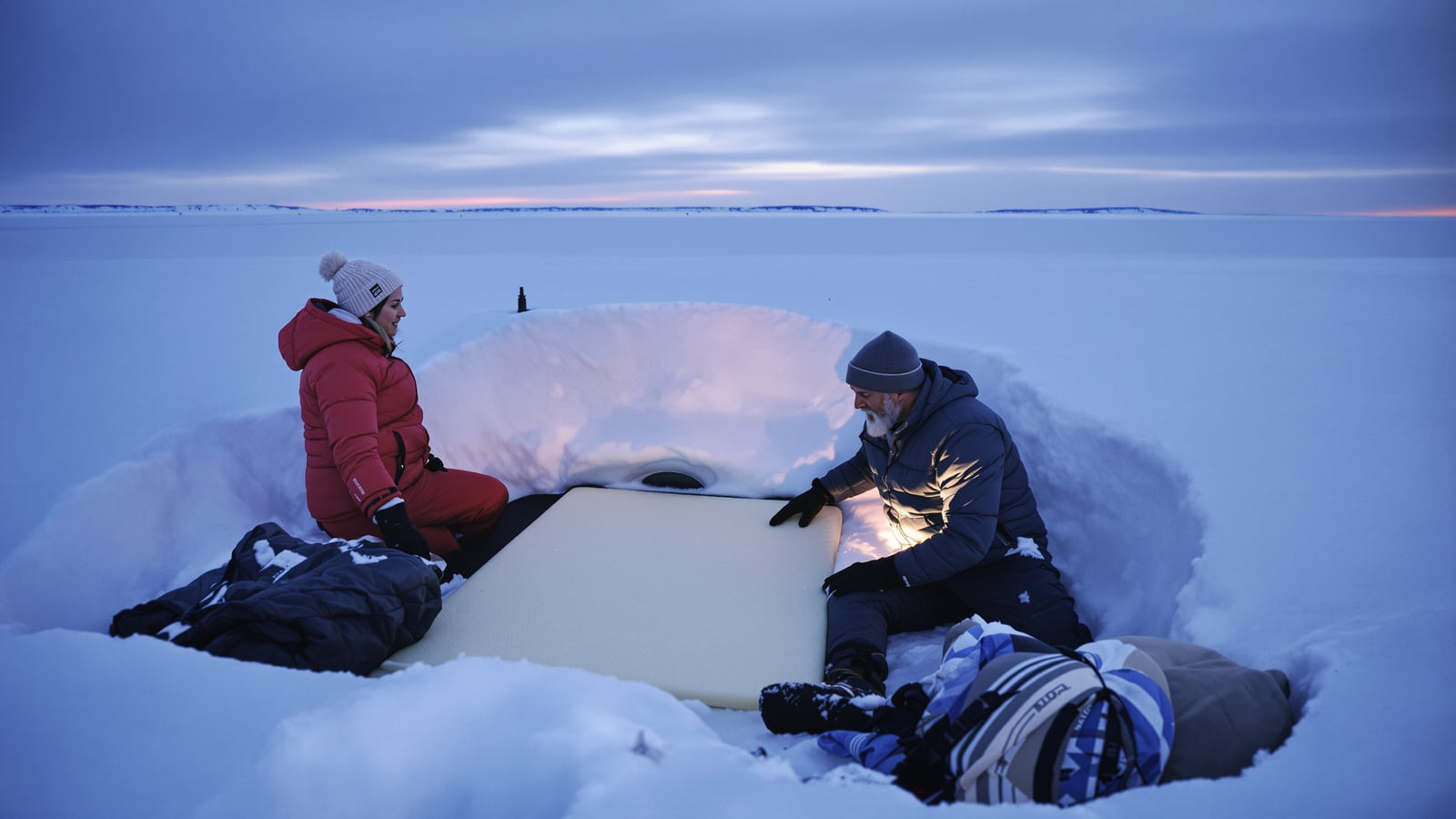
Quick answer: Insulate under yourself before you worry about the walls. Build the space small, so your body heat can warm it. Leave a vent open that you can check from inside. Never burn a flame or run a stove in a sealed shelter.
At 15°F, a sleeping bag laid straight on snow loses the argument around 2 a.m. You'll lie there thinking the bag is bad. The bag is fine. The ground is taking your heat through the one part of the bag that's squashed flat and can't insulate.
Most people build the walls first because walls look like shelter. Do the opposite.
The floor is where you lose
Your weight crushes insulation underneath you, so the floor needs material that doesn't compress. Down and fluffy synthetic fill don't count. They flatten to almost nothing under a hip.
In a snow shelter or on open ground, stack the layers in this order, bottom to top:
- A layer of evergreen boughs, dry leaves, or a pile of dead grass, six inches deep or more when you can get it
- A closed-cell foam pad, about $25 to $50, which doesn't leak air and can't puncture
- An inflatable pad on top if you own one, rated R-4 or higher for winter
- Your bag, with a spare jacket under your hips and shoulders for the pressure points
The foam pad is the cheapest piece of winter gear that earns its place. It doesn't fail. It also doubles as a seat, a splint backer, and a windbreak when you're cooking.
The boughs matter most if you've got nothing else. Cut them from deadfall or from the lower limbs of a tree where the law allows. Check the rules for the land you're on before you cut anything.
Build it small, then make it thick
A big shelter is a cold shelter. Your body puts out only so much heat, and every extra cubic foot of air is something you have to warm. You want enough room to lie down and sit up, and no more. Think coffin with headroom, not cabin.
In the woods without snow, a debris hut works. Prop a ridgepole against a stump or forked tree, lean ribs along both sides, and pile leaves, pine needles, and brush over the frame until it's about two feet thick. People always stop at one foot. It still feels cold after one foot. Two feet is where it starts holding heat.
In deep snow, a trench shelter or a snow cave beats anything you can make from branches. Snow is a decent insulator once you're inside it, and the temperature in a snow shelter stays near freezing even when the air outside doesn't. Near freezing sounds grim until you've spent a night at 0°F outside.
Some rules for snow shelters:
- Dig the entrance lower than the sleeping platform. Cold air sinks and stays in the low spot while warm air collects up high where you're lying.
- Dome the ceiling. A flat roof drips on you. A dome sheds the water down the walls.
- Leave the walls about a foot thick.
- If you pile snow into a mound to dig out (a quinzee), let it settle for an hour or two first. It's the waiting that makes it hold.
- Keep a shovel inside with you. It's your way out if the entrance drifts shut.
- Mark the outside with a pole or a ski. Snowmobilers and rescuers can't see a mound.
Snow shelters can collapse. That's why this is the section where I'll tell you to take a class before you try one overnight. More on that below.
Ventilation: the part that kills
Cold gets the attention. Carbon monoxide does the damage.
CO has no smell, no color, and no warning. It comes from any fire, stove, lantern, or charcoal burning in an enclosed space. The early signs, a headache, nausea, and drowsiness, look a lot like being tired and cold. Asleep, you won't recognize them. Every winter there are stories of people who died in tents and snow shelters with a stove running and the door closed.
So the rule is flat:
No charcoal. No stove. No open flame in a shelter you've closed up. Cook in the doorway with the door wide open, or cook outside. A small candle for light is the most that experienced people tolerate in a snow shelter, and only with a vent open.
A battery-powered CO alarm costs $20 to $40, clips to a tent loop, and does what your nose can't. If you ever use a heater of any kind, it's not optional.
Even with no flame, you still need airflow. You're breathing out moisture and carbon dioxide all night. In a sealed snow shelter, that builds up.
Poke a vent hole through the roof, about the size of your fist, and keep it open. Then keep checking it. Frost, drifting snow, and wet snowfall seal vents closed without any help from you. Every time you wake, put a hand up and make sure air is still moving. Keep your pole or ski pole handy for clearing it.
Don't fix a cold night by shutting the vent. Fix it with insulation, a warmer bag, or a hot bottle.
Keep the wet out
Wet insulation stops insulating. That includes your clothes, your bag, and your boughs.
- Before you build, take a layer off. Digging in a full parka soaks the inside of your clothes with sweat, and sweat is what makes you cold an hour later.
- Before bed, eat something, and drink. Your body runs on calories at night.
- In the bag, keep your face out of it. Breathing into the bag packs it with moisture. Pull the hood tight with your nose and mouth clear.
- A hard-sided bottle filled with hot water, lid screwed down tight, goes in the bag near your core. It'll stay warm for hours. Test the lid first. A leak in a winter bag is a bad hour.
- Inside a tent, crack the vents even when it's cold. Frost on the inside of the tent is breath, and it'll drop on your bag.
What to carry, with rough costs
- Closed-cell foam pad: $25 to $50
- Sleeping bag rated to 0°F or lower: a few hundred dollars for a good one, less if you buy used and wash it right
- Compact snow shovel, metal blade: $30 to $50
- 8-by-10-foot tarp: about $25
- Fifty feet of paracord: about $10
- Contractor-weight trash bags, to keep gear and boughs dry: a couple of dollars each
- Battery CO alarm: $20 to $40
- Space blanket, as backup only: under $10
Learn it with someone who's done it
You can't learn snow shelters from an article. Which snow packs well, how to tell when a roof is thin, and how a collapse starts are all things you learn standing next to an instructor.
Take a winter skills course from a qualified instructor before you sleep in a snow shelter for real. Local search-and-rescue teams, outdoor schools, and avalanche-safety programs run them. Then practice close to home, about a hundred yards from your truck or your back door, on a night you can bail out of.
Tell someone where you're going and when you'll be back. Check the rules for camping, fires, and cutting wood where you're headed, since they vary by land and by state. And if you ever do get lost, start with what to do in the first hour, because building the shelter is the second decision, not the first.
Pack out what you packed in. Knock the shelter down when you leave it so nobody wanders into a collapsed hole, and leave the spot cleaner than you found it.
The best winter shelter is the one you've already slept in once, close enough to go home from.
Wes Dunbar
Country & Skills
Grew up on an acreage and never quite left. Covers trucks, trades, land, and how to do the thing yourself.

Watch
Watch how it's done
Picked for this article.
From channels we rate. Plays on YouTube.
Scavenger Survival
Winter Survival Shelter, Stay Warm Overnight With No Fire
Silent Outdoors
How to Build a Winter Survival Shelter Fast for Freezing Nights
Read next