
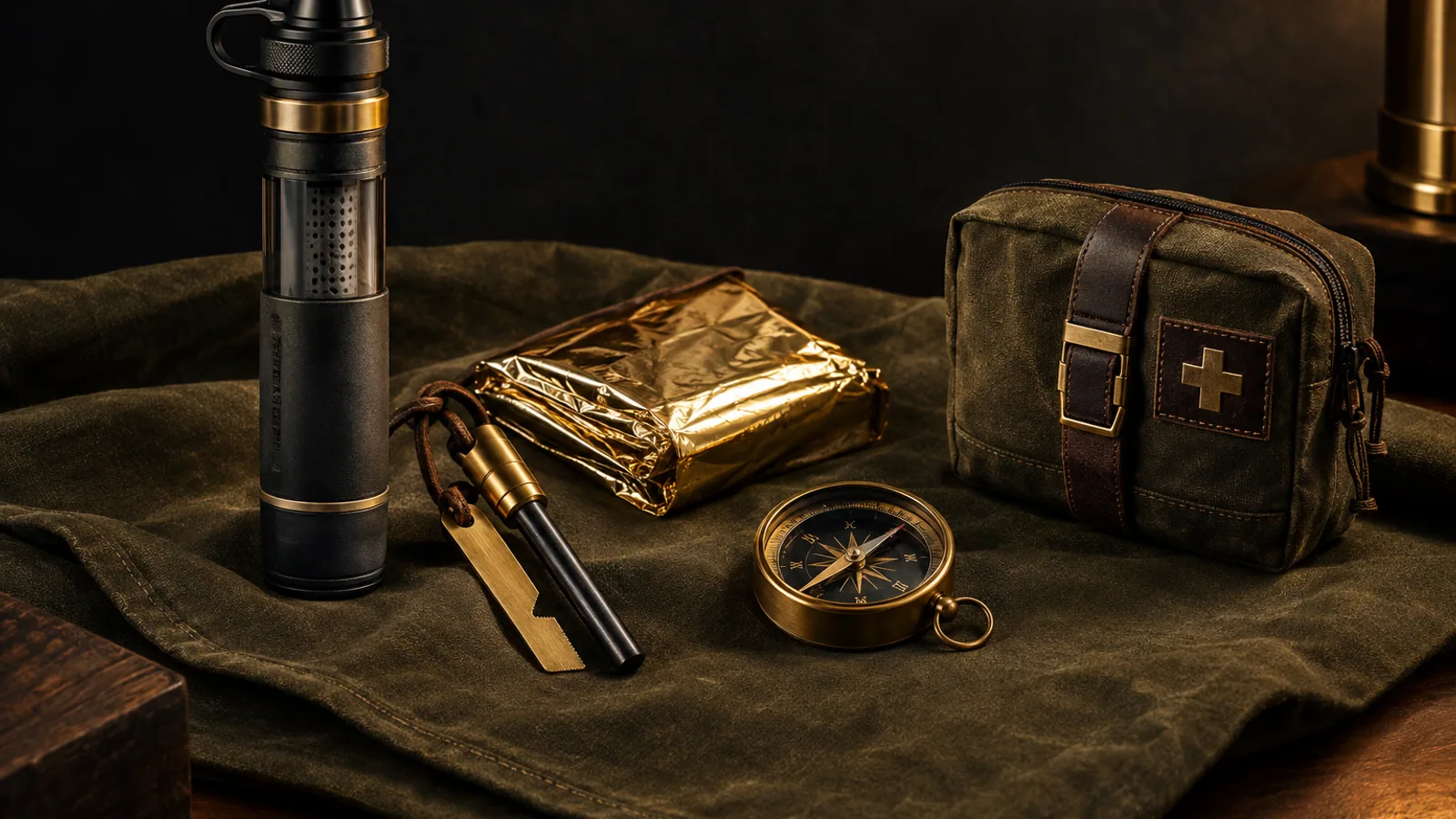
Quick answer: Write down where you're going, who's with you, what you're wearing, and the exact hour your person should call for help. Give it to someone who'll actually make the call. Then stay on the route you wrote down.
The plan isn't for you
You already know where you're going. The plan is for the person who has to find you.
Picture a Saturday. A man leaves at 6 a.m. for a ridge hike. His wife knows he went "up the mountain." By dark she doesn't know which mountain, which trailhead, or whether to worry yet. She waits. She calls his phone. She waits more. Every hour of that's an hour the searchers don't have.
A good plan removes the guessing. In most places, search and rescue is run through the county sheriff, and much of it is done by volunteers. They start with what you left behind. If that's a vague sentence, they start with a map and a guess.
What goes on the page
Write it. A text message works. A note on the counter works. Index card, phone note, whatever you'll really do. It needs:
- The trailhead and the route. Name the trail, the lake, the loop. If you might extend the hike, say so.
- Your vehicle. Make, color, plate number, and where it's parked.
- Everyone in the party. Names, ages, and anyone with a medical condition or medication they can't go without.
- What you're wearing and carrying. Jacket color, pack color, boots. Searchers scan for color.
- Your gear. Tent or no tent, how much water, whether you have a light, a map, a beacon.
- Your turnaround time. The hour you'll turn around no matter how close the summit looks.
- The call time. More on that next.
- Who to call. The county sheriff's number for the area you're in, and the plain instruction to call 911 and ask for search and rescue.
Do this the night before. Writing it at the trailhead means you'll skip half of it.
Pick the call time, then add a buffer
Most plans fail right here. "I'll be back around four" tells your wife nothing about when to act.
Say it like an order. "If I haven't called by 7 p.m., call the sheriff. Don't wait for me to turn up." Add an hour or two past your expected return so a slow descent doesn't set off a false alarm. Shorten that buffer in cold weather, in the dark, or when kids are with you.
Then comes the hard part. The person at home has to be willing to call early and feel a little foolish. Tell them so in advance. A call that turns out to be unnecessary costs everyone some embarrassment. A call that comes six hours late can cost far more. Nobody on a search team has ever been annoyed that somebody called too soon.
One more thing to know. Most rescues in the U.S. aren't billed to the person rescued, but a few states can charge when someone acted recklessly. Check your state. It's another reason to be conservative, and it won't change what you do.
What search and rescue wants you to leave behind
Beyond the plan, a few things will still help them find you, even when everything else has gone wrong.
The car, where you said it would be. It's the first thing they look for. Don't move it, and don't change trailheads on a whim. If you do change plans, text your person before service dies.
A boot print. Before you set out, snap a photo of the sole of each boot on a flat surface, with a coin or a pen for scale. Searchers use tread patterns to tell your track from everyone else's. It takes ten seconds.
Your signature in the register. If the trailhead has a sign-in box, use it. Write the real time and the real route.
A readable trail. If you're lost, stop. Make yourself easy to find. Tie something bright to a branch. Lay out a big shape in a clearing with gear or branches. Stay put in the open if you can. A person who keeps wandering is a moving target for searchers, and the moving makes the search area bigger every hour. For the rest of that first hour, read what to do in the first hour you're lost in the woods.
Your ego. Leave it at the car. The turnaround time exists to be obeyed, and the worst decisions out there get made within sight of a summit.
Gear that backs the plan up
You don't need much. You need the right few things.
- A whistle. Eight to ten dollars. Three blasts is the distress signal. It carries farther than your voice and doesn't tire you out.
- A headlamp with spare batteries. Twenty-five to forty dollars. Day hikes turn into night walks more often than anyone plans.
- Offline maps. Download them at home. The trailhead is where cell service usually quits. Gaia GPS and onX Backcountry both let you save maps to the phone. A paper map and compass are the backup, but only if you know how to use them.
- A phone in airplane mode. Save the battery for when you need it. Text messages get through on weaker signal than calls do.
- A satellite messenger or personal locator beacon. A beacon such as an ACR ResQLink runs roughly $300 to $400, with no subscription. Messengers like the Garmin inReach Mini cost about the same up front, plus a monthly plan starting around fifteen dollars. They let you send a message, and in some cases receive one, from places with no signal at all. If you go solo or deep, this is the one piece of gear worth the money.
If you carry in the backcountry
Lawful carry on the trail is part of the same mindset: you take responsibility for your own safety and your family's. It carries obligations too.
Carry laws vary by state, province, city, and by the kind of land you're standing on, and rules on federal and park land are layered on top of state law. Nothing here's legal advice. Check the rules for every place on your route, and ask a qualified attorney or instructor if you're unsure. Our piece on what your carry permit actually does at the state line covers the crossing-borders problem.
Treat the four rules as non-negotiable on the trail as at the range. At home, lock up whatever stays behind, out of reach of children. Never leave a firearm in an unattended vehicle at the trailhead. And remember what you're really carrying for: a firearm is the last tool in a long line. The first ones are the plan, the call time, and the turnaround.
Get taught, not just told
Reading gets you a plan. A class gets you the habits.
Look for a wilderness first aid course, typically a weekend and a few hundred dollars. Add a land navigation class from a local outdoor club or a search and rescue group. Many SAR teams run public awareness sessions for free, and they'll tell you exactly what they wish more hikers did. If you're new to firearms, start with your first firearms class before you think about carrying anywhere.
Write the plan tonight. Put it on the fridge. Tell your wife what time she calls, and mean it when you say she shouldn't wait.
Wes Dunbar
Country & Skills
Grew up on an acreage and never quite left. Covers trucks, trades, land, and how to do the thing yourself.

Watch
Watch how it's done
Picked for this article.
From channels we rate. Plays on YouTube.
NYSDEC
How To Plan A Hike
Read next