Building a Backyard Sauna and What Each Style Really Costs
Barrel kit, cabin kit or a stick-built box you frame yourself. What each runs, what the heater adds, and the mistakes that cost you a summer.
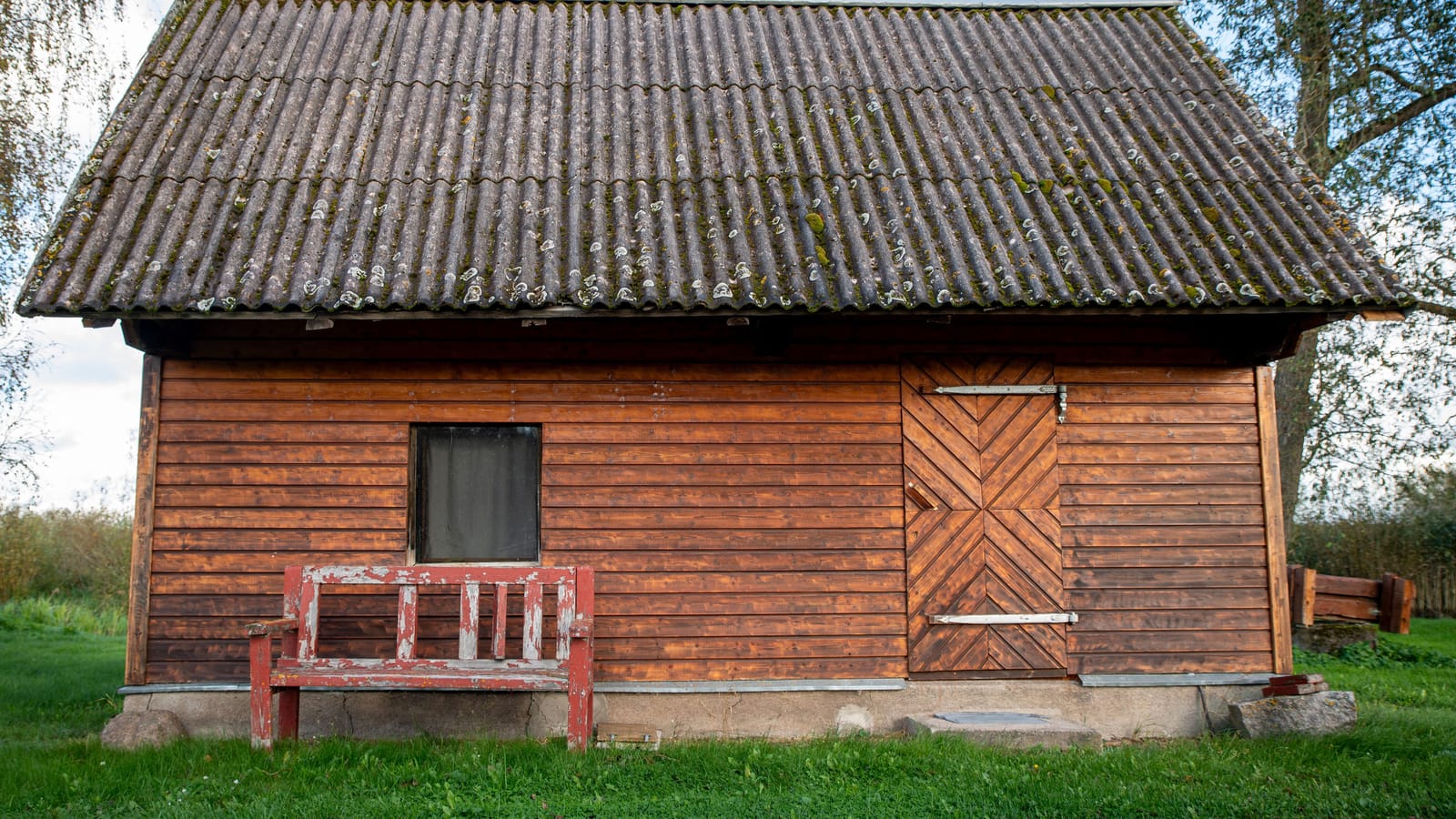
The shell is the cheap part. Everybody shops barrels and cabins and cedar grades, and then gets blindsided by the two line items nobody puts in the product photo: the heater and the power to run it. Budget $1,500 to $4,000 for a decent heater with stones and a chimney or a wiring run, before the first board goes down. Do that math first and the rest of the decision gets a lot simpler.
A 6-kilowatt electric heater wants its own 240-volt circuit, usually 30 amps. An 8-kilowatt wants 40. If your panel is full or the sauna sits 90 feet from the house, a licensed electrician is going to quote you somewhere in the $800 to $2,000 range for trenching, conduit, wire and the breaker. Get that number before you fall in love with a kit. Ask an electrician, not a forum.
The three paths, and what they actually cost
Barrel kit. Western red cedar staves, two round ends, steel bands, usually 6 or 7 feet long. Expect $5,000 to $9,000 for a well-made one from an established maker like Almost Heaven or Dundalk LeisureCraft, and $3,500 to $4,500 for an import with thinner staves and hardware you'll want to replace. Assembly is a Saturday with one helper. The barrel is the fastest path from money to sweat.
What the cheap barrel gets right: the shape. A round profile heats fast because there's less dead air above your head, and it sheds rain and snow without a roof to speak of. What it gets wrong: thin staves shrink in dry climates and the bands need a turn every season, the flat floor inside a round body means a wasted wedge of space you'll never use, and the door hardware on budget units is usually the first thing to fail.
Cabin kit. A square or hip-roof building, panelized or stick-and-board, typically 6x6 to 8x10. Figure $8,000 to $20,000 depending on size, glass and whether there's a changing room or porch. You get real insulation, a proper roof, headroom, and benches you can lie down on. You also get a longer build, a bigger pad and, in most towns, a much higher chance you need a permit.
Build it yourself. An 8x8 stick-built sauna framed with 2x6s, insulated with mineral wool, lined with foil vapor barrier and finished in cedar or thermally modified aspen runs roughly $4,000 to $7,000 in materials at current lumber prices, plus the heater. It's the best value per square foot and the only version you can shape around your yard. It's also three to four weekends if you know your way around a framing square, and six if you don't.
Pick the heater before the shell
Electric is the low-drama choice. A Harvia KIP in the 6-kilowatt range sits in the $500 to $800 window. Step up to a HUUM Drop or a Harvia Cilindro with a real stone load and you're at $1,300 to $2,200. More stones means a softer heat and steam that doesn't die the second you ladle water. That's the whole argument for spending more.
Wood-fired is the better experience and the bigger project. A Harvia M3 runs a few hundred dollars; a Kuuma from Lamppa is a serious stove at serious money, generally $2,000 and up. Then add the chimney. Insulated class-A pipe, roof flashing, storm collar and a spark arrestor will add $700 to $1,200, and the clearances aren't negotiable. Follow the manufacturer's listed clearances to combustibles exactly, use a floor protector, and put a carbon monoxide alarm inside the room. Call your insurance carrier before you install it, not after.
Size the heater to the room volume the manufacturer specifies, and add capacity if you have a lot of glass or an uninsulated barrel. An undersized heater is the single most common regret. It never quite gets there, and you stop using the thing by October.
The pad is where people cut corners
Sauna floors get wet. Water finds the low spot and sits there, and that's how a $9,000 barrel rots from the bottom up in five years.
Cheapest good foundation: dig out 6 inches, lay landscape fabric, fill with 3/4-inch crushed stone, compact it in two lifts, and set the cradles or skids on solid concrete blocks. Four yards of gravel delivered runs $250 to $450 in most markets. Rent a plate compactor for $60 to $90 a day. Don't skip the compactor and don't use round pea gravel, which never locks up.
Better: a 4-inch concrete slab with a slight slope to one side, $6 to $12 per square foot poured by a contractor. For a 8x8 that's $400 to $800 in concrete alone if you do it yourself with a rented mixer.
Rent, don't buy: plate compactor, a one-man auger if you're setting piers, and a mini excavator if the site needs more than an afternoon with a shovel. A day on an excavator runs $250 to $400 and turns a miserable week into a morning.
Weekend plan for a barrel kit
Friday evening. Unbox everything. Count the staves against the packing list. Kits ship short more often than anyone admits, and you'd rather find out Friday than at 2 p.m. Saturday.
Saturday morning. Set the gravel or pavers. Level the cradles across both axes with a 4-foot level and a long straightedge. Everything downstream depends on this.
Saturday afternoon. Floor boards, then staves from the bottom up, both ends set in the grooves, bands loose. Tap the staves home with a rubber mallet and a scrap block. Snug the bands evenly, side to side, like torquing lug nuts.
Sunday. Door, benches, backrests, heater rails, trim. Run a garden hose on the roof for five minutes and look for drips. Then stop. Let a wood stove installation or an electrical hookup happen on its own day, with the right person doing it.
Tools you'll want: rubber mallet, 1/2-inch ratchet and socket set, 4-foot level, cordless drill and impact driver, 20-foot tape, a speed square, and a pair of sawhorses. Nothing exotic.
Safety items that aren't optional
- The door swings out, always, with a ball catch or magnet. No latch, no lock, no hardware a person could get stuck behind.
- Tempered glass only, and check that it's labeled.
- A guard rail around any wood stove, far enough back that a bare shin can't reach it.
- Upper and lower vents. Fresh air low near the heater, exhaust high on the opposite wall. A sealed box is a bad idea for reasons that go beyond comfort.
- GFCI protection on the light circuit, and fixtures rated for the heat.
- Keep the room to a temperature you'd hand to a guest. If someone's on heart medication or pregnant, that's a conversation for their doctor, not a sauna article.
When to walk away
If you'll use it twice in February and then forget about it, buy a gym membership with a sauna in it and put the $9,000 toward a fence that actually needed replacing. The people who get their money's worth use the thing three or four nights a week, and they'll tell you the reason is that the sauna sits 40 feet from the back door with a shoveled path to it. Put it too far out and you've built a shed.
And if you're deciding between a sauna and a hot tub, know the trade. The hot tub is easier to enjoy and harder to own: chemicals, a cover that dies every four years, a pump that doesn't. The sauna is emptier the first ten minutes and then it's the best room on the property.
Build the pad right, buy one heater size up, and put a bench wide enough for two. That's where the conversations happen.
Dean Shaw
Gear & Garage
Reads the warranty, the parts list and the long-term owner reviews before anything else. Trucks, tools, watches, and the cheap version that costs more.

Watch
Watch how it's done
Picked for this article.
From channels we rate. Plays on YouTube.
The Sauna Heater
Brutally Honest Advice for Sauna Builders
Good Enough Builds
I Built a Backyard Sauna—Here’s What I’d Do Differently
Read next