Buy your hand tools used and let someone else take the loss
A used Stanley plane or Starrett square costs less than the new one and usually works better. Here's where to find them and what to check before you pay.
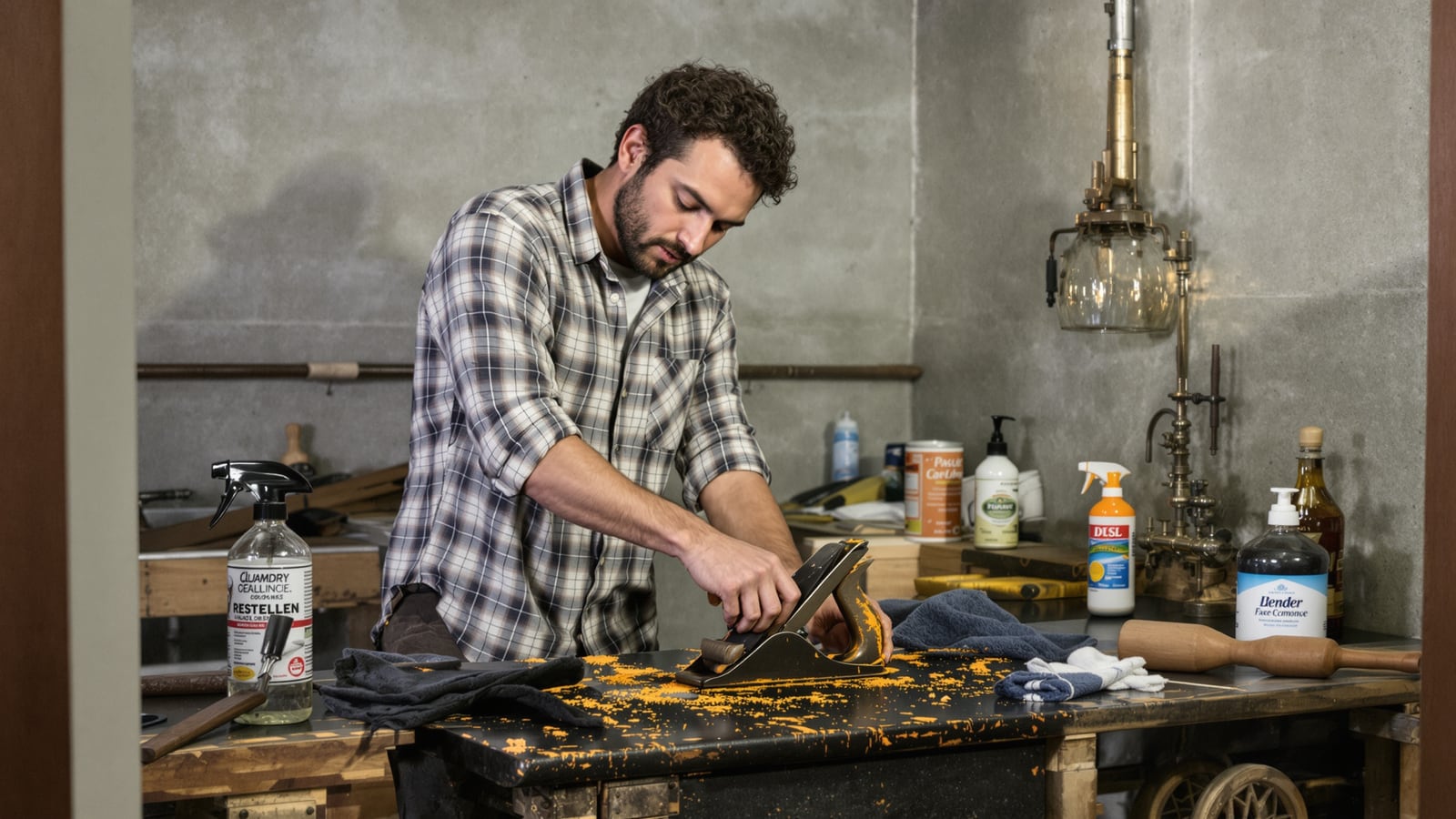
Quick answer: Buy old planes, saws, squares, chisels and hammers used. The depreciation already happened decades ago, so what you pay is close to what you'll get back if you ever sell. Check for cracks, pitting on working surfaces and a loose head, then spend one evening cleaning and sharpening.
The loss was taken before you showed up
A new car loses its value the moment it leaves the lot. A new cordless drill is outdated in about three years. Old hand tools don't work that way.
A Stanley Bailey plane made generations ago has already taken every hit it's going to take. It's a cast iron body, a steel blade and a wooden tote. Nothing in it wears out in a way you can't fix. Buy it fairly and use it for ten years, and it'll still be worth what you paid. Often it'll be worth more.
Now look at what new costs. A decent new bench plane is a real purchase, and the cheap ones sold in big-box stores tend to have soft blades and rough castings that take hours of flattening before they cut well. The older tool was often made better. The steel was good, the castings were machined, and somebody has already proved it lasts by using it for fifty years.
That's the whole argument. You're not buying second best. You're buying the one purchase where the best thing is also the cheap thing.
What to buy used
Start with the tools that can't wear out in any way that matters.
- Bench planes. A No. 4 smoothing plane and a No. 5 jack plane, which runs roughly 14 inches, cover most of what a home shop needs. Stanley, Record and Millers Falls are all easy to find.
- Handsaws. Old Disston saws turn up everywhere. The steel was good, and you can resharpen the teeth yourself.
- Squares and measuring tools. Starrett has been making precision tools since 1880. An old combination square from them is a tool you buy once.
- Chisels. Old socket chisels and good bevel-edge sets hold an edge better than most new budget sets.
- Hammers and mallets. A claw hammer with a hickory handle can outlive you, as long as the head is tight.
Skip the electric stuff. Old power tools are a different gamble, with failing cords, worn bearings and parts nobody makes anymore. This piece is about tools that have no motor to die.
Where to look
Estate sales are the best source, and the best ones are the ones nobody advertises well. Go early on the first morning. When a man who worked with his hands passes away, his family usually wants the garage cleared and prices things low. You'll find a coffee can of chisels, a rusted plane under a bench and a drawer of squares.
Flea markets and farm auctions come next. Online listings work too, but you pay for the seller's photography and the shipping. Anything described as "rare" or "collector grade" is priced for collectors. You don't want collector grade. You want a user, which is a tool that works and has a little wear on it.
Ask older guys at a hardware store or a lumberyard. Somebody's father-in-law has a basement full of this stuff and no one to give it to.
What to check before you hand over cash
Do it standing there, in about two minutes.
Planes. Sight down the sole from the front. It should be flat, with no rocking. Tap the casting with a knuckle and listen. A ring means it's solid. A dull thud means a crack, so put it down. Check the throat and the sides for hairline breaks. Surface rust is fine. Deep pits on the sole or the frog are not.
Saws. Sight down the plate for kinks. A bent saw plate rarely goes fully straight again. Light rust cleans off. Deep pitting at the tooth line means you'll be fighting it forever.
Squares. Draw a line along the blade against a straight board, flip the square over and draw it again. If the two lines don't match, the square is out. Move on.
Chisels. Look at the length. A chisel worn to a stub has nothing left to sharpen. Check that the back is flat near the edge and that the handle isn't split.
Hammers. Grab the head and try to twist it. It shouldn't move. A loose head is dangerous, and a chipped or mushroomed striking face can throw a shard. Walk away from either.
Bring a small straightedge, a flashlight and a magnet. The magnet tells you the steel from the pot metal in a few seconds.
The annoying part
Nobody tells you this up front. Almost every old tool needs an evening of work before it's right.
The plane needs its sole flattened and its blade honed. The saw needs sharpening. The chisel needs its back lapped. That's real time, and if you don't have a way to sharpen, the tool will just sit there being old. Sharpening is the skill that makes this whole plan pay off, so learn it first. Raise a burr, and the rest of sharpening follows is the place to start, and Learn to sharpen and every tool you own gets better covers the rest.
Some sellers also know what they have. Prices on the famous names have crept up, and a rust-free plane in a nice box can cost real money. Don't pay it. Be patient. The ugly one with a little surface rust and a sound casting is the better buy.
And sometimes the new tool is the right call. If you want a modern, tuned, ready-to-use plane and you'd rather pay for that than spend a Saturday on it, that's a sensible trade. Your time costs something too.
Start with five
If you're building a kit from scratch, Build a tool tote first, and buy these five tools names the basics. Buy those five used when you can. Add a No. 4 plane and a decent handsaw after that, and you'll have most of a working shop for less than one mid-range new power tool.
Then do the part most guys skip. Clean what you bought. Oil the steel, sharpen the edge, replace the handle if it's cracked and put it away dry. The old rule applies: leave a tool better than you found it. Do that and it's worth a little more when you pass it on, and the next man to find it at an estate sale gets the same deal you did.
Wes Dunbar
Country & Skills
Grew up on an acreage and never quite left. Covers trucks, trades, land, and how to do the thing yourself.

Watch
Worth an hour of your evening
More from Woodworking.
From channels we rate. Plays on YouTube.
Read next