How much walking actually counts when you've got kids
The 10,000-step number came from a pedometer ad. Here's what a real walking habit looks like for someone with a job, a family and 40 spare minutes.
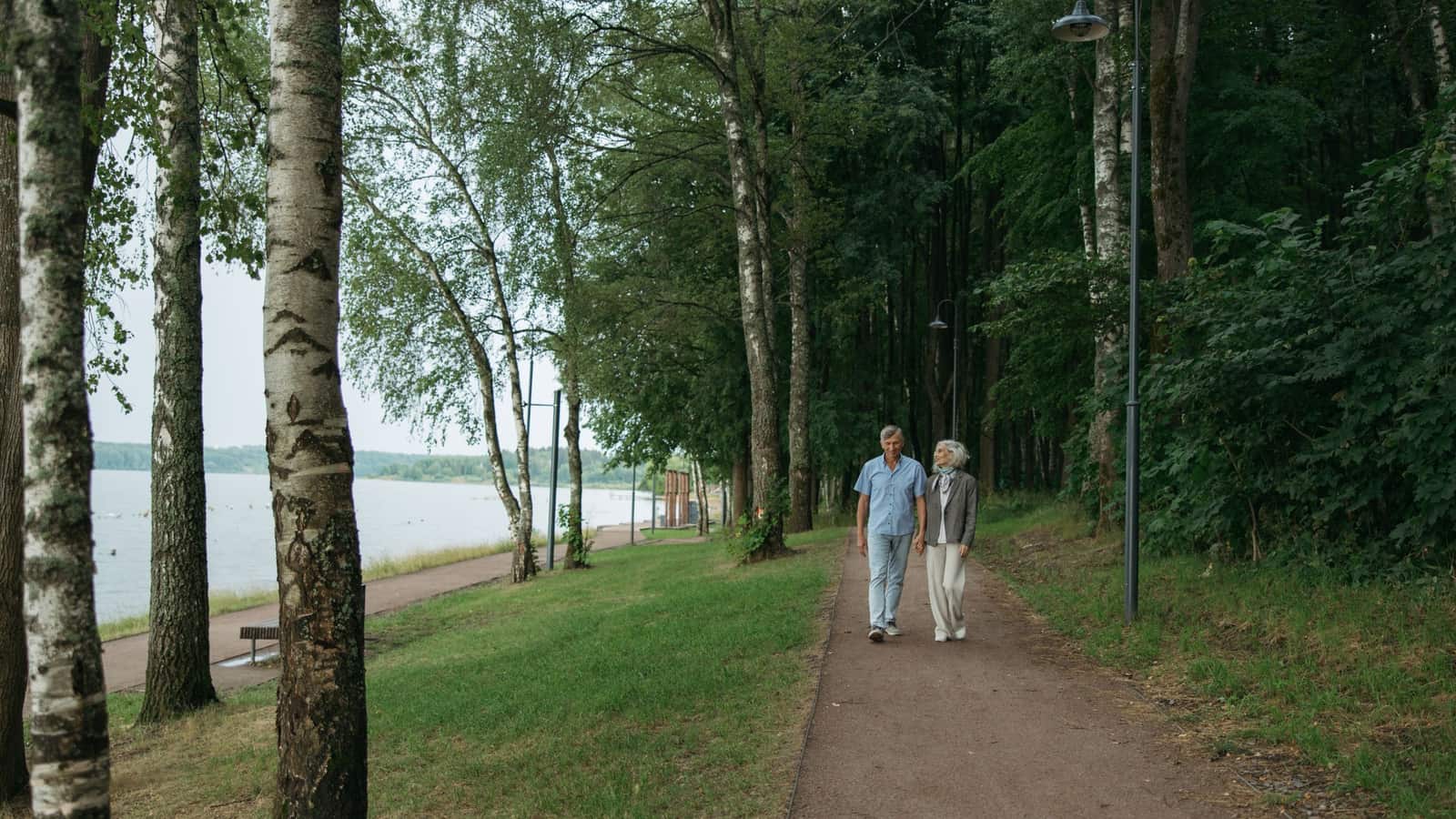
Twenty minutes after dinner, at a pace where you could talk but wouldn't want to sing. Do that five nights a week and you've done more for your heart, your knees, your sleep and your waistline than most of the people paying $180 a month for a gym they visit nine times a year.
That's the whole program. The rest of this is details, and the details matter, but if you stop reading right now and go put on your shoes, you win.
The 10,000 came from a marketing department
The number everybody quotes traces back to a Japanese pedometer sold in the mid-1960s called the Manpo-kei, which translates roughly to "10,000-step meter." It was a product name. It was chosen partly because the Japanese character for 10,000 looks like a man walking. It wasn't the output of a lab.
That doesn't make 10,000 a bad target. It makes it an arbitrary one, and arbitrary targets are where busy people quit. If you're averaging 3,500 steps a day because you drive to an office and sit in it, the gap between you and 10,000 feels like a second job. So you don't start.
The useful framing is different. The steepest part of the benefit curve is at the bottom. Going from almost nothing to a modest amount is the biggest single jump you will ever make in your fitness, and it's also the cheapest. Going from 9,000 to 12,000 is fine. It's not the same event.
So pick your current average, add two thousand, and hold it for a month. That's it. Your phone already knows your average. Go look.
What makes a walk count
Not all steps are equal, and the tracker on your wrist can't tell the difference between shuffling around a grocery store and moving with purpose on a hill.
Three things upgrade a walk:
- Pace. You want the zone where conversation is possible but slightly clipped. Full sentences, a little breath between them. That's the aerobic sweet spot everybody's rebranded as "Zone 2," and it's the same thing your grandfather called a brisk walk.
- Continuity. Twenty unbroken minutes beats four scattered five-minute errands, even though the step count reads the same. Your cardiovascular system responds to sustained demand, not to accumulated fidgeting. Both are good. One is better.
- Load or grade. A hill, a treadmill at 6 percent, or weight on your back turns an easy walk into real work without adding a minute to it.
That last one is the cheat code for people with no time. Same 25 minutes, significantly more stimulus.
Rucking, and how not to hurt yourself doing it
Put weight in a backpack, walk. That's rucking. The military's been doing it forever and the fitness internet discovered it about four years ago and immediately started selling $300 plate carriers for it.
You don't need one to start. A school backpack with two gallon jugs of water in it, held tight against your spine, is about 16 pounds and costs you nothing. If it turns into a habit, buy the proper pack later.
The mistakes are predictable. People start at 40 pounds because it sounds respectable and their shoulders and lower back file a complaint by day four. Start at 10 to 15 pounds. Walk your normal route at your normal pace. Add weight only when the current load feels like nothing, and add it in small increments, not by doubling.
Keep the weight high and tight, up between your shoulder blades, not sagging at your hips. A pack that swings is a pack that's rubbing a hole in you. Use the chest strap. If you have a hip belt, use it on longer efforts and let your hips carry some of the load.
And ruck on flat ground before you ruck on stairs. Loaded descents are where knees get opinions.
The schedule nobody writes about
Here's the part the fitness content skips, because it's less fun than talking about VO2 max: you have children and a job, and the 6 a.m. hour is already spoken for.
So stop trying to find walking time. Attach walking to something that already exists.
Walk the kids to school if it's under a mile. Take every phone call standing and moving. Park at the far end of the lot, not because of the extra ninety steps but because it makes walking the default instead of a decision. Do the after-dinner loop with your wife and make it the twenty minutes where the phones stay inside. That last one does more for a marriage than most things people write books about.
If you work from home, the 3 p.m. slump isn't a coffee problem. It's a movement problem. Fifteen minutes outside fixes it more reliably than the fourth cup does.
A dog helps enormously, though adopting a Labrador purely as a fitness accessory is a big commitment for a cardio strategy.
Recovery walking is real, and it's not a consolation prize
The day after a heavy squat session or a long run, most people either do nothing or do something stupid. Easy walking is the third option and the right one most of the time.
Low-intensity movement drives blood through sore tissue without adding damage. You'll feel looser at minute fifteen than you did at minute one. Twenty to thirty easy minutes on a rest day makes the next hard session better, and it's the single most underused recovery tool in the whole business, because it doesn't come in a bottle and nobody makes money selling it.
If you're genuinely wrecked, walk anyway, just slower and shorter. If something's sharp, swollen or getting worse, that's a doctor conversation, not a walk.
Where walking falls short
It won't build much muscle. If you walk five miles a day and lift nothing, you'll be a lean person with weak hips and a back that complains when you move a couch. Walking is the base. Two lifting sessions a week is the rest of it, and they don't have to be long.
It also won't out-pace your kitchen. A brisk 30-minute walk burns roughly what's in a large muffin. Fine trade. Just don't treat the walk as a coupon.
And past a certain point, more walking stops paying. Ninety minutes a day of ambling is a lot of time for a small additional return. If you've got the conditioning base covered and you're still hungry for progress, go faster, go uphill or add load. Don't just go longer.
The things that actually stop people
Blisters, mostly. Cotton socks hold water against your skin and grind it off. Get a few pairs of wool or synthetic blend socks and the problem largely disappears. Running shoes are fine for walking. Replace them when the midsole feels dead underfoot, not when the outside looks tired.
Winter dark is the other one. Buy a cheap headlamp and a reflective vest, keep them by the door, and stop negotiating with yourself at 5:45 p.m.
Heat is a genuine risk, not a toughness test. Move the walk to dawn in July, carry water past 45 minutes, and don't be proud about it.
None of this is medical advice. If you've got heart trouble, a new joint, a pregnancy or a long layoff behind you, run your plan past your doctor first and then go.
Most men will do more useful work for their health this year on a sidewalk than in a squat rack. The sidewalk's already outside your door, and it doesn't require a membership, a training partner or a good night's sleep to show up.
Cal Brennan
Fitness
Strength coach. Trains fathers, tradesmen and desk workers, which means programs that survive a bad week.

Watch
Worth an hour of your evening
More from Fitness.
From channels we rate. Plays on YouTube.
Read next