How to choose between urgent care, the ER and waiting for Monday
A working parent's triage system for 9 p.m. injuries and 3 a.m. fevers, including the stuff urgent care can't do and the symptoms that skip the line.
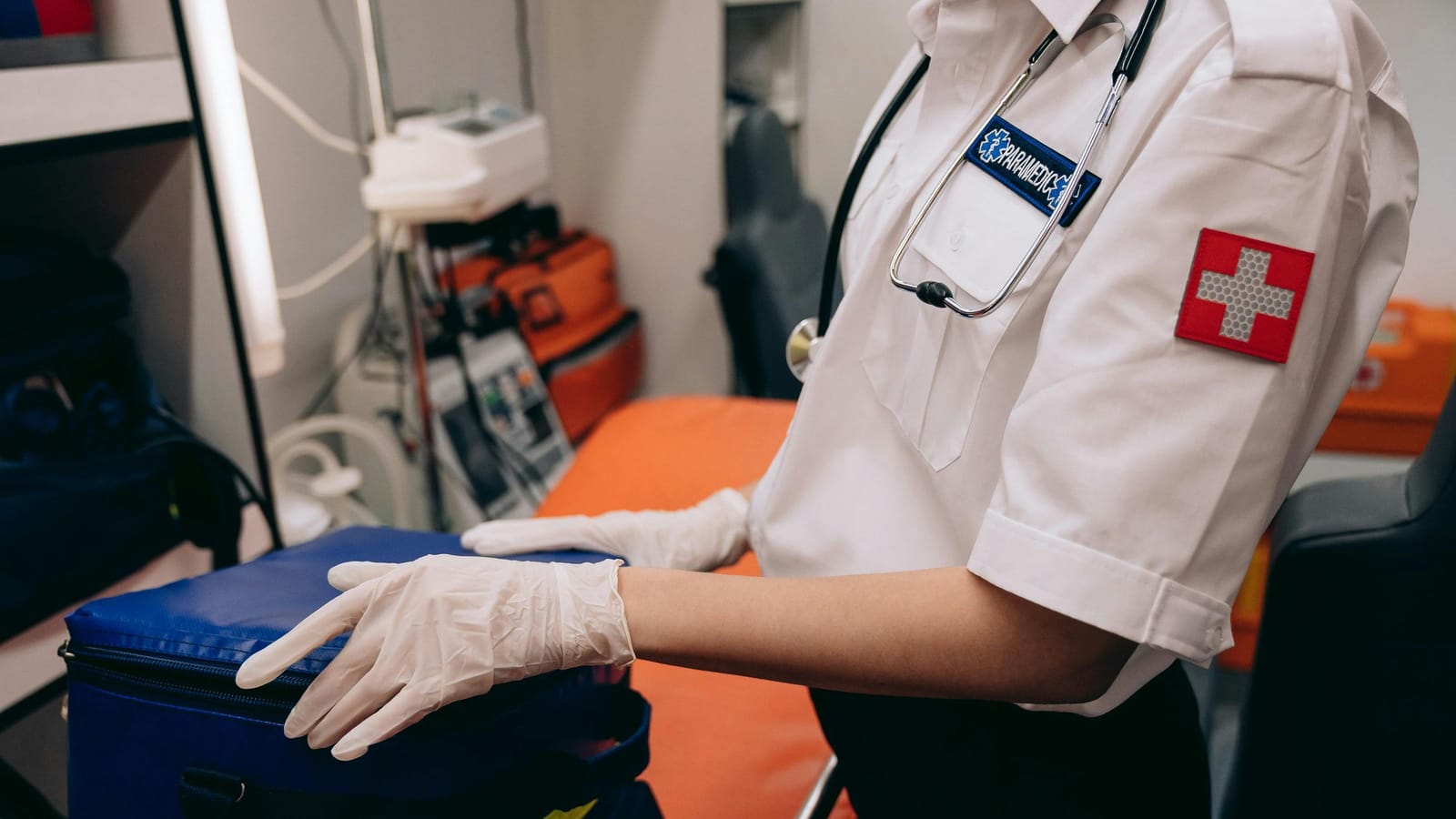
It's 9:40 on a Tuesday. Your eight-year-old took a scooter over a curb and there's a split above his eyebrow that won't stop weeping through the paper towel. Your wife's asking what you want to do. You've got a 7 a.m. call and $3,000 left on the deductible, and the nearest emergency department is the one where you once sat five hours with a kidney stone.
That's the decision. Not "is he hurt." He's obviously hurt. The question is which door, and the honest answer is that most people default to whichever one they used last time.
Build the rule now, while nobody's bleeding.
One question sorts the whole thing
Ask whether minutes change the outcome.
That's it. Not severity, not pain level, not how scared you are. Some genuinely miserable problems are fine to sit on until morning. Some barely-painful ones need an ambulance. The whole system runs on whether time is doing damage right now.
A dislocated finger hurts more than a stroke's first ten minutes. Guess which one gets the lights and siren.
The ER list, and don't negotiate with it
Some things skip triage in your head. Call 911 or go straight to the emergency department for any of these:
- Chest pressure, tightness or pain that lasts more than a few minutes, especially with sweating, nausea, or pain into the jaw, back or arm
- Face drooping, one-sided weakness, sudden slurred or garbled speech, sudden vision loss. The whole point of stroke care is a clock
- Trouble breathing at rest, or breathing so fast you can't finish a sentence
- Bleeding that doesn't stop after ten minutes of firm, continuous pressure
- A head injury with vomiting, confusion, a seizure, worsening headache, or any loss of consciousness — and anyone on a blood thinner who hits their head goes, period
- An obviously deformed limb, bone through skin, or a joint that clearly isn't where it belongs
- Sudden severe abdominal pain, especially with fever or vomiting
- A fever in a baby under three months old. Pediatricians are unanimous on this one and it's not the night to be the exception
- Anything that feels like the worst headache of your life, arriving in seconds
Notice how few of those involve a decision. That's the design. If your gut is screaming, the list already covered it, and a wasted ER trip is a cheap price for being wrong in the safe direction.
What urgent care is actually good at
Urgent care exists for the enormous middle. Real problems that need seeing today and don't need a surgeon on standby.
Most clinics can do X-ray, stitches, staples, skin glue, splints, strep and flu and COVID swabs, a urine culture, basic bloodwork, a nebulizer treatment, draining a simple abscess, removing a fishhook, checking an ear. That covers a huge share of what actually happens to families.
Call before you drive. Ask two questions: are you taking new patients right now, and do you have X-ray on site tonight? Plenty of clinics run the imaging tech on day shift only, and finding that out at 8:15 p.m. with a kid on your hip is a special kind of annoying.
What urgent care generally can't do: CT scans, MRI, ultrasound, IV antibiotics for hours, setting a real fracture, admitting you to a bed, or anything cardiac beyond a basic EKG and a phone call telling you to go next door. If your problem needs any of that, urgent care is a $75 waiting room with a forwarding address.
The forgotten third option
Your insurance plan has a 24-hour nurse line. Your pediatrician's office has an after-hours number that reaches an actual on-call person. Most primary care offices now have a message portal that gets answered by 8 a.m.
Almost nobody uses these, and they resolve more late-night questions than any clinic. A nurse who does this all night knows exactly which cough is croup and which rash is worth a look. It costs nothing and takes eleven minutes.
Put those two numbers in your phone tonight. Name the contacts something you'll find while panicking, not "Blue Cross member services."
Things that can wait for Monday
The Monday pile is bigger than people think:
- Pain that's been building for days or weeks and isn't worse tonight than it was at lunch
- A sprained ankle you can put some weight on, that isn't deformed, where you can still wiggle everything
- Rashes without fever, without spreading fast, without blistering
- A cough in week two that's slowly improving
- Refills, forms, a lump you noticed three weeks ago, a mole you've been meaning to ask about
- Back pain without numbness in the groin, without leg weakness, without loss of bladder control
That last set of exceptions matters. Ordinary back pain waits. Back pain with numbness where you sit on a saddle, or sudden trouble controlling your bladder, is an emergency department problem tonight.
The trade-offs nobody mentions
Urgent care can cost you two hours and then send you to the ER anyway, where you start over at the back of the line. That's the real risk of splitting the difference on something borderline. If you're genuinely torn on a possible fracture in a big bone, a head injury, or bad abdominal pain, go where the CT scanner lives.
Watch for free-standing emergency departments. They look like urgent care from the parking lot. Same strip mall, same friendly sign, same hours. They bill like a hospital. Read the sign. The words "emergency" or "ER" anywhere on it mean you're about to get emergency pricing for a sinus infection.
And check your plan's urgent care copay once, this week, before you need it. Most plans treat urgent care far closer to an office visit than an ER visit. Knowing the actual number kills the 10 p.m. argument about whether to go at all.
Make the visit worth the trip
Bring a current medication list, including supplements. Write it on a note in your phone and update it twice a year.
Know the timeline before you walk in. Not "he's been sick a few days" but "fever started Saturday night, hit 102 Sunday, he's been drinking okay, three wet diapers today." Triage nurses make decisions on that specificity.
Take a photo of the injury or rash when it happens, and another every few hours. Rashes fade, swelling moves, and the doctor seeing you at 11 p.m. has no idea what it looked like at 4.
Then ask the only exit question that matters: what should make me come back tonight? A good clinician will give you three specific things. Write them down. That answer converts you from a guesser into someone with a plan.
When to break your own rule
Go anyway if it's the third time this month. Go anyway if the treatment you got two days ago is making things worse instead of better. Go anyway if your wife's instinct says something's off with one of the kids, because that instinct has a better track record than any checklist, including this one.
None of this replaces a clinician who can actually look at you. Your doctor, your pediatrician, the nurse on the phone at midnight — they know things a page can't. Use them.
The scooter kid, by the way, needed glue, took forty minutes, and told the story at school for a week. You'll be fine. Just know the door before you need it.
Cal Brennan
Fitness
Strength coach. Trains fathers, tradesmen and desk workers, which means programs that survive a bad week.

Watch
Watch how it's done
Picked for this article.
From channels we rate. Plays on YouTube.
Jackson Health System
Doc Talk: Urgent Care vs. Emergency Room: When to go Where
WCCO - CBS Minnesota
What's The Difference Between Urgent Care And The ER?
Read next