How to ride out a panic attack without making it worse
Your body just fired a fire alarm with no fire. Knowing what's actually happening cuts the whole thing shorter.
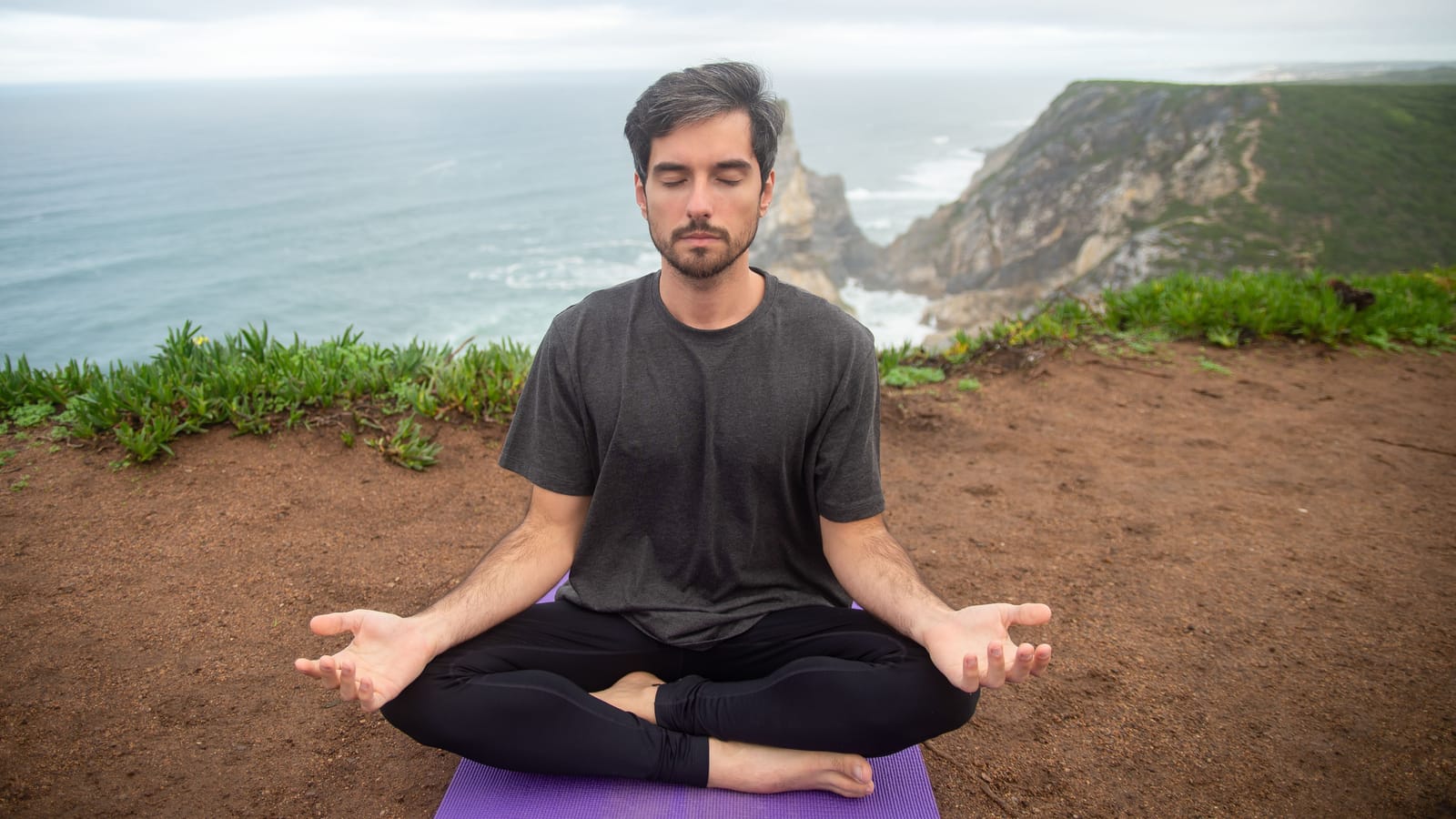
You're in the parking lot with a cart full of groceries and your heart is running about 140. Your hands are cold. Your chest feels like somebody set a cinder block on it, the edges of your vision have gone strange, and a very calm voice in the back of your head is explaining that you're about to die next to a shopping cart.
You're not. But nothing anybody says in that moment sounds convincing, because your body has already made its decision and your body outranks you.
So let's do the useful thing and explain what's actually firing.
The alarm works. It just went off with no fire.
A panic attack is a full adrenaline dump with nothing to spend it on. The same system that would save your life if a truck jumped the curb has fired at a moment when there's no truck. Once the switch flips, the whole sequence runs whether it makes sense or not.
Heart rate jumps to move oxygen fast. Blood shunts from your hands and gut toward the big muscles, which is why your fingers go cold and your stomach turns over. Pupils widen, which makes fluorescent lighting look wrong and reality look faintly filmed. Digestion shuts down. Muscles tense to brace.
None of that's malfunction. It's the fight-or-flight response doing exactly what it was designed to do, aimed at nothing.
The cruel part is that all those sensations are alarming on their own. So you notice your pounding heart, you get frightened by it, and the fear tops up the adrenaline. That loop is the actual engine of a panic attack. Not the trigger. The loop.
You're not short of air. You've got too much.
This one surprises people every time.
During an attack you feel like you can't get a full breath, so you breathe harder and faster. But you weren't low on oxygen to begin with. What you're doing is blowing off carbon dioxide faster than your body makes it, and that shift in blood chemistry narrows the vessels feeding your brain.
That's where the dizziness comes from. The tingling in your fingertips and around your mouth. The lightheaded, unplugged-from-your-body feeling. Sometimes the hands cramp into a claw, which is terrifying and completely harmless.
So the sensation of suffocating is being caused by the breathing you're doing to fix the suffocating. Read that twice, because knowing it's half the treatment.
The old advice was a paper bag. Skip it. It's imprecise, it's a bad idea if what you're having is actually a cardiac or asthma event, and it looks like something out of a sitcom. There's a better tool and you already own it.
Make the exhale longer than the inhale
That's the whole technique. In through the nose for a count of four, out through the mouth for a count of six or eight. Slow, not deep. You're not trying to fill your lungs, you're trying to stop dumping CO2.
Long exhales pull on the vagus nerve and lean on the brake pedal of your nervous system. It's not mystical. It's plumbing.
Two more things that work in the first minute:
- Cold on your face. Splash cold water, or press a cold soda can against your cheekbones and the bridge of your nose. Cold on the face triggers a reflex that drops heart rate. Bathroom sink, gas station, doesn't matter.
- Weight through your feet. Stand up, push your heels into the floor, feel the ground push back. Name five things you can see out loud if you're alone in the truck. You're giving your attention a job so it stops monitoring your pulse.
Now the honest part. Sometimes none of it lands, and the best available option is sitting on a curb feeling awful for a while. That's allowed. It still ends.
The clock is genuinely on your side
A panic attack usually peaks within about ten minutes. It can't sustain itself much longer than that, because your body physically runs out of the chemistry to keep it going. Adrenaline gets cleared. The tide goes out.
You may feel wrung out and shaky for an hour afterward and exhausted that evening. That's the hangover, not a relapse.
Say this to yourself while it's happening, out loud if you can: this peaks and passes, and I don't have to do anything about it. You're not talking yourself out of the fear. You're refusing to feed it.
Get the first one checked out. Seriously.
A panic attack and a heart attack overlap enough that you don't get to self-diagnose the first one. Crushing chest pressure, pain moving into the jaw or the left arm, a cold sweat, pain that starts with exertion rather than at rest, any of that in a man over forty with a family history or high blood pressure. Call 911. An EKG and a set of blood tests is a cheap way to find out.
Nobody in an emergency room thinks less of you for it. They see this several times a week.
Once your doctor has cleared your heart, you have something enormously valuable: certainty. The next time it happens, you can say with evidence that your heart is fine, and you can stop taking your pulse every thirty seconds. Constant pulse-checking is one of the main ways people keep an attack alive.
What sets the table for one
Panic rarely shows up in a well-rested, well-fed body. It shows up in the body you've been running on fumes.
Four hours of sleep, three cups of coffee, lunch skipped because of a 1 p.m. meeting, two drinks the night before, and a week of training hard because the gym is the only thirty minutes that belongs to you. That's not a character flaw. That's a Tuesday with two kids and a mortgage.
But it's also a nervous system with no margin. Caffeine on an empty stomach mimics the exact sensations of an attack, and if you're already primed, your brain reads the racing heart as danger and pulls the lever.
The fix isn't optimal. It's boring. Cap the coffee before noon. Eat actual lunch. Protect the sleep you can protect, which some weeks means seven hours instead of five and not a minute more. Sustainable beats perfect, every time.
Keep training. Especially the hard stuff.
The instinct after a first attack is to avoid anything that makes your heart pound. Hills, intervals, the sauna, the last set. Don't.
Regular exercise is one of the more reliable things you can do for baseline anxiety, and there's a second benefit that matters more. When you sprint and your heart hits 160 and your breathing goes ragged and then you recover and you're fine, you're teaching your brain that a pounding heart isn't a verdict. You're rewriting the meaning of the sensation.
Start easy if you need to. Walk fast, then jog, then push. But get back to the point where you can be out of breath and unbothered.
If it happens in front of your kids
Tell them the truth in small words. "Dad's body got a false alarm. It's uncomfortable and it's not dangerous and it's going to stop in a few minutes." Then let them see it stop.
Kids aren't frightened by your heart rate. They're frightened by a parent acting frightened and refusing to explain. Handle it in front of them once, calmly, and you've taught them more about managing fear than a hundred pep talks.
And if these keep coming, or you've started planning your week around avoiding places where one might happen, that's the point to book with your family doctor. Cognitive behavioral therapy has a genuinely good record here, medication is a legitimate option and not a surrender, and the earlier you deal with it the less your life shrinks around it.
The people who get stuck aren't the ones who panic. They're the ones who stop going to the store.
Cal Brennan
Fitness
Strength coach. Trains fathers, tradesmen and desk workers, which means programs that survive a bad week.

Watch
Watch how it's done
Picked for this article.
From channels we rate. Plays on YouTube.
Therapy in a Nutshell
So, You're Having an Anxiety Attack (The Calm-Down Method for Stopping Anxiety Attacks)
Mike Maher | TAKE A DEEP BREATH
Breathing Exercises To Stop A Panic Attack Now | TAKE A DEEP BREATH
Read next