What to do about anxiety when you can't take a month off
Caffeine math, a worry window, and a straight answer on the day you stop managing it yourself and call a doctor.
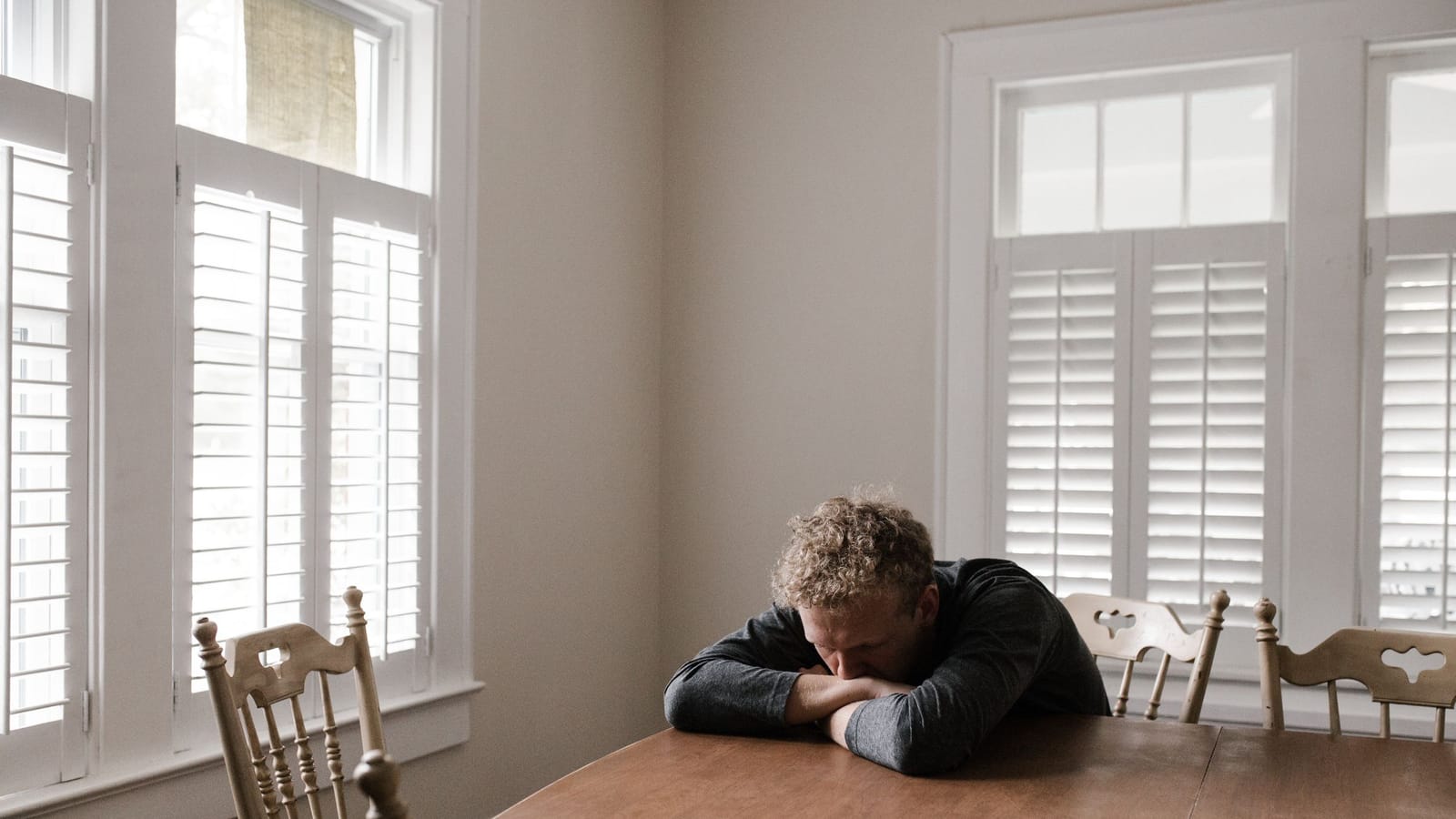
It's 4:12 in the morning and you're doing math on the ceiling. The truck payment, the thing your boss said on Thursday, whether that ache under your ribs is nothing. Your alarm goes off in two hours and you already know how the day is going to feel.
Before you spend another week white-knuckling it, run the cheap fixes. Most people carrying low-grade anxiety are also carrying 300 milligrams of caffeine past two in the afternoon, six hours of broken sleep, and a phone they check forty times before lunch. Those aren't the whole story. They're the part you can change by Wednesday without a single appointment.
This isn't medical advice, and there's a section below about when to stop reading articles and call a doctor. Read that part too.
Know what you're dealing with
Ordinary anxiety has an object. You're nervous about the presentation, the biopsy, the closing. It spikes, the event happens, it drains away. That's your nervous system working correctly.
An anxiety disorder is when the alarm stops being tied to anything. The dread arrives before you've thought of a reason. It shows up more days than it doesn't, it lasts months, and it starts costing you things: sleep, patience with your kids, the promotion you didn't apply for because the interview sounded unbearable.
There's also a physical version that people miss entirely. Tight jaw. Shallow breathing you only notice when somebody points it out. A stomach that's been unhappy since spring. Shoulders parked up near your ears. If a massage therapist has ever said "wow" out loud, you know what I mean.
Name which one you've got. The plan is different.
The four inputs, in order
Caffeine. It has a half-life of roughly five to six hours in most adults, which means the 3 p.m. cup is still half-present at 9 p.m. A 16-ounce drip coffee commonly runs 200 milligrams or more, and the energy drink in your truck cupholder is probably 200 by itself. Set a hard cutoff at noon for two weeks. Not zero caffeine. Just earlier. If your afternoon falls apart, that's information worth having.
Alcohol. Two drinks will absolutely help you fall asleep. They'll also wake you at 3 a.m. with your heart going, because the sedative wears off and your system rebounds in the other direction. If you're anxious and you drink most nights, you're running an experiment where the treatment causes the symptom. Take fourteen days off and see what the mornings feel like.
Sleep timing, not sleep length. You may not be able to get eight hours. Kids don't negotiate. But you can get up at the same time seven days a week, which does more for a scrambled nervous system than sleeping until ten on Saturday and lying awake on Sunday night.
Walking outside. Thirty minutes, daylight if you can get it, no podcast for the first ten. Walking is the only form of exercise nobody has ever had to be talked into doing again after a bad week. Hard training helps too, but hard training is the first thing to go when you're fried. Walking survives.
The breathing thing that works in a parking lot
When your chest goes tight before a meeting, you don't need a meditation app. You need your exhale longer than your inhale, for about ninety seconds.
Two short inhales through the nose, back to back, filling up the second one on top of the first. Then one long, slow exhale through the mouth until you're genuinely empty. Do that five or six times. The long exhale is doing the work, and it's the part people skip.
It looks like nothing. It works in a Home Depot parking lot, on a job site, in the church lot before you go in. I'd rather have that than an app subscription.
Get it out of your head and onto paper
Worry that stays in your head loops, because your brain has no way to mark it as handled. Written down, it stops circling.
Pick a fifteen-minute window, same time daily. Late afternoon, not bedtime. Write every worry in a single list, longhand. Then sort each one into two columns: things I can act on, and things I can't.
Next to each item in the action column, write the single next physical step. Not "fix the money situation." Write "call the credit union Tuesday, ask about the rate." Anxiety hates specificity. A vague threat is infinite. A phone call is fifteen minutes.
The other column, the one you can't act on, you leave there. You'll want to keep working it. Don't.
When the loop starts outside your window, tell yourself it goes on the list at 4:30. That sounds like a trick, and it partly is. It also works, because you're not suppressing the thought. You're scheduling it.
Avoidance is the engine
This is the part nobody tells you. Every time you dodge the thing that scares you, the fear gets a raise.
You skip the call, and the relief feels great for an hour. Your nervous system learns that the call was genuinely dangerous and that avoiding it was the correct move. Tomorrow the call is harder. Six months of that and you've built a life shaped entirely around a list of things you don't do anymore.
The counter-move is boring. Do the small version of the avoided thing, on purpose, before you feel ready. Make the call at 9 a.m. so you can't negotiate with yourself all day. Sign up for the thing. Go to the party for forty minutes.
And pray if you pray. It's not a substitute for the phone call. It's fuel for making it.
Sometimes the anxiety is correct
Worth saying plainly: not all of this is a malfunction. If you're $40,000 in consumer debt and you feel sick every time a bill arrives, your nervous system isn't broken. It's reporting accurately. Breathing exercises won't fix a budget.
Same with a marriage you've been avoiding a conversation in, or a job that's genuinely wrong for you. Before you treat the alarm, check whether something's on fire. Sometimes the most effective anxiety treatment is a hard conversation you've been putting off for a year.
Tell your wife. Tell your husband.
You think you're hiding it. You're not. Your family has been reading your face since the day they met you, and what they can't do is tell the difference between "Dad is anxious" and "Dad is angry at me." The silence doesn't protect anybody. It just makes them guess, and they guess wrong.
Say the plain version. "I've been wound up for a couple months and it's not about you. I'm working on it." That's not weakness. Weakness is making everyone in the house walk carefully around a problem you won't name.
When to stop managing it yourself
Call your doctor, this month, if any of these are true:
- You've had more anxious days than calm ones for six months or more.
- You're having panic attacks: sudden surges of terror with a pounding heart, sweating, and a feeling that something catastrophic is happening.
- You're avoiding work, driving, stores, or people, and the list keeps growing.
- You're using alcohol or anything else to get through the evening.
- It's wrecking your sleep most nights.
- Chest pain, a racing heart, or shortness of breath. Get that evaluated properly. Anxiety is a diagnosis you arrive at after ruling things out, not before.
A first visit should include bloodwork. Thyroid problems, anemia, blood sugar swings and certain medications all produce something that feels exactly like anxiety, and treating the wrong thing wastes months. Ask about a referral for cognitive behavioral therapy, which is a structured, homework-based approach with a real track record and an end date. Twelve to sixteen sessions, not twelve years.
If medication comes up, it's a conversation between you and your physician, and it's neither a moral failure nor a magic fix. Ask what it does, how long until you'd know, and what coming off it looks like.
If you're having thoughts of harming yourself, call or text 988 now. It works in the United States and Canada, and it's staffed around the clock.
Most people who do the caffeine, the walking, the list and the hard phone call feel meaningfully better inside a month. Some don't, and that's exactly the group that needs a professional rather than another article. Knowing which one you're is worth more than any tip on this page.
The bravest thing on the list is still the phone call. Make it before you feel ready.
Cal Brennan
Fitness
Strength coach. Trains fathers, tradesmen and desk workers, which means programs that survive a bad week.

Watch
Watch how it's done
Picked for this article.
From channels we rate. Plays on YouTube.
Yoga With Adriene
5 Minute Calming Breathwork
Hands-On Meditation
5 Minutes Box Breathing Relaxation Exercise | Beginner Pace | Anxiety Reduction Pranayama Technique
Read next