When chest pain is the bench press and when to call 911
Most chest pain in a healthy 40-year-old is muscle, cartilage or acid. The exceptions kill people who decided to wait it out.
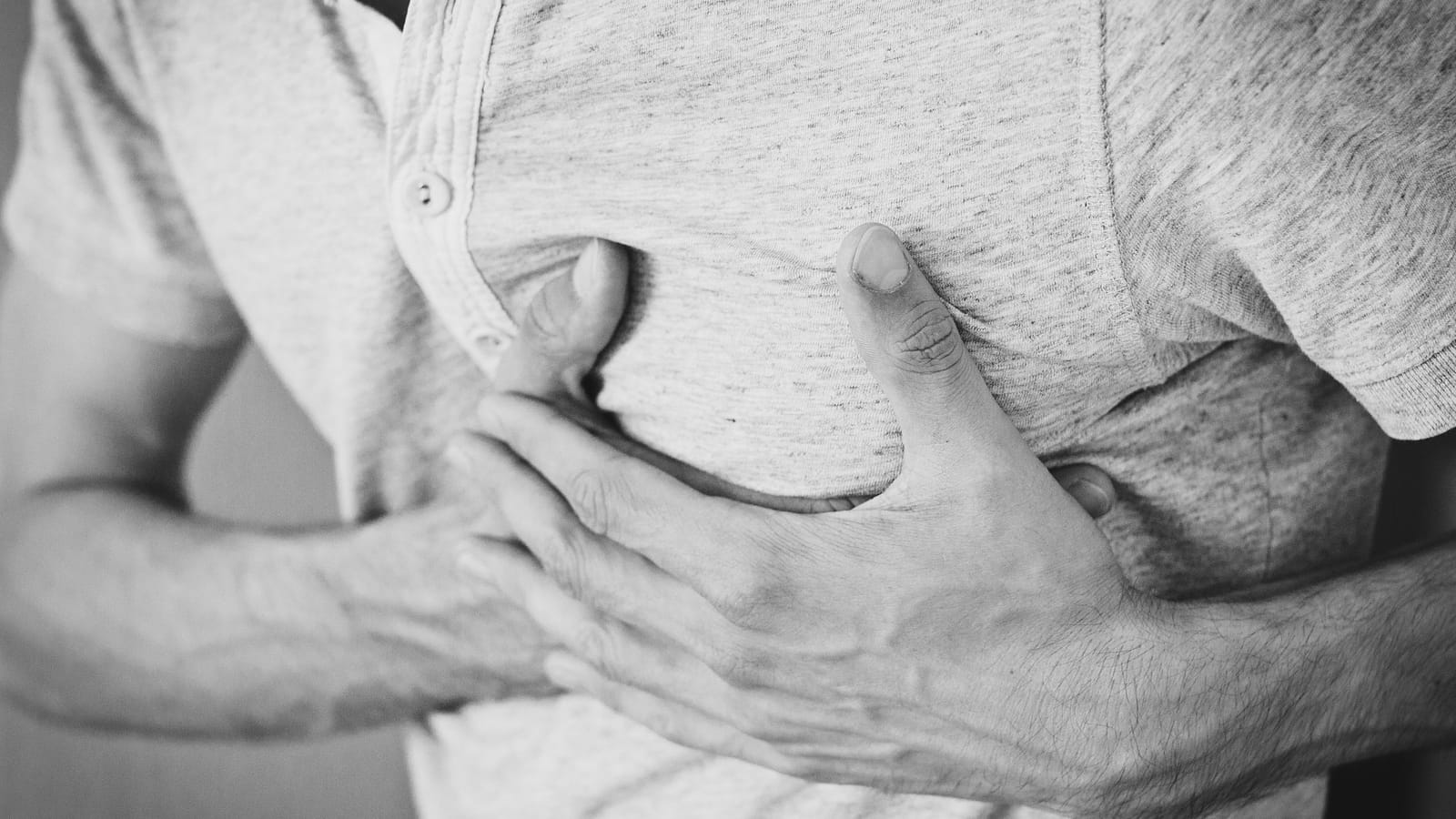
The rule goes first, because nothing else in this piece matters if you get this part wrong.
If pressure, squeezing or heaviness sits in the middle of your chest and lasts more than a few minutes, call 911. Same if it comes with cold sweat, nausea, shortness of breath, lightheadedness, or pain spreading into your jaw, neck, upper back or either arm. Call even if you're 38 and you deadlift. Call even if it eases off and comes back. Don't drive yourself, don't text your wife from the parking lot, don't finish the third set of five at 185 and see how you feel after.
That's the whole non-negotiable part. Everything below assumes you've already ruled that out, or a doctor has.
Why you don't drive yourself
Two reasons. The ambulance can run a 12-lead EKG in your driveway, which means the hospital knows what's happening to you before you arrive and the cath lab can be spinning up. And if your rhythm goes bad on the way, the people in the back of that truck can fix it. The people in your Tahoe can't.
Every emergency department has a version of the same patient: the man who drove himself in, parked, walked to the desk, and apologized for making a fuss. Sometimes he's fine. Sometimes he collapses at triage.
Yes, an ambulance ride costs real money, and yes, an ER workup for what turns out to be a strained intercostal is an expensive lesson in humility. Weigh that against the alternative for about one second, then dial.
Embarrassment is survivable. That's the entire pitch.
The atypical version, which is the one people miss
Not everybody gets the movie heart attack. Women, people with diabetes, and anyone over about 70 are more likely to show up with something vaguer: unusual fatigue that's been building for days, shortness of breath with no chest pain at all, nausea, pain between the shoulder blades, or a jaw that aches like a bad tooth.
If you're the one talking your wife out of going in because "it's not really chest pain," stop talking. Go.
Two other emergencies worth knowing by name. A sudden tearing pain that rips from chest to back, worst at the very first second, is an aortic emergency until proven otherwise. Sharp chest pain with sudden breathlessness, especially after a long flight, surgery, or a leg that's been swollen and sore, can be a clot in the lung. Both are 911 calls, not urgent care calls.
What it usually is
Now the boring, common stuff. A healthy adult under 50 with no risk factors who hurts in the chest is most often dealing with one of four things.
Costochondritis. Inflammation where your ribs meet the sternum. It's sharp, it's localized, you can usually put a fingertip on it, and it lights up when you press or take a deep breath. Heavy pressing, a bad rack position, or a two-week chest cold with a lot of coughing will all do it. It's miserable and it's harmless, and it takes weeks, not days.
An intercostal or pec strain. Ripped feeling, comes on during or right after a specific effort, hurts to twist or to sneeze. Sneezing with a strained intercostal is an experience you only need once.
Reflux. Burning under the breastbone, sour taste, worse lying flat, worse after a big late meal. The overlap with cardiac pain is genuinely nasty, which is why people sit at home with an actual heart attack telling themselves it's the sausage.
Anxiety or panic. Tight chest, racing heart, tingling hands, a sense that something terrible is about to happen. Real symptoms, real physiology, not weakness. Also not something to diagnose yourself with on a first episode.
The press-on-it test, and why it isn't proof
If you poke the spot and reproduce the exact pain, that leans musculoskeletal. Leans. It's not a clearance.
People have tender chest walls and blocked arteries at the same time. The move isn't to run your own cardiology workup in the bathroom mirror at 2:40 in the morning. The move is to use the red flag list, and when the list says go, go.
Here's the honest trade-off nobody says out loud: if you go in every single time you feel a twinge, you'll get a large bill and a lot of shrugs. So build the judgment ahead of time, when you're calm. Know your blood pressure, your cholesterol numbers, your family history. A 45-year-old with a normal stress test and clean numbers can reasonably sit with a rib that hurts when he breathes. A 55-year-old smoker with a father who died at 58 should not be doing any sitting at all.
What to say so you're taken seriously
Lead with the words that trigger the right pathway. "Chest pressure" gets you an EKG in under ten minutes. "My chest is bothering me a little" gets you a clipboard.
Have these ready:
- When it started, and what you were doing
- Whether it's pressure, burning, or sharp and stabbing
- Whether effort makes it worse and rest makes it better
- Where it travels, if anywhere
- Every medication and supplement you take, including the pre-workout
- Family history of heart disease, and the ages
If a dispatcher tells you to chew an aspirin, chew it. Don't self-prescribe one off this article. I'm a guy who's spent twenty years around barbells and injuries, not your physician, and this is general information, not advice about your specific chest on your specific night.
Training around the ones that aren't your heart
Once you've been cleared and the diagnosis is a cranky rib joint or a strained intercostal, the mistake is total shutdown. You don't need six weeks on the couch. You need to stop doing the one thing that hurts and keep doing everything else.
Drop flat barbell pressing. Keep squatting, keep hinging, keep walking. Swap the bench for a floor press with dumbbells and neutral grips, which shortens the range at the bottom where costochondritis screams. Landmine presses are usually tolerated when nothing else is. Rowing and pulldowns are generally fine as long as you're not letting the shoulder blades run wild at the stretch.
Load light, stop at the first sharp signal, and expect four to eight weeks with rib cartilage. It's slow tissue with a lousy blood supply. Pushing through it at week two is how you buy week ten.
For reflux, the fix is usually scheduling. Dads eat dinner at 9:15 because bedtime ran long, then lie down at 10. Move the meal earlier, make the late one smaller, put a couple of blocks under the head of the bed, and see what happens in a week. If it doesn't change, that's a doctor conversation, not a heartburn-aisle one.
The part your family actually cares about
There's a kind of man who thinks the toughest thing he can do isn't make a scene. He waits until morning. He doesn't want to wake anybody. He'd rather be wrong quietly than right loudly.
That's not toughness. Toughness is being at the kitchen table on Saturday morning making eggs, because on Thursday night you woke your wife up and told her to call.
Cal Brennan
Fitness
Strength coach. Trains fathers, tradesmen and desk workers, which means programs that survive a bad week.

Watch
Worth an hour of your evening
More from Fitness.
From channels we rate. Plays on YouTube.
Read next