

The drain plug doesn't need your muscle, it needs a torque wrench
A stripped oil pan thread usually starts with one extra grunt on the ratchet. Fix it for a few dollars now, or pay for a pan later.
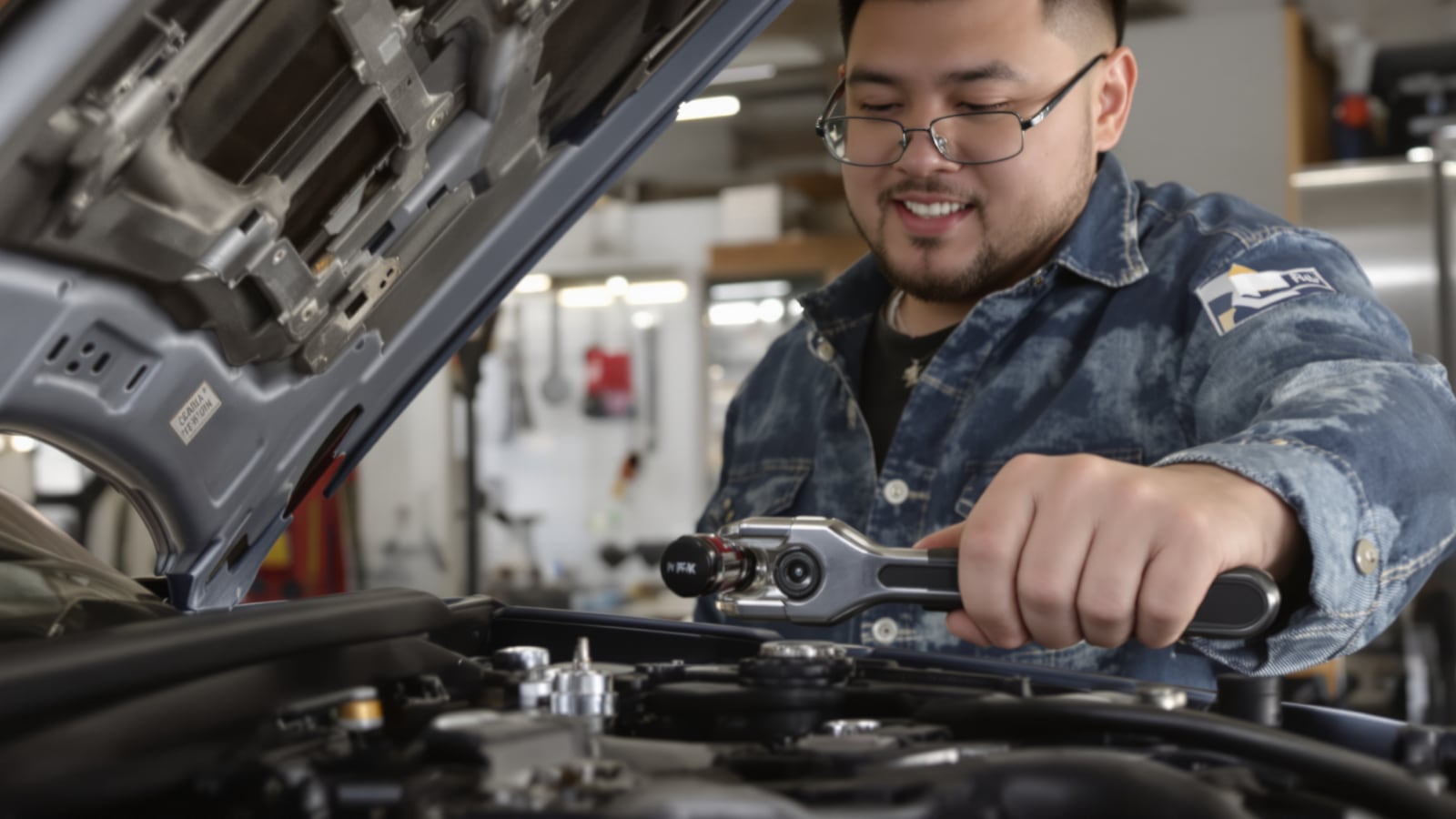
Quick answer: Use a new crush washer every change, start the plug by hand, and tighten it to the number in your owner's manual with a torque wrench. If a plug ever spins without biting, stop. An oversize plug or a thread-repair insert costs a few dollars to a few dozen. A new pan costs a Saturday and a lot more.
How a good pan gets ruined
The plug is steel. In many cars the pan is aluminum, and aluminum is soft. Pull a wrench on that plug like you're mad at it and the steel wins. The threads in the pan flatten, and the plug turns forever without ever getting tight.
The usual story goes like this. You change your oil and the plug weeps a drop or two. So you give it another quarter turn. It stops weeping, and you feel clever. Next change, the same plug, the same old washer, and it weeps again. Another quarter turn. By the third round the threads are done.
A weeping plug is almost never a plug that's too loose. It's a washer that's already been crushed once and can't seal again. Tightening doesn't fix a flat washer. It just spends your threads.
Before you pick up a wrench
Buy the washer first. Before you slide under the car, have a new crush washer (aluminum or copper, depending on the car) in your hand. They cost a couple of dollars. Some cars use a plug with a rubber seal built in, and that gets replaced as a unit. A few use plastic plugs. Check which you've got, because a plastic plug is not something you reuse and not something you muscle.
Use the right socket. Get a six-point socket or a box-end wrench, never a twelve-point and never an adjustable. A rounded plug head is its own headache, and it's usually caused by a sloppy fit.
Find your torque spec. It's in the owner's manual or the service manual for your exact engine. Don't trust a number from a forum thread about a different car. Plenty of passenger cars land somewhere in the twenties to low thirties in foot-pounds, but that's a ballpark and not a spec. Your car's number is the only one that counts.
Putting it back without wrecking it
- Clean the threads and the pan surface. Wipe the pan around the hole with a rag. Grit under a washer is how a good seal becomes a slow leak.
- Start the plug by hand. Spin it in with your fingers for several full turns. It should go smoothly. If it fights you in the first turn or two, it's cross-threaded. Back it out and start again, because forcing it will finish the job on those threads.
- Seat it with the ratchet, then use the torque wrench. Snug it down with a short handle, then click it to spec. A torque wrench is a tool a lot of guys skip, and it pays for itself the first time it saves a pan. If you don't own one, borrow one from a buddy. Bring it back clean, with the setting dialed down to its lowest number so the spring isn't left loaded, and drop something off with it. A six-pack or a bag of donuts works. That's how it's done.
- Check it after the first drive. Look at the plug and the ground under it. A dry plug means you're done.
If you have no spec and no torque wrench, the old rule is snug the plug until the washer touches, then give it a modest turn more. It's a fallback and not a standard. You'll get it wrong in one direction or the other eventually.
The quick-lube problem
A lot of pans get stripped by somebody else. A shop in a hurry runs a plug in with an impact gun, and it goes in at whatever the gun feels like. You won't know until the next change, when the plug feels mushy.
You can ask the shop to hand-torque it. Some will, and some will look at you funny. If you've got a car you plan to keep for a long time, and the 250,000-mile kind of ownership is the whole point, change your own oil. It's the cheapest insurance you'll ever buy for that pan.
When it's already spinning
Feel that moment when the plug stops biting? Stop turning it. Don't give it one more try, because every extra turn chews more thread.
You've got three realistic fixes, from cheapest to most involved.
- An oversize drain plug. It's slightly fatter, and the threads are cut to bite into the damaged hole. For a lightly stripped pan this often works and costs a few dollars. It's a repair you can do in the driveway while the oil is out. The catch is that you get one shot at it. If the hole is too far gone, an oversize plug will spin too.
- A thread-repair insert. Kits such as Helicoil and Time-Sert cut new threads in the pan and install a steel insert that restores the original size. This is the permanent fix. Done right, the pan is as good as new. The catch is metal shavings. Pack the tap's flutes with grease so it holds the chips, and drain and clean thoroughly. If you're not comfortable doing it with a pan on the car, that's a fair reason to hand it to a shop.
- Replace the pan. This is the fix that nobody wants, and it's the end of the road when the hole is oval, cracked or bent. Some pans bolt on with a handful of fasteners and a gasket. Others sit under a crossmember or an exhaust pipe and eat an afternoon.
Don't reach for epoxy, sealant tape or a rubber-coated plug as a permanent answer. They might get you home. They're not a repair, and a plug that lets go on the highway drains the engine in a hurry. Treat any temporary fix as exactly that, and check the oil level before every drive until it's fixed properly.
The honest trade-off
A torque wrench is one more tool in a garage that already has too many. The oversize plug or the insert kit is one more chore on an afternoon you wanted to spend doing something else. Some guys will say they've never used a torque wrench on a drain plug and never had a problem. They're telling the truth. They've also got a feel built over years of doing it, and a couple of pans they didn't talk about.
If you're not that guy yet, don't pretend. Measure it. It's thirty seconds.
One more habit
Take the old oil to an auto parts store or recycling center, and leave the driveway cleaner than you found it. A drip pan, a cardboard sheet and a rag take two minutes. Then the next time you're under that car, the plug comes out easy and goes back the same way, which is the whole point.
If you're picking up your first beater and want a car you can learn this on, read why your first project car should be boring, cheap and popular. And if you want to know which jobs can wait and which can't, the car servicing that can't wait is worth ten minutes.
The drain plug is the cheapest part on the car. Treat it like the one thing standing between you and a new pan, because it is.
Dean Shaw
Gear & Garage
Reads the warranty, the parts list and the long-term owner reviews before anything else. Trucks, tools, watches, and the cheap version that costs more.

Watch
Worth an hour of your evening
More from Cars.
From channels we rate. Plays on YouTube.
Read next