

When the clutch pedal feels different, act that week
A clutch rarely fails without warning. The pedal usually tells you first, and what you do in the next few weeks decides the size of the bill.
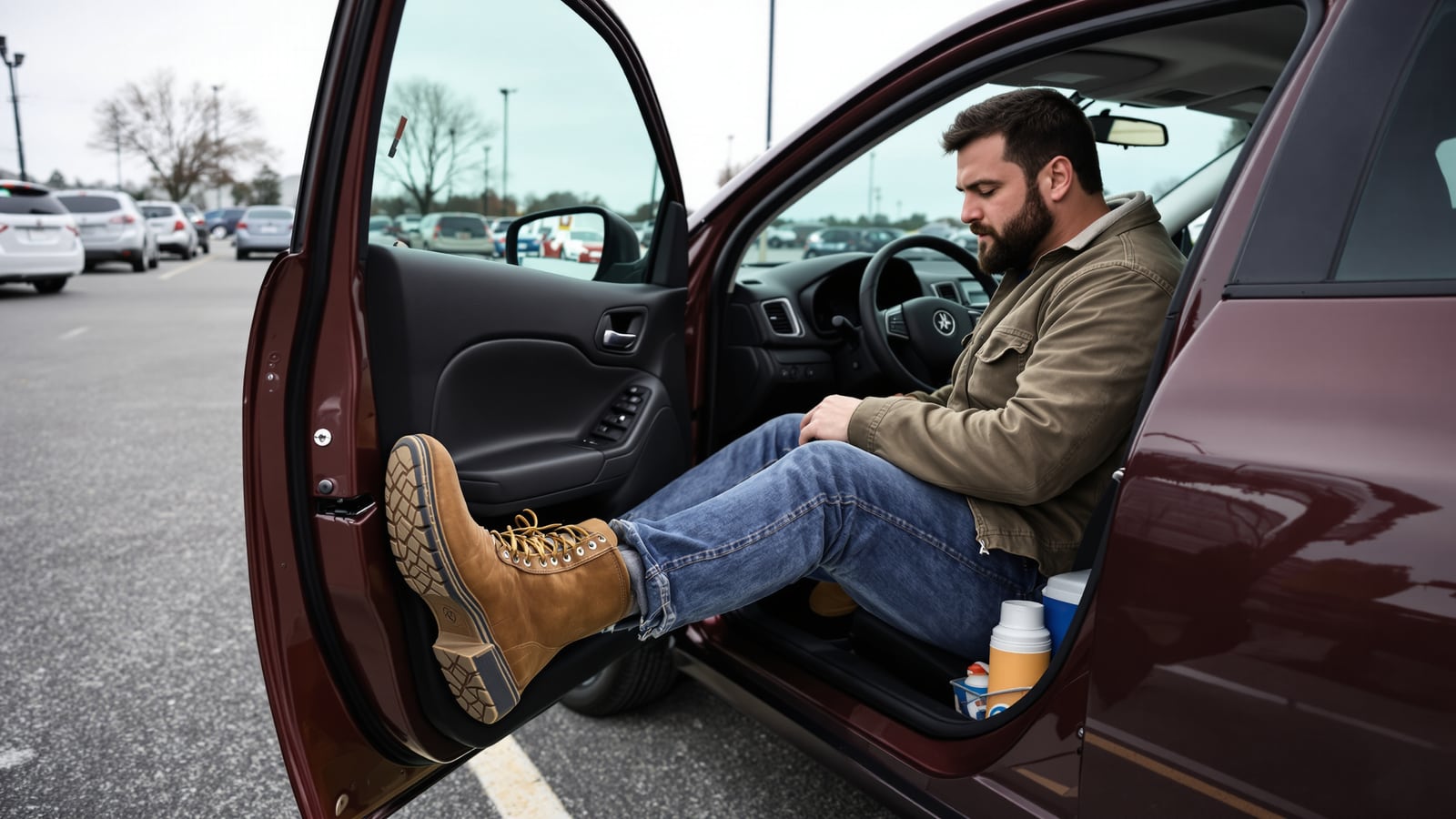
Quick answer: A change in how the pedal feels is the cheapest warning your car will ever give you. Spongy or sinking usually points to the hydraulics. High or slipping points to a worn clutch. Grinding when you press it points to the release bearing. Catch any of them early and you're paying for one part. Ignore them and you can end up paying for several.
You already know the pedal
You press it a few thousand times a month. Your leg knows where it grabs, how heavy it is, and how it comes back up. That makes you a better diagnostic tool than anything a shop plugs in.
So the day it feels different, don't wait for a second opinion from the car. Write down what changed. Soft, heavy, high, low, noisy, sticky, shuddery. A mechanic can work with "the engagement point moved about two inches higher over a month." He can't do much with "it's weird."
The pedal is soft, or sinks, or won't come back
This is usually hydraulic. Most modern manuals use a master cylinder at the pedal, a slave cylinder at the transmission, and fluid between them. Common fluid is brake fluid, which absorbs moisture over the years. Seals wear, air gets in, and the pedal goes mushy.
Look for the obvious first. Check the reservoir level, usually a small one near the brake master cylinder. Look at the carpet under the pedal for a wet spot and at the bell housing area for a drip.
A bleed or a fluid flush is often the cheap end of this problem. A leaking master or slave cylinder is a real part, but it's still a small repair next to a clutch job. The trouble comes when you keep driving with a pedal that slowly drops to the floor. One day it stays there, you can't get it into gear, and now you're being towed.
The engagement point climbs, and the engine revs without the car going
If the clutch only bites at the very top of the pedal travel, that's a classic wear sign. The friction disc is thinning. A few more months and you'll feel the second symptom: you press the throttle in a higher gear, the tach jumps, and the car doesn't pick up speed to match.
That's slip. Slipping cooks the disc and the flywheel face, and it burns faster the longer you keep going. You can't un-burn a flywheel.
The honest trade-off: a worn clutch can limp along for weeks or for a long time, depending on how it's driven. Nobody can promise you a number. But the repair is the same job either way, and it's cheaper when the flywheel can be resurfaced instead of replaced. Waiting only makes sense if you accept that the job gets bigger and the timing gets worse. Usually it fails at a stoplight, or on the way to something you can't miss.
It grinds, chatters, or shudders
Three different noises, three different suspects.
- A rumble or whine with the pedal pushed in usually means the release bearing, also called the throw-out bearing. It only spins under load when you press the pedal. If the noise stops when you let go, that's your clue.
- A shudder when you pull away points to a contaminated or glazed disc, a warped surface, or a leak putting oil where it doesn't belong. The oil is the part that matters. A leaking rear main seal or transmission input shaft seal will soak a new clutch just like it killed the old one, so a good shop fixes the leak during the job.
- Grinding when you shift, even with the pedal fully down, can mean the clutch isn't fully releasing. That drag is where the transmission starts paying for it.
Where the transmission actually gets hurt
Let's keep this straight, because a lot of folks say "my clutch is gone, I need a new transmission." Those are two different jobs, and a clutch replacement is the smaller one by a good margin.
The clutch sits between the engine and the transmission. When it wears out, it's the clutch that needs replacing, not the gearbox. But a clutch that doesn't release cleanly forces the gears to mesh while the input shaft is still turning. The brass synchronizers that match gear speeds take that abuse. Grind into a gear often enough and you wear the synchros, and that's a gearbox rebuild, not a clutch job.
So the order of costs usually runs like this:
- Fluid or a bleed.
- A hydraulic cylinder.
- A full clutch kit, which often means pulling the transmission anyway, so labor is the biggest piece.
- A flywheel.
- Synchros or a rebuilt transmission.
You'd like to stop at step one. Every week you ignore it pushes you down the list.
One thing to ask on step three: since the transmission is coming out regardless, ask whether the release bearing, the pilot bearing, and the rear main seal should be done at the same time. Paying for labor twice is the real waste.
Habits that wear the clutch faster
Some of this is how the car's driven, and that's fixable for free.
- Don't rest your foot on the pedal. A little pressure is enough to start wearing the release bearing and the disc.
- Don't hold the car on a hill with the clutch. That's what the brake and the handbrake are for.
- Don't sit in gear at a light with the pedal down for long stretches. Shift to neutral and let it up.
- Don't launch the car every time the light turns green. Smooth is cheaper.
If you've ever handed the keys to a sixteen-year-old and said, "Learn on mine," you've already paid for this lesson. A new driver slips the clutch to avoid stalling, and every stall is a little more wear. Teach it in an empty parking lot on a Saturday, and take the hit as the price of raising a driver who can handle a stick. He'll thank you the first time he's the only one in the group who can drive the borrowed truck.
Buying a stick with this in mind
If you're shopping used, the clutch is part of the test drive. Check the pedal travel and the feel, then run it in a higher gear at low speed and give it throttle to see if the revs jump without the car following. Our piece on what to check before you hand a stranger cash for a car covers the rest of the walk-around. And if you're planning to keep one forever, what it really takes to get a car past 250,000 miles puts the clutch in the context of everything else that wears.
Brake fluid and clutch fluid service also fit the category of car servicing that can't wait, and the kind that can. Old fluid is a quiet problem until it isn't.
What to do this week
Press the pedal with the engine off and feel for sponge. Check the reservoir. Park, run the engine, and try first gear and reverse with the pedal fully down. If it grinds, don't keep doing it.
Then get a written quote from a shop you trust, ask which part is failing, and ask what else they'd do while the transmission is out. A good mechanic will tell you what can wait. A bad one will tell you everything's urgent.
The pedal told you early. That's the cheap part. Act on it.
Dean Shaw
Gear & Garage
Reads the warranty, the parts list and the long-term owner reviews before anything else. Trucks, tools, watches, and the cheap version that costs more.

Watch
Worth an hour of your evening
More from Cars.
From channels we rate. Plays on YouTube.
Read next