

A damp transmission line is a warning. Don't ignore it.
Cooler lines rarely fail without notice. They sweat first, and that grimy film is your cheapest chance to save the transmission.
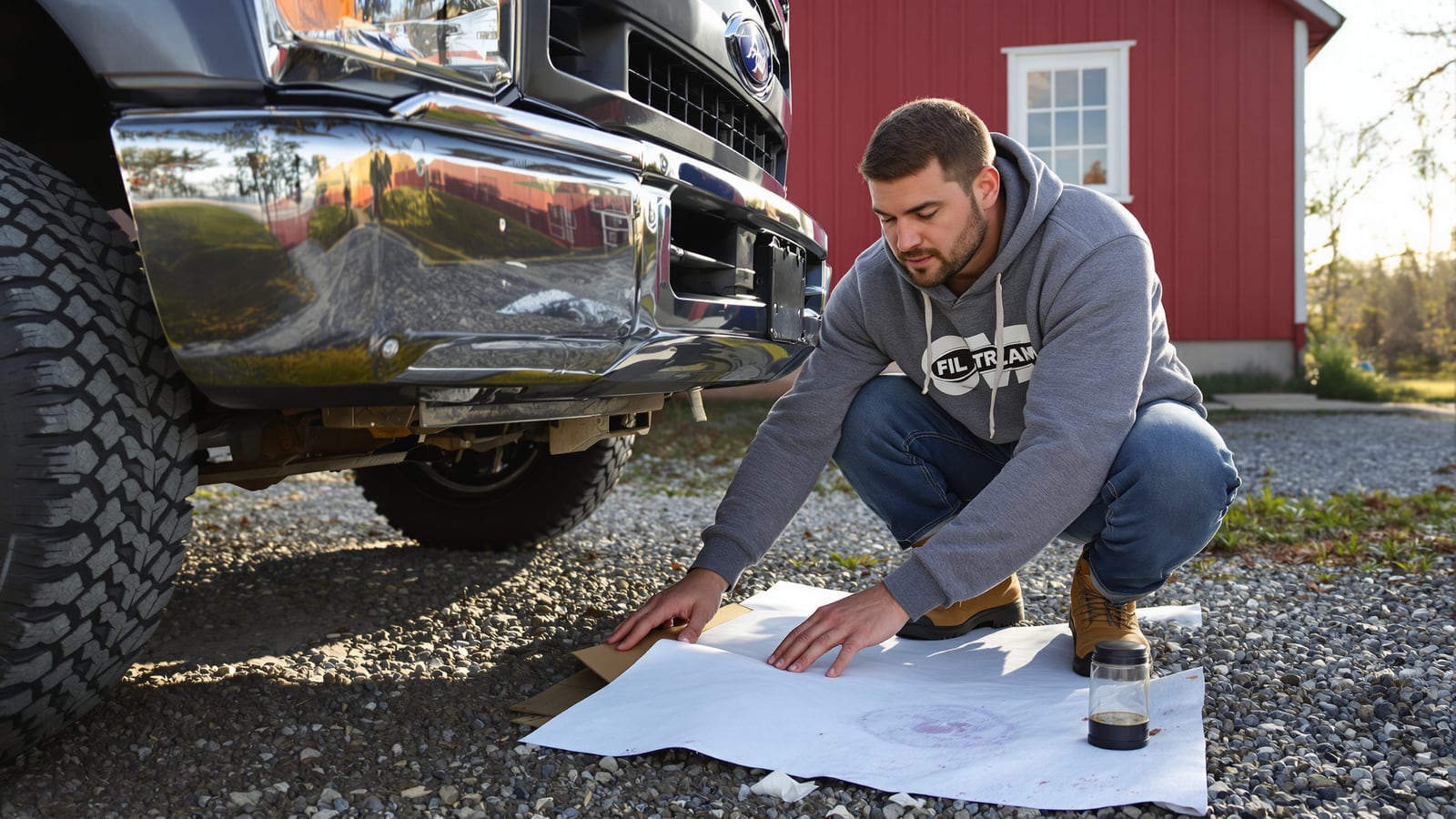
Slide a flattened cardboard box under the front of your truck tonight and look at it in the morning. A spot the size of a quarter, reddish and oily, near the middle or passenger side? That's the cheapest warning you'll ever get about a transmission.
Cooler lines carry hot automatic transmission fluid out to a cooler, usually built into the radiator or mounted in front of it, and back again. They run under pressure the whole time the engine's on. When one lets go at highway speed, the pump pushes fluid out faster than you'd believe. The shifts go soft, then the transmission slips, then it cooks. A couple of miles can finish what years of service built.
Almost none of them fail without notice, though. They weep first.
What weeping looks like
A weeping line doesn't drip. It seeps. You'll see a wet, dark film around a fitting or along a section of hose, and dust and road grime stick to it until it looks like a tar smear. That's why people walk right past it. It looks like old dirt.
Transmission fluid is usually red or pink when it's healthy, and brown or nearly black when it's tired. It feels slick and oily, and it has a faint petroleum smell, a bit sweeter than motor oil. Engine oil is amber to black, and coolant is slimy, bright and sweet. Rub it between a clean fingertip and a white paper towel and you'll know within seconds which one you've found.
Places it likes to show up:
- Quick-connect fittings at the transmission and at the radiator. The seals inside get old and hard.
- Rubber sections of the line. They crack, swell and go mushy from heat and age.
- Steel line sections near the frame and crossmember, where rust eats them from the outside.
- Anywhere a line rubs a bracket, a belt or a sharp edge. A chafed spot becomes a pinhole.
- Crimped joints where rubber hose meets a steel tube.
How to inspect one in ten minutes
Do this with the engine cold. Cooler lines carry fluid that can burn you, and so can everything else under there after a drive.
- Find the two lines coming off the transmission. They're usually small-diameter, side by side, and run forward toward the radiator. Your owner's manual or a repair manual for your exact vehicle will show the route.
- Follow them with a flashlight and your fingertips. Feel for wetness, tackiness or a gritty film.
- Squeeze the rubber sections. They should feel firm. Soft, spongy, cracked or swollen means replace it.
- Look at the steel parts for flaking rust, dents and bright shiny spots where something's been rubbing.
- Check the fittings at both ends. Wipe one clean with a rag, run the engine for a minute or two, then look again. A fresh bead tells you exactly where it's coming from.
If you need to be under the vehicle, use jack stands on level ground. A jack alone isn't a support. Nobody's weekend is worth the risk.
A pro tip that costs nothing: after you wipe a suspect spot clean, photograph it. Next week you'll know whether it's growing.
Not every wet spot is the cooler line
Be honest about this part. Transmission fluid on the underside can come from the pan gasket, the pan bolts, the output shaft seal, the front pump seal or a leaking dipstick tube. The cooler line is only one suspect. Fluid blown backward by airflow can also make a line look guilty when the leak is higher up.
One more cause is nastier. In many vehicles the transmission cooler sits inside the radiator, separated from the coolant by thin metal. If that wall fails, fluid and coolant mix. A milky, pinkish look in the radiator or overflow tank is a stop-driving problem, and it needs a shop fast.
When you can't tell where it's coming from, clean the area with brake cleaner and a rag, and let the leak show you its source over a day or two. This is the same habit behind twenty minutes with the engine off: look first, guess later.
Check the fluid, and read it correctly
If you see any weeping, check the fluid level. Many vehicles still have a transmission dipstick. The procedure varies, and some want the engine running, warm and in park, while others differ. Follow the manual. A lot of newer vehicles are sealed with no dipstick at all, and checking the level properly means a fill plug and a specific fluid temperature. That's a shop job unless you have the tools and the service data.
Low fluid plus a damp line means you have a leak that's making progress. Don't top off and forget it.
And use the exact fluid specified for your transmission. "Universal" isn't a safe guess. Modern transmissions are picky, and the wrong fluid causes problems of its own.
What the fix looks like
This is where self-reliance has limits, and it's fine to say so.
A rubber section that's gone soft usually needs a replacement line or hose made for transmission fluid. Fuel hose and heater hose aren't the same thing. Transmission fluid eats the wrong rubber, and a hose that looks fine on day one can swell and burst a month later.
For rusted steel lines, don't clamp and pray. Replace the line. Premade lines exist for plenty of popular trucks and cars, and a good parts counter can find yours by vehicle. Some fittings need a special disconnect tool. They're cheap, and they keep you from breaking the plastic.
If you tow, this matters more. A trailer behind you means the transmission works harder, runs hotter, and the lines and cooler see more pressure and heat. It's a good habit to inspect before each season of towing, not after the first breakdown.
If you're not comfortable with fluid, fittings and torque specs, take it to a shop and show them the photograph. A good shop will tell you whether it's the line, the fitting or something else. Ask them to show you the wet spot on the lift. Any honest mechanic is glad to do it.
Leave it better than you found it
When it's fixed, clean up. Wipe down the area so the next leak, if there is one, shows itself. Bag the old line and rags for proper disposal, because used fluid doesn't belong in the driveway or the ground. Many parts stores take it. And keep that old line on a shelf for a week, so if the repair doesn't hold you can compare.
This inspection belongs in your regular rhythm, along with the checks in the car servicing that can't wait. It's one reason people get a car past a quarter million miles, as in what it really takes to get a car past 250,000 miles. The vehicles that go the distance usually belong to people who notice a damp spot and do something about it.
A greasy line is a small problem now. It's a very large one on the shoulder with the hazards on.
Dean Shaw
Gear & Garage
Reads the warranty, the parts list and the long-term owner reviews before anything else. Trucks, tools, watches, and the cheap version that costs more.

Watch
Worth an hour of your evening
More from Cars.
From channels we rate. Plays on YouTube.
Read next