

The belt gets the blame. The tensioner did the damage.
A serpentine belt is rubber. The tensioner behind it has a spring, a bearing and a pulley, and it's usually the part that quits first.
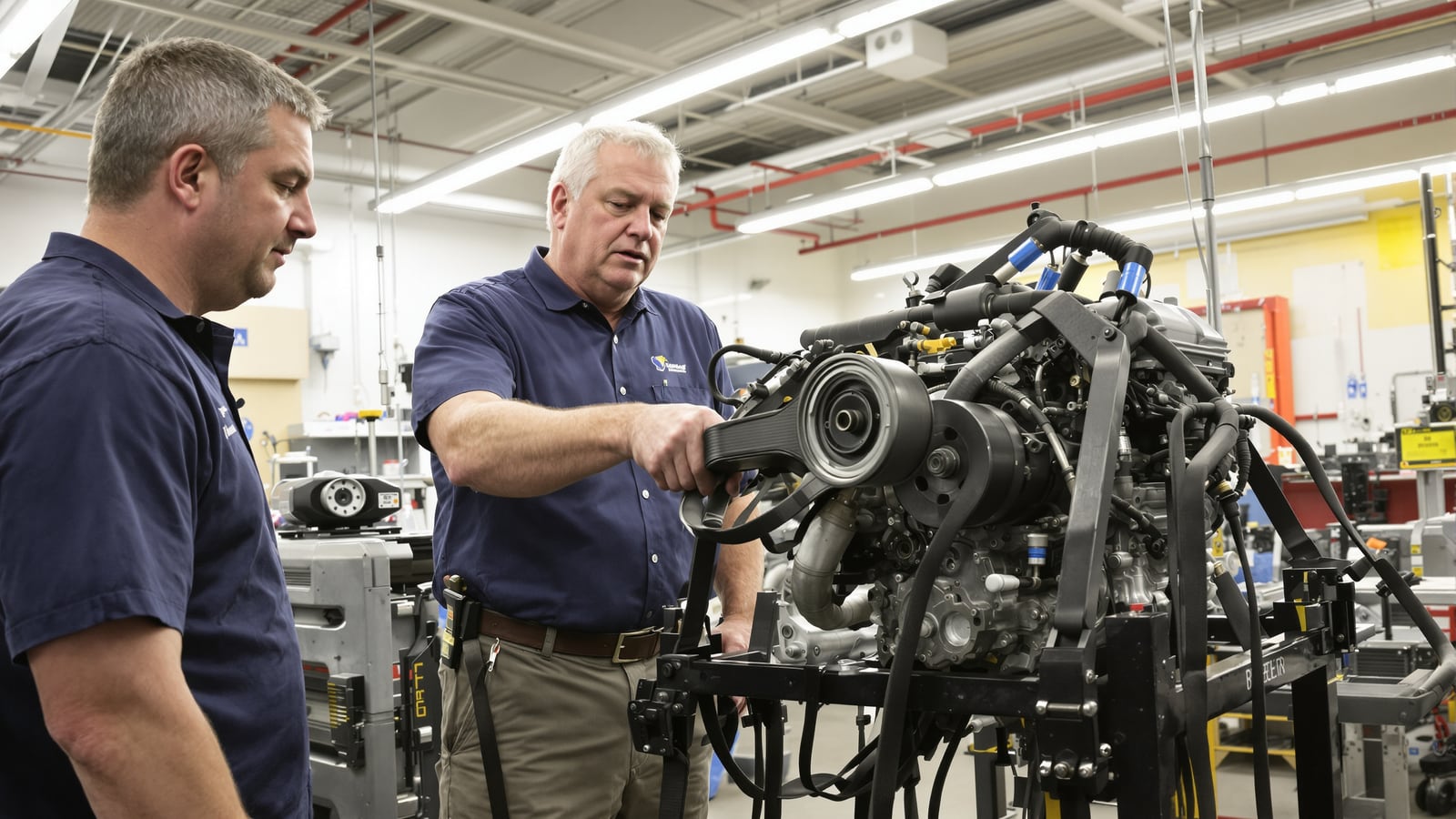
Quick answer: If your belt squeals, flutters or shreds, the tensioner is the first suspect, not the last. Replace the two together, and don't let anyone sell you a belt alone on a high-mileage engine.
The part nobody looks at
Pop the hood and find the long, snaking belt. It runs the alternator, usually the water pump, often the power steering pump and the A/C compressor. Everybody knows it's there. Mechanics get asked about it constantly.
Nobody asks about the little spring-loaded arm with a pulley on the end that keeps it tight. That's the tensioner. It sits there turning at engine speed, pushing against the belt with a coiled spring, absorbing every pulse the engine throws at it. Thousands of times a minute, for years.
A belt is a strip of rubber. A tensioner is a spring, a pivot, a damper and a ball bearing in a pulley. Which one do you think has more ways to wear out?
Think about the belt's job and the tensioner's job side by side. The belt just rides. The tensioner does the work. When the spring weakens, the belt runs loose and slips. When the bearing goes rough, it adds drag and noise. When the pivot wears, the arm starts to bounce and wobble, and the pulley runs slightly crooked. A crooked pulley chews one edge of the belt.
That's the pattern behind the classic story. A guy replaces the belt, it sounds great for a few weeks, then the squeal comes back. Or the new belt looks ragged on one side by 10,000 miles. He blames cheap rubber. The belt was fine. The tensioner killed it.
How a tensioner tells you it's dying
Most of these signs show up well before anything lets go.
- A chirp or squeal on cold starts that fades as the engine warms. A weak spring is one cause, and a new belt won't cure it.
- A growl or grinding hum that rises and falls with engine speed. That's usually a pulley bearing, either on the tensioner or on an idler beside it.
- Belt flutter. With the engine idling, watch the belt in the longest span. If it's whipping or the tensioner arm is visibly bouncing, the damper or spring is worn out.
- One-sided belt wear. Frayed edges mean something is out of line. A bad tensioner pulley is a prime suspect.
- Dust around the pulley. A fine black or rust-colored dust near the tensioner body means it's wearing against itself.
Modern belts rarely show the old cracked-and-dry look. They wear thin instead, so a belt can look clean and still be done. Your owner's manual gives a replacement interval, and plenty of belts are rated for a long stretch. The tensioner doesn't always live that long.
If you haven't looked at yours in years, twenty minutes with the engine off will tell you more than you'd expect.
A ten-minute check in the driveway
Engine off. Key out of the ignition, not just off. Let it cool.
- Take a photo of the belt routing before you touch anything. Many cars have a diagram sticker under the hood too. You'll want both.
- Look at the tensioner arm. Most have a small pointer and a pair of marks showing the working range. If the pointer sits at the end of its range, the belt is stretched or the tensioner is worn out of spec.
- Wiggle the pulley. Push on it sideways with your thumb. It shouldn't move. Any play is a bearing on its way out.
- Check the pulley face and flange. Grooves, chips or a wobbly edge are bad signs.
- Look for oil or coolant. A leak from a valve cover, a seal or a hose can drip onto the belt and the tensioner. Rubber and oil don't get along. If the belt is slick and swollen, fix the leak first or you'll do this job twice.
If you want to go further, the tensioner can be released with a breaker bar or a long, flat serpentine belt tool on its square drive or hex fitting. Slip the belt off, then spin each pulley by hand. They should turn smooth and quiet. Gritty, loose or noisy means replace it.
One warning. That spring holds real force. Keep your fingers out of the belt path, hold the tool firmly, and let the arm back down slowly. Never let it snap. Let go of that bar carelessly and you'll have a bruise that lasts a month, if you're lucky.
What happens when it quits on the road
Here's the part that makes this more than a nuisance. When the belt comes off, whatever it drives stops. The alternator quits and the battery light comes on. If the water pump rides on that belt, the engine overheats quickly. Power steering may go heavy in your hands. On a lot of cars these all happen at once.
So you get a battery warning, a rising temperature needle and a stiff wheel, all at highway speed or in traffic. Get off the road to a safe spot and shut the engine down. Don't try to limp it home. A cooked engine costs a great deal more than a tow truck.
This is a serpentine belt, not a timing belt. Different system, different failure. The timing belt, on engines that have one, can wreck the engine if it breaks. If you aren't sure which your car has, the manual says. The serpentine belt is the easier, cheaper warning shot.
Replace them as a pair
On most engines, the belt and tensioner are a small part of the bill. The labor is mostly getting to them, and that labor is the same whether you do one or both. Doing the belt alone and the tensioner next year means paying for the same access twice.
The practical rule: once a car is well into its life, treat the belt, the tensioner and any idler pulleys as one job. Idlers are the smooth pulleys that guide the belt. They have the same kind of bearing and wear the same way. Many parts stores sell them as kits matched to your engine.
Buy a name-brand tensioner from a reputable supplier. A tensioner is one of those parts where saving a few dollars on a no-name unit is how you end up in the same driveway in six months. If you're going deep into the maintenance world, what it really takes to get a car past 250,000 miles covers the parts that matter most for the long haul.
At the shop
Don't be a pushover, and don't be rude about it. When you go in for a squealing belt, say this: "I'd like the belt and tensioner replaced together, and I'd like to see the old parts." A good shop is fine with that. If they only quote a belt on a car with 100,000 miles and a noisy pulley, ask them why.
And if the car is acting up, the noise is a symptom. The car servicing that can't wait is worth a read before you decide which line items to approve.
When you do the job yourself, leave it better than you found it. Wipe down the pulleys, clean any residue off the mounting surface, and fix the small leak you found while you were in there. The next person under that hood, maybe your own son, will thank you.
A belt gets forty dollars of attention. The tensioner, which does the actual work, gets none. Give it a look this weekend.
Dean Shaw
Gear & Garage
Reads the warranty, the parts list and the long-term owner reviews before anything else. Trucks, tools, watches, and the cheap version that costs more.

Watch
Worth an hour of your evening
More from Cars.
From channels we rate. Plays on YouTube.
Read next